You are currently logged-out. You can log-in or create an account to save favorites and more. more info
Unity in Worship: Embracing Active Participation
AI Suggested Keywords:
Intro to New Liturgy
The talk discusses the new liturgical order, "Institutio Generalis Missae," introduced as an evolution from the previous rubrics of the Mass. This new order expands beyond rubrics and gestures, providing dogmatic, doctrinal, and pastoral explanations. It emphasizes the liturgical assembly's role, fostering active participation from the entire congregation while maintaining distinct ministerial functions. The significant changes highlighted include the revised offertory rite, which now underscores unity and the participation of all in the liturgical celebration, and a modified structure for the introduction, penitential rite, and communion to enhance communal and spiritual engagement.
Additionally, specific liturgical elements, such as the usage and symbolism in the offertory and the importance of the Eucharistic prayer, are detailed with an emphasis on their theological implications and the role of the congregation in the sacramental action, thereby stressing active participation in the liturgical process.
Referenced Works:
-
"Institutio Generalis Missae": The central document discussed, detailing the structure and purpose of the new order of Mass, emphasizing an inclusive approach to the liturgical assembly and individual roles within the community.
-
"Ordo Missae": Compared to the "Institutio Generalis Missae" to illustrate the shift from a focus on priestly duties to a broader community involvement in the liturgy, reflecting an evolving understanding of the Mass.
-
The Epistle to the Hebrews: Referenced during a discussion of the "Our Father," highlighting the scriptural basis for confidence in Christ's priestly mediation.
-
St. Augustine: Cited to underline the significance of communal aspects like singing during the offertory, enhancing the spiritual engagement of the congregation.
-
First Epistle to the Corinthians: Mentioned concerning the Eucharist, emphasizing the discernment necessary when participating in communion to avoid judgment as per St. Paul's teachings.
AI Suggested Title: Unity in Worship: Embracing Active Participation

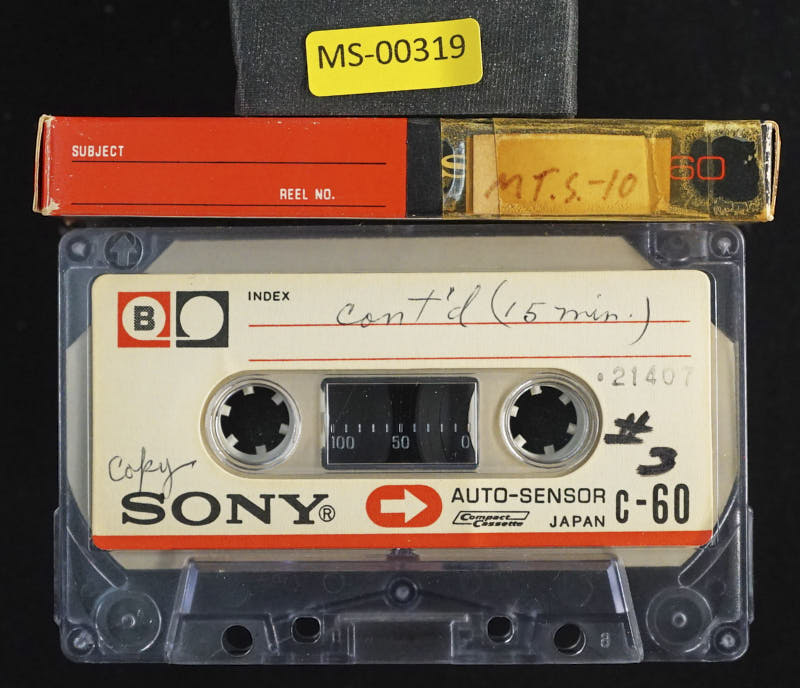

AI Vision - Possible Values from Photos:
Speaker: Unknown
Location: Unknown
Possible Title: Conference on New General Instructions of the Mass
Additional text: cop. y. 3, cantel 15 min, to community & guests, #3
@AI-Vision_v002
strengthfully backed up by the fact that Colonel Ottaviani has the greatest support for the world of matters. The wonder I had some time ago reported the contrary, and now I have to take it all back. So what I wanted to talk about is what is noted here as the Institutio Generalis Missae. In general, you see immediately in taking a look at it that it is a different thing from the general rubrics that we had up to now, because it's a presentation. They call it an institution.
[01:04]
It's a presentation of the present right of the mass in all its various aspects. And it isn't limited just to rubrics and gestures, but it also gives dogmatic, doctrinal, or pastoral explanation for the reasons why these things are used and so on. Another fact which is important in this context is that this new Ordo Misse has in view and focuses on the liturgical assembly as a whole. That's important because up to now in the rubrics, we had only the things that concerned what the priests to do. So this considers now the entire assembly. But that, of course, does not mean, as it is well put also here in the order, that the various functions of the ministers should in any way kind of the, you know,
[02:17]
considered secondary, and so on. But the variety of functions is an essential part for constituting the assembly, the liturgical assembly, because the liturgical assembly is the mystical body in its hierarchical order. And therefore, the priest is a peasant in time. On the other hand, however, all various, the whole people of God is taken into this action, but of course every part and everyone who assists at it and participates in it, contributes to it in his own way. I think that's in itself an important part of the whole thing because there is certainly a tendency today to consider the active participation of the people in last analysis as something where everybody does everything in last analysis.
[03:29]
But that is, of course, not active participation. To participate means to take your definite part, what you have to do. And therefore, also the active participation of the people has in general, of course, a different character from, for example, let's say, the activity of the priest. The priest, that is an important thing here, but one might also mention just in parentheses that the rubrics of this institution clearly says that the, let us say, variety of ministries should certainly not be used in the Mass for display, which is an important, you know how we have in the past, you know, I mean, the three, the two of deacons, the subdeacons, all this variety of things that we are often priests of deacons, so that is out.
[04:37]
The variety of ministry, ministers, that come into play at the Mass are, by the way, concerning the typical Mass or the usual Mass. What is considered there is the priest, and then the reader, and then the chanter, and the acolyte. That is considered, let's say, the kind of standard participation as far as the ministry is concerned. But of course, the active participation of the people always, and that's one of the big things, to get the whole people of God, you know, into it. But of course, this active participation of the people, I would say, is, as in general, see, a participation in the, how do I say, in the, no, in the kind of,
[05:40]
womanly character, you know, there is a difference between Christ and the church. And this difference is also perpetuated, let us say, a part of the institution and celebration of the maps. There is the bridegroom and there is the bride. And while the priests and all the ministers and their foremost intention and meaning is to serve the whole, still everybody in his own way. And of course, you know that one of the important things in our entire, say, in the celebration, the constitution of the church in this time between the first and the second coming of Christ, that we are in pilgrimage, is this that the agape of God Presented in Christ, in which he has loved us first, is the active element.
[06:46]
And the participation of the people is that of opening up for it and getting integrally ready, but essentially there in order to receive. You can see that very clearly in the offertory right. the present offertory right. Let me just pick that out in the moment. The offertory right is one of those who have undergone the biggest changes. And the meaning of the changes is that this offertory, which in some way can be considered as the most vivid or evident, most visible, the participation of the people, and however, this overtory has been, let us say, removed from any possibility of being considered as, let us say, the sacrifice, or in that matter even his sacrifice.
[07:59]
There is absolutely one sacrifice, and this one sacrifice is made present again in the canon through the Eucharistic prayer, and the gifts that have been put upon the altar, and this is the sacrifice. So in the repetition we have, which we had before, that the offertory right, you know, I had developed into sort of a second of a, as we say, a little canon, that means a duplication of the, prayers of the Eucharistic prayer already at the offertory, anticipations and so on, all that has been completely eliminated. And the emphasis has been given to the people bringing the gifts and bringing these gifts, that's very important of course, in the spirit of, let's say, the Holy Spirit of unity.
[09:01]
And therefore, giving these gifts with singing, important part, because love sings. Therefore, St. Augustine was the one who emphasized that at the offertory, people should come at the procession and singing. On the other hand, it has also been emphasized now that that the people should bring the Eucharistic gifts, because the fact, you know, that now the little hosts, you know, are not recommended anymore, but recommended are bigger hosts. And those, of course, that can be done also by the people at home, and therefore it can be brought to the altar so that this thing has a better meaning. But on the other hand, the prayers which the priest says, had when he receives the gifts are generally, the general rule is that they are not be said aloud, you know, but just silent by the priest's officer to say also, there should be no elevation at that time, but just a kind of gesture of giving or presenting, not high above the order, but in a modest way.
[10:23]
And the prayers which are said are said secreto, as it says in the Latin edition. And if there is no singing at the authoritory, then it is said the priest can say these little invocations. And at the same time, the people can give this answer, but also the answer is not an answer. and it required any rubrics and so on. So you could see that there is a clear, I'm going to say, playing down of the offertory as a, let's say, sacrificial act. See, it is therefore done, you can say, and also therefore the emphasis in the rubrics that at the offertory, not only gifts for the altar should be brought, but also for the poor one. That this, therefore, this offertory gets this kind of, in some way one can say the offertory represents, in some way represents, that is inspired by the spirit of Our Lady, of Mary.
[11:36]
The accent in these prayers, these short kind of blessings, or so on, or presentation prayers, you see, that the priest says at the... offering of the bread and that of the presenting of the bride, accepting them. They represent an attempt to bring out the fact that this offertory here is, in this way, the entry, one can say, of creation. Blessed be the Lord of creation. Blessed be the Lord of creation. So of creation, you see it's the Old Testament, the New Testament in some way, it's creation and redemption. So the offertory has this function to emphasize that these gifts we take are the gifts that we receive from God. That means from the Lord of creation.
[12:37]
And then, of course, the other emphasis, which is given and that human hands have made. So that emphasizes the fact that what is offered at the altar is not simply, let's say, the raw gifts of creation, but they are also what human hands have made. And therefore, one can say, that represents, it seems to me, the whole, let's say, realm of what we would call civilization or culture, what man does with creation, and therefore is in that way represented in these gifts. But what man does in this order, and it's of course also clear that this is the role of the church, there is the function of the laity, because the laity in a special way, is turned to creation. And in that way, also in a positive and active and transforming way. Because in that way, man is cooperating
[13:44]
in this whole work of creation. And therefore that is recognized, this kind of order is recognized at the offer time. But of course it is taken in, this is not the sacrifice, it is taken in then immediately into the Eucharistic prayer. I just wanted to, because on the whole you see the three, one can say four, maybe three things. that receive in this new order of mass special attention is, first of all, is the beginning, and then it's the offertory, and then it is the communion, as far as the right is concerned. Now, if we maybe just say a few things about the beginning, in the beginning, what is the intention of the new order of mass in the, let us say, in the entrance run? is this that a real kind of meeting is made easier between the priest and the people.
[14:47]
That in one way that the priest may, in that way, open the celebration. One can say, break the ice of estrangement that there is always, you know, between the people and the priest and all, and open up. And of course, he can't say either, and that depends, I think, on the degree of salinity of the mass, these three various occasions of the simple mass, simply the Lord is with you, you know, as we used to say, and with you also, as they say now. But then it is important, and then the priest should really, out of the situation, try best he can to establish a kind of living unity among the community and himself. In shortly presenting with a few words, the ratio, let's just say the spirit of this assembly and the main purpose, what do we call, what do we celebrate and so on at this moment.
[16:00]
in that place for you. Or maybe there is, in the past, there are some people, let us say, from the outside and so on, and he can greet them and in this way take them into the celebration. I mean, he's free to do that in any way he can. So it would be a pity, of course, on our hand, we have to see all these things develop if just these same formulas would be repeated because the idea is That here some personal note should be given right in the beginning. But you see right away also, and that's an important element, that really every single celebration of the Mass needs a rethinking and a preparation, especially on the part of the celebrating priest. Because it's not easy to, and I must confess, I mean up to this moment, person may too, and we haven't. really have the time, you know, to get into this thing. It is not easy to do this in a way which really would be effective.
[17:06]
But as I say, it's of utmost importance because this is one of the emphasis is the bring out the personal living element of the moment. In that way, because the whole thing is very much, you see, That's an important thing to consider. The options which are given are by no means given just for the sake of variety in order to avoid boredom. If one would think that and approach the options that way, one would really take the most superficial of the approach. But the institution is very explicit in this. saying and emphasizing that the options are given so that the individual situation of the assembly and of the look of the community and the character of the community that is gathered together there would what is best for this community on this day under these circumstances that would be taken out from these options.
[18:22]
So what is, as I say again, see, it's not the simply mechanical presentation of various possibilities that can be at limitum changed with the idea that one otherwise gets bored. Repetition in itself is not bad as long as what is repeated is good and adequate and brings out the character of this specific celebration. Then in the, as I say, there is this word. And then, of course, on the other hand, you see that, and that is the thing that we have. You have now had the opportunity to also to see in action various possibilities. There are these three possibilities. We know, of course, that this confitio, this actus penitentialis, penitential actus, the part in the whole which provoked the greatest say, opposition.
[19:24]
And, as you know very well, it was the first synod of Bishops who kind of took a majority vote and decided on this actus penitianus. It was that assembly of the synod which took place with the express abstention or keeping out of all the periti And in this case, all the periti or the concilium were against this actus penitentialis really for the simple reason that this is a, the mass as such does not move on the level of repentance. But the mass as such moves on the level of what they would call of union. But at the same time, taking into account the fact that we are still on pilgrimage here in this church, therefore this celebration, which essentially is here, let's say, on the level of the via unitiva, the union level, is, however, you know, punctuated, one can say, constantly
[20:43]
by references and by acts of parents and so on, to bring out the same elements that I tried to characterize before, that the participation of the people is very much, let's say, on the line of the woman. And part of that, of course, the whole mercy element. And then also this whole recognizing of one's force and one's, let us say, general sinful condition. I was saying that way, this kind of humility, which is, of course, in the Christian everywhere where the Holy Spirit comes into play. The reason why not always bounce when the Holy Spirit is involved. So in that way, this element, as I say, comes again and again in the course of communion and so on, again and again. And for this reason, not everybody, anybody who's really acquainted with the texts of the mass knows this, you know, that the whole tenor of the mass is certainly not one of pride and self-assurance, but it is union, but of course in humility and iconizing our condition.
[22:00]
But anyhow, the pastor of Gales and so on, the spirit of the majority of the bishops there, the synod, was in favor of this actus benedentialis. On the whole, that, let us say, historically, seen from the part of the development of the liturgy, one can say this is a regress, because then Pius, the fifth missal, has had the actus benedentialis simply on the part of the priest, and he is accompanied by the minister, and the minister represents also the congregation. And then to have this, as it's said, place at the foot of the altar, anything that in the old tribe that takes place at the foot of the altar is in that way not really part of the official mass. Only the priest is there, you see, on the plinth of the altar. So in that way, this actus penitentialis in the prayer at the foot of the audience we used to have was more clearly relegated to a kind of inferior level.
[23:10]
Now with this present rubric, it is kind of lifted up and made an integral part of the celebration itself. Now as you know very well, this has say, called and brought forth the strong criticism on the part especially of all those who in the Concilium had to do with this thing. And when has found then as a kind of, let us say, reconciled or compromised, you know, the third way and, you know, so, for example, we have a pirate was, yeah, participated in this, that there was a possibility of kind of fusing this Actus Penelentialis together into one with the Lord have mercy. As you know, the Lord of mercy in that way has been reduced from nine times to six times.
[24:18]
the literal invocation on the part of the canter for mercy, for Christ the Redeemer, you see, for Christ the Christ for our sin, and also for the risen Christ to these proceeds for our sins, you know, there's the meaning of these three things, answered then by the people with the curia land, Lord, have mercy. That would then also eliminate or at least give a new meaning to the scene of the curia lesson. because that was one of these things that one had hoped, you know, would disappear from the mass altogether. But it hasn't disappeared, so it's still there as a kind of a relic in some way one can say on the whole, I mean, I don't want to discourage about these things. Of course, it is a great progress in the whole thing, but it doesn't really, what looks at it, live up to the standards that the council itself had said for the restoration of the house.
[25:25]
Because one of the things of the council was that repetition should be eliminated. Of course, if we introduce the prayer, the common prayer of all the faithful, then of course the curiation prayer there at the beginning would have been and could have been taken into this prayer of all the faithful, because it is not good If you have an entrance right, it goes on, and it goes on, and it goes on, and it never comes to name. Now we begin with the song, and then you're supposed to say the name of the Father, Son, Holy Spirit. We can't pale down that, you know. But then, of course, comes the introducing of the priest. Then comes the act of penance, you know, all those are consigned. Then it comes the curia leison. Then it comes the gloria. and common status play and the connect and so on, so it's a constant repetition of always new beginnings. You shouldn't say it's very big, but I mean, there it is.
[26:27]
And I think our way out would be, follow this kind of thing, and to fuse the act of repentance into the curialization seems to me would be the least, let's say, obnoxious approach to this question. And then, so in that way then, but it is of course in some way, I must say and keep that also in mind, because there it is and we have to see that it's also for the spiritual good of those who participate. It's of course good if on one side, let's say, the priest breaks the ice and through a personal word refers to the situation and in that way helps the awareness while on the other side then the community you know the whole assembly too takes this up by a certain stop you know and in that way by a you know again you know that say remembering
[27:39]
that this year we enter into a celebration. And this entering into the celebration is, and demands from us, a metanoag. See, it is a change of mind, a change of heart. We enter into this world where the kingdom of God, the presence of the kingdom of God is proclaimed in public by the whole assembly And in that way, not only proclaim, but is set away. And of course, that requires a certain stopping and a leaving, let's say, of the turmoil of the worldly thoughts and entering into that whole realm of forgiveness that opens up with the celebration of the Eucharist. That's why it's a good thing. And it forces, you know, we know very well how bad routine is and how necessary it is for people who enter into the Mass, really at least give them a chance to think, my, as a citizen of the city of God, here I enter, I appear before the mercy seat of our Heavenly Father to Christ, united here we are in the Holy Spirit, and that therefore
[29:08]
The secularia desideria of St. Paul, as St. Benedict Paulson, should be done away. The worldly desires, the worldly spirit, all these things leave. So that is, therefore, it's, and that follows completely, one can say, a general intention, you know, in this whole renewal business, weighing by all means the Christian people to a full realization of their specific position and message and function here in this world. And that it is different from the usual drifting of our thoughts, our oblivion, our forgetfulness, our thoughtlessness, and especially the numbness, you know, that we are constantly subject to. So at least give people an opportunity to Little stop of silence, rise out of that way.
[30:11]
It is, I think, it's a good thing. Now, if we have already then spoken about the third, the second point, which is the offertoid procession and the prayers that accompany it and the character, what is the intention? The intention is to make it absolutely clear that the worship, the act of worship, mass, is the supreme act of Christ's sacrifice on the cross, that therefore this here takes place completely in the realm of the agape, into which, you know, then, and in that way, one can say, in a certain way, also, this offertory may represent, you know, a certain incarnation into which, of course, this creation is taken in a living a deliberate way. So just in some way I would say that while in the beginning we have this penitential act, that of the heart, at the offertory where the action begins, we have this participation, this opening up, and this one of those parts of the mass which really needed
[31:33]
the, let us say, restructuring most clearly. One thing is, you know, that the communion part of Christ is devoted, you know, it is this way that through the participation in the sacrifice of Christ, then, later on, and that was the reason, for example, for our, now we use the word confidence, before we use the word we are bold to say or something now. This is taken, as you know, from the epistle to the Hebrews from the 10th chapter, where Christ is described as the high priest. He enters the veil of his flesh into the presence of the Father. And that is, therefore, in the presence of the Father. We are there with it in this boldness. But our daring and our boldness is, of course, based on Christ's sacrifice, was on Christ's agape.
[32:34]
So in that way, the Our Father is then simply our standing now before the mercy throne in the Holy of Holies. One can say the presence of the kingdom is there. The first that we do in the songs of God's love is Our Father. And then there are the The little embolism there, as you know, has been changed. You have heard it in these days. It has been changed. There is an interesting factor. You see the prayers of the intercession of Mary, of Peter and Andrew that was brought in by St. Gregory, that has been eliminated. Now that is a little step, you know, which goes in the general direction. That is one of the problems we are facing. The transition, one can say, of the local Roman liturgy to a universal liturgy, of the local Roman liturgy.
[33:38]
This, we have spoken about that in the past, how wonderful it is in itself, you know, that the Roman Church, absolutely every liturgical celebration was geared to the place and the concrete circumstances in which one found oneself, you see. In the meantime, we can see, especially now here in the season, that always is more or less abolished. The local woman thing is taken out. And part of this is also this intercession because this was, one can say, St. Gregory's great devotion. You see, these are the three patron saints of Rome. And one is Our Lady, one is St. Peter, and the other is St. Paul. And then Gregory I, because he had a great predilection indeed for the Orient and for Constantinople, brought Saint Andrew into it as a jester of reconciliation. Of course, that is, as I say, typically one thing.
[34:40]
So that thing has been dropped. Instead of that, the emphasis in the embolism is on the idea of peace. And then, of course, logically, right after this Embolism now comes the kiss of peace. Now, this kiss of peace is opened up really by the dominical Lord Jesus Christ, you know, so the prayer is what we used to say, the first of the three prayers. In itself, of course, one can say if one had followed the advice of the council to eliminate what are duplicates, one certainly would have eliminated this prayer, but there it is. one never knows on whose, you know, Greek elections and choice, you know, things that was done in the end, you know. And therefore, it is there, but as you know, it has been taken out of the subjective into the community level, the hour.
[35:41]
It's also supposed to be set with elevated hands. And then after it, you know, after one has set this prayer, then comes, and that would be to my mind to say that really, makes sense, is peace of the Lord be with you always. Because that is the old announcing of the giving of the kiss of peace, the invitation to the whole community to all to turn towards one another and giving one another the kiss of peace. And that would be good to be conscious of that in the context. And then, of course, comes the case of peace, and of course that also, as you know, interesting one sees that this is one of the things that calls for most of the resistance. People say, oh, I don't know who's next to me. I don't know if he lives up to my standards in his own business.
[36:47]
So in the whole defreezing, He said a good word, defreezing process. You know, this isn't, huh? Defrosting. Right, defrosting. This defrosting process, you know, the, this, oh, isn't there another word? The thawing out process, something like that. You know, this is a process of great. important, and thank God that we have that established there. And then comes after the peace. This is, of course, again, you see the Our Father, and the embolism is manifestation and establishing of unity. The peace is establishing of unity, and then the breaking of the bread, you see, too. Establishing of unity, and this breaking of the bread, you know, is then again done with the singing of the Lamb of God, and also with this company that too, with the, to say, with some of the people, and so on.
[37:55]
But the important thing here is, again, you see, now that we, at this, that everybody realizes that the breaking of the one oath at this moment is, again, the symbol of the process of unification. So that everybody sees, we, as St. Augustine says, there is the loaf on the altar, this loaf is you. And then this is consecrated, and now the unity of Christ itself goes and takes in all the manifold variety and the many of the people And that is the breaking of the break. Our entering, one can say in that way, into the union of Christ. That is also, in me, comes a question, you see, if it is good to break the whole into parts at the moment of the consecration.
[39:00]
I think, on the whole, one cannot do what is said in these words. They are not meant as a rubric, thing, but they are meant in the context of this entire celebration. And of course, he broke the bread and he gave it to his disciples and said, see, now in that, literally in that succession, we just can't do it. The essence of God is being done. But in some way, I say that's just lots of further discussion on these points. It seems to me that the breaking of the bread at that moment is, I mean, personally, it jars me because, you say, this is in fact, you know, the symbol of unity is broken before it is even, let's say, there, you see. So, therefore, in some way, I think the action of the breaking of the bread, you know, should be confined to this moment where we do it, you see. Again, a kind of duplication of that.
[40:03]
That's just an assignment. And then, of course, is the act of communion. And there, you know, what has been done there is the reducing of the dominant or not worthy. See? And then also the adding of the invitation to come to the Supper, take part in the Supper of the Lamb. And so that people know this whole retus, you know, is, let us say, in some way, call it the retus of discernment. St. Paul gives this basic admonition in the first bit of the Corinthians. If you take part at the altar and the bread, remember and discern this, from the usual food and so on, this is the body of Christ and this is the word of Christ that you receive.
[41:08]
And of course, there is always then this element that St. Paul also mentions in that context in the first historical Corinthians, this element of, again, you know, we have to correspond and we have to realize what we take because otherwise we would Eat and drink judgment, as St. Paul expresses it. But of course, it's an enormous difference. If you look at this right and compare it, it's very interesting that in the actual celebration of the mass until the Second Vatican Council and the present liturgical reform, all in the communion part, the rights that represent unity were dropped. The case of peace just shrank into a privilege of the clergy, and they did it in such a way that they didn't. You come too close to one another. And then, you see, so the people looked at this in wonderment.
[42:10]
What does it mean? And then, on the other hand, the act of the breaking of the bread had also fallen into its use, because we have all the little hosts. So therefore, these two things had dropped, while the other thing, the safeguard, you know, the absolution and so on, and the confidio again in origin, I think we all went through. All that, you see, was there. And then had taken completely the stage, you see. I mean, that was the thing. So the preparation for the community was all guided, you know, by the individual Some people call it the guild machine. But now, of course, there is this new, thank God. Thank you.
[43:09]
@Transcribed_UNK
@Text_v005
@Score_92.95