You are currently logged-out. You can log-in or create an account to save favorites and more. more info
Transformative Journeys in Monastic Spirituality
AI Suggested Keywords:
This talk focuses on the theme of transformation in monastic spirituality, emphasizing its dynamic nature and the concept of spiritual senses, as articulated by early Christian thinkers like Origen. The discussion links these ideas to the development of the interior life and monastic practices, exploring how figures like Augustine, William of St. Thierry, and later mystics like Merton, engaged with the doctrine of spiritual senses to understand and articulate the transformative journey within monastic life.
- Origen: Major influence on the understanding of spiritual senses; developed foundational ideas for monastic spirituality through works exploring the "two men" and interior senses, aligning with Pauline theology.
- Karl Rahner: His early work focused on Origen's doctrine of the five spiritual senses, underscoring its significance for the spiritual life and history of spirituality.
- St. Augustine: Explored the concept of spiritual senses in his "Confessions," emphasizing inner spiritual love distinct from physical experiences.
- William of St. Thierry: Expanded the doctrine of spiritual senses, relating them to divine love and monastic life; influential in the Cistercian tradition.
- Bernard of Clairvaux and Baldwin of Forde: Further developed and expanded upon the doctrine of spiritual senses in their teachings, particularly within the Cistercian context.
- Thomas Merton: Prominent 20th-century thinker and advocate of the dynamic monastic life, emphasizing transformation and the renewal of the spiritual senses to achieve likeness to Christ.
- Nicolaus Cabasilas: Related the doctrine of spiritual senses to sacramental theology, highlighting their role in the Christian life.
- St. Paul: Quoted and referenced extensively throughout the talk, particularly his writings on transformation and the new man in Christ, serving as a theological foundation for understanding monastic transformation.
- Hebrews 5:14: Cited by Origen and referenced in the discussion as a biblical basis for training the spiritual senses for moral and spiritual discernment.
AI Suggested Title: Transformative Journeys in Monastic Spirituality
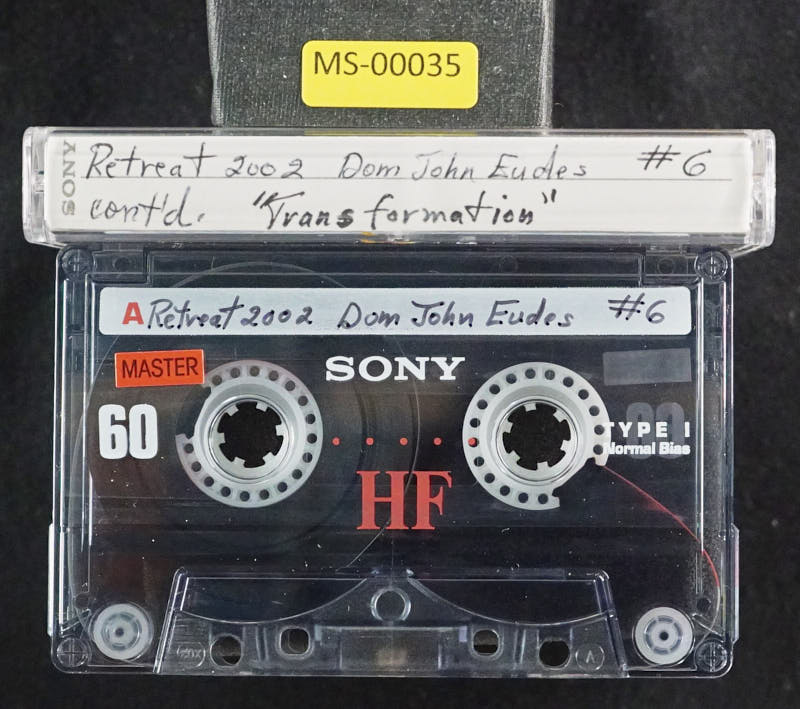
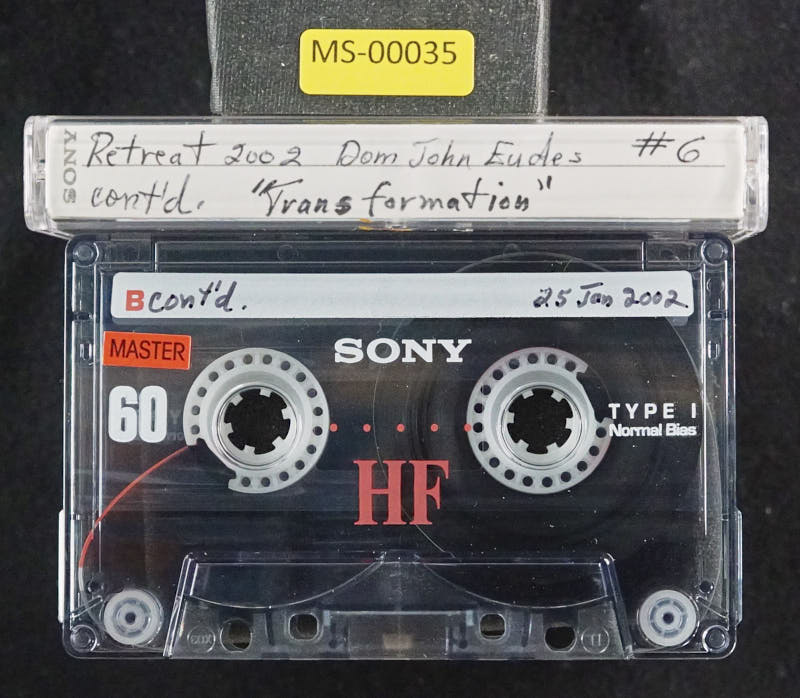
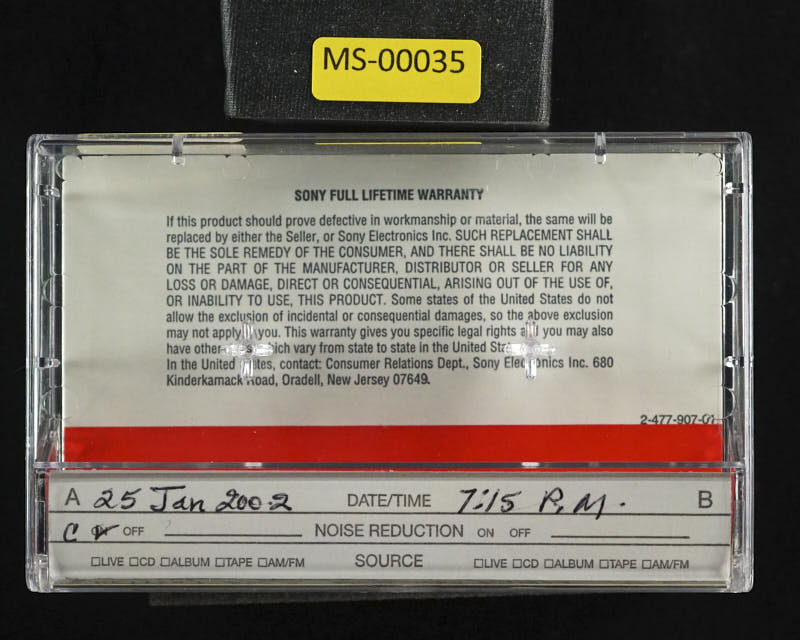
AI Vision - Possible Values from Photos:
Speaker: Dom John Eudes
Possible Title: Transformation
Additional text: #6, cont\u2019d., 7:15 P.M.
@AI-Vision_v002
In the name of the Father, and of the Son, and of the Holy Spirit, may the Spirit of the Lord Jesus enlighten the eyes of our heart and strengthen us in his love. Amen. So this will be our last talk this evening. And I thought I'd speak to you about a very fundamental orientation of monastic life that has to do with The monastic spirituality, from its inception, has been conceived as a process of transformation. As a result, it's very dynamic in character, which is not the way it looks to people on the outside. I remember when I thought of becoming a monk I thought the biggest trial I would have would be the routine and boredom after a couple of years.
[01:09]
But it doesn't work that way. That's too static a way of viewing the monastic enterprise. The opposite is the case, in fact. It's very dynamic in character. because of their concern for a true and full involvement of the whole person in the process of being transformed so as to become conformed to Christ. Many of the influential mystics and thinkers of the early church concerned themselves with understanding as fully as possible the workings of the interior life. they developed an anthropology on which to base their teachings on the spiritual life. Only a few of these, with great refinement of observation, came to appreciate that among the faculties of the soul that assume an increasingly significant function as one advances in the way of the spirit are the spiritual senses.
[02:18]
The earliest of these writers and the most creative would seem to have been, again, While he was not himself a monk, few thinkers have been more influential on the impact of their writings on monastic spirituality. He lived before Saint Anthony and before there was monasticism, the way we think of it in terms of separation from the world. Besides, he was probably the equivalent of a dean of a big college or president of catechetical institutes, something like that, the Institut Catholique of Paris, because Alexandria was analogous to Paris in those days. He was the first to articulate a formal doctrine of the whole of the five spiritual senses as such.
[03:24]
In a recently rediscovered work, he elaborated a very broad theory of the correspondences between the inner and the outer man that prepared the ground for his views on the inner senses. He bases himself on the Pauline doctrine of the two men. Here's how he puts it. Well, first of all, Paul had said this. In Colossians, Paul writes, no longer lie to one another, putting off the old man with his acts and putting on the new. The man who is renewed in the knowledge according to the image of him who created him. So that's St. Paul. And Origen concludes from this passage that each of us consists of two men, each having a correspondence with the other. Here's his comment. For just as the exterior man corresponds to the interior man as like-named, so is the case with its members.
[04:33]
We can assert that each member of the exterior man is found under the same name in the interior man. The exterior man has eyes. The interior man also is said to have eyes. and so on. He goes through the senses that way. And observing the divine precepts, we acquire in the order of the spirit a more penetrating vision. The eyes of the interior man are more penetrating than our physical eyes. This thought is elaborated in considerable detail for each of the bodily senses. Hearing, taste, touch. But in addition, for other bodily parts." It's kind of quaint at times, the way he says, they're bones of the spiritual man as well as eyes and ears. When Jeremiah cries out that his intestines are in pain, he refers to the intestines of the heart, which we also feel when the church suffers in childbirth, he says.
[05:43]
When Isaiah refers to those who have lost their heart, he doesn't mean their physical heart, obviously. He refers to the spiritual heart, not the bodily. Karl Rahner considered this doctrine of origin insofar as it dealt with the spiritual senses to be of considerable importance for the spiritual life and for a fuller understanding of the history of spirituality. In fact, his The first major publication in 1932, he was still a student, was precisely on this topic, On Origin's Doctrine of the Five Spiritual Senses. It's found in Revue d'Essetique et Mystique. Werner introduces his essay with some helpful observations concerning the expression spiritual senses, which has persisted in use into modern times. First, he observes that there is the necessity for anyone who attempts to describe spiritual experience to make use of similes based upon spiritual experience.
[06:57]
There's no other source from which to derive the kind of language requisite for communication with human persons, he says. In fact, throughout the centuries of the Christian era, Spiritual authors have spoken of their inner life in terms of sight, hearing, touch, taste, and smell. This mode of the five spiritual senses in origin is derived from both the New and the Old Testaments. It's interesting that he saw Proverbs 2.5 as an explicit affirmation of their existence. The Greek text that he cites, however, is not... doesn't exist today. And it's not in the Hebrew. But it's probably, he was really the first great textual critic. So he probably had found a version of the Greek translation that had this text, which it says, you discover the divine sense of perception.
[08:09]
So as often happened, he took those words very seriously. What is this divine sense of perception? This sense, however, unfolds, he writes, in various individual faculties, site for the contemplation of immaterial forms. This sense for the divine was discovered by the prophets. So that's his comment on that. Interesting text. The divine sense of perception. The New Testament text he cites is taken from the epistle to the Hebrews. It's often stimulated discussion by preachers and exegetes. Hebrews 5.14 Solid food is for the perfect. Those who have by habit trained their senses for the discernment of good and evil. So it's possible to train interior senses to discern, distinguish between good and evil.
[09:23]
Origen's interpretation of this text differs from other commentators who see in these words of reference to the faculty of moral discernment quite distinct from the spiritual sense of taste. few perhaps will agree with Arjun that this text serves as a solid demonstration of the validity of his theory of the spiritual senses, but it seems to me that there is a real basis for it. There's an analogy here as I see it with the functioning of our bodily senses, which is of considerable interest for the life of prayer and of ministry. The external senses function with comparative rudeness. And those persons who have not disciplined them in the course of mastering some skill are applied art. You see this in many different forms. Whether it's analyzing a literary text, a painting that a painter, a well-trained painter can see things in a painting that's lost on
[10:37]
Most of us can tell things from the brush stroke as well as the colors and so on. And different people, for example, musicians, can be trained to distinguish notes that are lost on the majority of us. I remember when, back in the old days, at Gethsemane, we had people like Dame de Broquette, and one or two of the others from Salem come over and teach. And one of them, it wasn't Devoket, it was one of the great experts in the chant, was listening to some singing there on records with Devoket and some others, and he stopped them. He said, they're singing flat. and the others who were also experts missed it, but he had heard that and so they replayed it and they saw he was right.
[11:44]
Mozart did that, he was traveling once, Dresden or someplace, and he knew they were gonna play one of his symphonies and were practicing for it in the afternoon, so he dropped in, they didn't know who it was. He was a very unprepossessing gentleman and he's sitting there listening to them, and all of a sudden he jumps up and shouts, why did you play a D flat instead of D sharp? So our senses can be trained to perceive things that are lost on others who haven't trained them, even physically. Now one of the most remarkable cases I know of was a German eye surgeon in the 30s who devised a new operation, whether it was a retinal operation, I forget what it was, so that he was able to operate, I think it was a series of about eight people who had never seen in their life.
[12:52]
And so after the first one, he opens up the bandages and he thought the person would would see the way he saw. What he found was that although the person could see, he couldn't discriminate any objects. Everything was a blur until he was taught what was out there, and then he could see it. And this came as a surprise to him and it surprised me too. I always thought you'd just see it, it's there, but our very sight is learned by training, by putting words on things, and colors too. It was sort of a gray blur is all they could describe at first. So it's interesting how, in a way, sight seems to be the most objective of the senses.
[13:57]
But in fact, a great deal goes on when we see and name, recognize any object. And of course, emotion, affection, attitudes influence what we see, how we perceive different situations. There's a famous course that's studied in law school called Evidence. I read a book on it once, very interesting. And what is admissible as evidence? There are rules of evidence that every judge has to know. But this professor who was teaching evidence arranged one day for this experiment. All of a sudden, in the middle of his class, seven people burst into the room shouting, And one had a book, another had a rock.
[15:01]
They all did something different. There were four men and three women in this group, and 19 students. So after about two minutes of doing this, running around the room, shouting, doing different things, it was all pre-planned, they ran out. And then he told them, this was planned. And so your homework or your test is to write up what happened. And you got 19 different versions. That some thought there were five men and two women, others five women and two men. Some thought that the one who had the stone threw it on the desk and the book was on the floor. It was rather sobering when you consider it. how easily that is. And I just ran into that the other day with someone who had such a different version of some event than somebody else who told me about it, that it was perplexing.
[16:12]
But that's going on all the time, even as you listen to me and I perceive you, our basic attitudes enter in to our experience. They're learned. It's not just a coldly objective functioning. Well, that's true even much more of our interior senses, obviously. Psychiatry, in a way, is built on that, at least the best kind of, the most useful kind of depth psychology. where you can hear people saying that they don't realize they're communicating if you listen with what they call the third ear. And I've been able to do that sometimes, not often enough. And it's very convincing when you can.
[17:15]
You can hear people conveying messages. They might be saying something quite different, but what they really mean is I resent the fact that you don't do more for me. They might be thanking you, you know, thanks for trying or something, or that I want you to feel more affection for me, or you're awfully cold, whereas what they're talking about might be something very different, but that's what they're really feeling and communicating. But they don't realize it. But if you know how to listen, you can pick that up and then use it for their advantage. Why not? This is what's eating you. You get resentful if people don't give you enough attention. I just dealt with a superior last week who consulted me about one of her nuns.
[18:18]
And she felt that the problem came from... Her problem with this nun came from the fact that the nun wanted more attention than the spirit could give her. But she never told her that, but that's what she communicated without stating it. So the senses then can be trained, and the ascetic life is really honored when it's undertaken well, it seems to me, that's why I'm talking about it, it's ordered to this training and cultivating and bringing to its active potential, might say, developing its potential of our capacity to experience spiritual realities.
[19:21]
St. Augustine spoke about this in his Confessions. What is it that I love when I love you? It's not the beauty of a body, nor the fittingness of time, nor the brilliance of light so welcome to these eyes, nor the sweet melodies of all kinds of songs, nor the aromas of flowers, ointments and perfumes, not sweet cakes and honey, our lovely limbs to be embraced. It is not these I love when I love you, O God, and yet I love a certain light and a certain voice and a certain odor and a certain food and a certain embrace when I love my God. It is the light, the voice, the sweet odor, the food, and the embrace of my interior man where light shines on my soul which has no place, and where there is a sound that time does not snatch away, and where there is a sweet odor which the breeze does not scatter, and where there is a savor that eating does not diminish.
[20:39]
Beautiful passage. In the course of the centuries, this doctrine was often referred to in connection with spiritual experience by authors dealing with prayer and the interior life, only in passing, however, without any intent to give a further development to it. The Cistercians of the 12th century often refer to the spiritual senses with conviction. A particularly moving passage is found of William St. Terry's Commentary on the Catechal, where he writes, Eliminating grace is the virtue of all virtues and the light of good works, without which even virtues are without effect, and good works have no good fruit. Or if on occasion they should seem to have some, yet they are without vigor, they give no cheer, they lack the oil of joy, they teach no unction, they have no flavor of divine sweetness, no odor.
[21:40]
of eternity, no efficacious experience of the spiritual senses. In earlier work, William had developed a more elaborate doctrine of the spiritual senses as such at considerable length, becoming the first author since origin to evolve a consistent and rather complete system. So from the third century to the twelfth, this the system of the spiritual senses, not the individual senses, but as the system was sort of in abeyance, sort of overlooked. But here's what William wrote in. I think it's the enigma of faith. For just as the body has its five senses by which it's joined to the soul with life mediating the union, so also the soul has its five senses by which it is joined to God with charity mediating this union.
[22:49]
So it is that the apostle says, do not be conformed to this world, but be reformed in the newness of your sense. Again, he too quotes St. Paul, that you might prove that the will of God is good and pleasing and perfect. Here he shows that through the bodily senses we grow old and are conformed to this world, but through the senses of the mind, William continues, we are renewed in the knowledge of God, in newness of life, according to the will and good pleasure of God. He then goes on to describe in particular and with considerable ingenuity each of those spiritual senses. He has about, I think it's about five pages on it, and its relation to various loves. dwelling extensively on sight, which he associates with divine love. Here are his words. Divine love is compared to vision, for vision is the principal sense.
[23:55]
Just as among all the affections, divine love has the chief place. From the sight of the eyes, all the other senses are said to see, whereas only vision actually does so. For we say, feel and see, taste and see. and so on for the other senses. Try this and see what you think of it. Put this on and see how it fits, and so on. As he developed this teaching further in the course of time, William describes the manner in which the functioning of the spiritual senses is experienced by the contemplative in the course of higher stages of the monastic search for union with God. and gives an explanation of the experience that is at once psychologically and theologically satisfying, I'd say. The bride was sitting, cast back on herself, waiting for the return of the spouse, he writes, having a pledge of the spirit that he will soon return, weeping, desiring that he should return.
[25:01]
And suddenly, she seems to herself to hear first what she does not see and to sense with her interior sense which she does not understand, the presence of the divinity. And thus she exclaims, the voice of my beloved, all the senses of the faithful soul grow cheerful. She eagerly goes to meet him as he comes leaping to her, that is, hastening. Seeing him coming to her, she recollects herself so as to receive him, sensing him, drawing near and standing behind the wall. So there are a whole series of people after William and that same period, the 12th century, who speak similarly of these senses. Bernard is one. He treated as some length the way in which the various kinds of love are related specifically to the five spiritual senses.
[26:06]
He makes the following observation in the course of an interesting sermon that has been little remarked upon. There is therefore life, truth, sense, and charity of the soul. There is, if you observe carefully to be found, a variegated love that is perhaps divided into five kinds corresponding to the five senses of the body. Like William, Bernard too analyzes the various senses and relates them to the distinct love relationships, thus indicating the fittingness of considering one type of love more suited to his particular sense. William's discussion of his teaching is by far the more developed, though. It's characteristically detailed and analytical, giving every indication that it is the more original, at any rate, at many of the details. The two friends may well have discussed those matters among themselves prior to their writing about them for their many points of contact between the two accounts.
[27:11]
Baldwin and Ford in England, who is also a Cistercian abbot in the 12th century, is another of the very few who dealt formally with a rather extensive treatment of the doctrine of the five senses. He very probably was familiar with the passage from Augustine cited above and was influenced by it. All the Cistercians seem to have studied Augustine very carefully, as well as Gregory the Great and Origen. how many manuscripts of origin were found in Cistercian monasteries in the 12th century. Baldwin also may have known William's work, more likely St. Bernard's treatment of the same topic. Here's what he has to say about it. When it is wonderfully united to God by the love of obedience, the soul lives and senses in him and by him.
[28:17]
And it draws a sort of analogy with the things it knows through the bodily senses. Thus, by the grace of a most inward inspiration, it senses God within itself and touches him spiritually by faith, smells him by hope, tastes him by charity, hears him, by obedience and seize him by contemplation. The next time we find this theme taken up and integrated into his spirituality is in the first half of the 13th century in the Lowlands. A Beguine, Hedevis, who wrote in medieval Dutch, had read this section on the spiritual senses in the book by William St. Terry. There's an article in that treats of this, the Jesuits studying medieval Dutch mystics and publish on it.
[29:24]
They were strongly influenced by the Cistercians, by the way. She was a Beguine And so in the book on the nature and dignity of love, where William wrote on the spiritual senses rather than on the ending of faith, she had read William and followed it closely as she elaborates her own teaching on the mutual influence of reason and love. She puts this in a letter of hers. The power of sight, she writes, that is created as natural to the soul is charity. This power of sight has two eyes, love and reason. Reason cannot see God except in what he is not. Love rests not except in what he is. Reason is its secure path by which it proceeds.
[30:32]
Love experiences failure, but failure advances it more than reason. Reason instructs love, and love enlightens reason. You can tell she has quite a wit to put things together that way. This utilization of William's work has been demonstrated quite conclusively and indicates that his own views on the matter, though not widely influential, were appreciated by another great mystic and gifted poet. She was important in Dutch language even, although almost totally unknown in America. In fact, even in Dutch literature, she was pretty well unknown until some recent discoveries of some manuscripts. So, another original treatment of this theme was provided a little later in the Byzantine world by Nitalis Cavasillas, a lay theologian, 14th century.
[31:49]
He relates his doctrine of the spiritual senses to the sacraments, which are the source of the operations of the spiritual senses. He was a great liturgist. Yes, you probably are familiar with his writings on me. Liturgy and the Life of Christ, I think are his two main works. He teaches that only those who cultivate their spiritual senses will be received into the light that is life. So it's an important basic theme in his view. Whether people talk about it or not, cultivating the senses is extremely important. Essential, he says. He views this world as a workshop in which we train our senses to perceive the divine realities and prepare the wedding garment which we shall wear at the banquet of the spouse. There's a lot more to be said about it.
[32:51]
I don't want to be too long tonight. And I think it is fruitful to give a good deal of reflection to it, but you don't see a lot written on it. Rauner is the one who's done most. He later wrote an article dealing with St. Bonaventure and the spiritual senses because Bonaventure, after William of St. Thierry, although Rauner didn't realize William had also written on it. Bonaventure is one of the few who had developed the doctrine of the five spiritual senses. And Rahner published that in his Theological Investigations. He has that article and the one too on origin was revised and sort of summarized also in his Theological Investigations.
[33:56]
St. Edward, without referring to the spiritual senses explicitly, tells of the usefulness, even the necessity, of a knowledge of self at the level of relationships as well as of their roots in the psyche and his extensive analysis of the various kinds of love. He had become very conscious of the need for a very concrete and detailed self-knowledge and wrote of it quite deliberately. He introduces his lengthy thorough study of the various sources of love and its kinds with the following comment. Now I want first of all to explore the hidden recesses of my own conscience so that this attachment may not trick me if I happen to be ignorant of its cause and origin. And that same principle is why it's helpful to study the spiritual senses. The more we understand them, the less. likely we are to be led astray by them, and the more effectively we can develop.
[35:12]
In our own time, Merton appreciated very much the importance of this doctrine. His whole spirituality was like that of these fathers, a very dynamic one. What that means is that it's not enough to adapt to monastic life, so that I think it's important to give out this doctrine also in the novitiate, and I have spoken to it about this too, and I was going to say recently, so that they understand there's more to monastic life and formation then adapting to what amounts to the subculture of our usages and liturgy and so on. That's essential, but it's only a beginning.
[36:16]
And what's more important is this inner transformation. Merton rediscovered the fundamental role of this dynamic concept of monastic life and became its most prominent spokesman in our time. Repeatedly, he emphasized the need to preserve and stress those practices which the tradition has always considered essential for the attainment of this goal of recovering the likeness to Christ through transformation. Metamorpho is the word that St. Paul uses. To cite one instance of many in his diary entry for September 6, 1948, Merton describes his sense of restlessness and inner conflict arising largely from the consequences of the prominence that his recently published autobiography had brought him. It was a pain in the neck after a while.
[37:20]
His reflection on this situation or an attempt to clarify his interior vision of his vocation as a monk because he... He says there he was sort of confused by the whole business getting so much attention and so on. So he wrote, to make a rule, the whole meaning of my existence is not enough. To make an order, a spiritual tradition, the center of my life, is not enough. Contemplation is not enough. By itself, it's not enough of an ideal. The complete gift of myself to Christ. Transformation. Total simplicity and poverty. These are some of the things that I need. And he really meant that. And that was the tone of his teaching, I would say.
[38:22]
It's important that we remember that love supplies the energy that brings about the transformations which are required for the fashioning of the new man in his maturity. Again, it's in St. Paul that we find this point made. He states in his Epistle to the Ephesians that he makes it clear that while in baptism we're created anew in Christ, Yet achieving the full stature of mature manhood in Christ is the work of an ongoing movement, a growth in the spirit of Jesus. And that growth takes place under the energy generated by charity. Here's what he says, Ephesians chapter 4. And he gave some to be apostles, others prophets, others evangelists, others pastors and teachers for the perfecting of the saints in view of the work of service, for the building up of the body of Christ, so that we might no longer be children tossed about and carried away by every wind of teaching and the craftiness of men and their malicious deceitfulness of error.
[39:50]
Rather, we are to practice the truth in charity. so as to grow up in all ways in him who is the head, Christ. So, it seems to me that understanding monastic life in this perspective from the beginning is the ideal, but at least it, that as early a stage of our monastic life as possible, puts us in a position to go about using the usages, the practices, and the various teachings found in the traditions in a more efficacious and more useful way, rather than imposing things on ourselves exteriorly, cultivating this
[40:52]
discretion and discernment that comes from seeing into the mystery of Christ with greater insight with the eyes of the Spirit. And that's what Saint Benedict calls on us to do, to seek to know God's truth in the deifying light which is possible only to the eyes of the spirit. So I consider this particular doctrine one of the important perspectives to create as far as possible in our monastic communities. And to do that, emphasizing the cultivation of the interior senses is certainly a major contribution.
[41:54]
So we'll leave it at that. Right. Right. Yeah, that's... Of course, it could if it's gone about the wrong way, but the importance of discernment is stressed in this. Actually, I have a whole series. I'm giving a seminar this June in Lillienfeld in Austria on discernment. And this is part of it. I didn't stress that here, but what you say is a very important point.
[43:00]
And discerning what is the most useful thing for me to work on in the spiritual life at this time is one of the reasons why we should get familiar with our own feelings, our own inner structures, our own deeper attitudes so that we don't get off the track, get isolated or get solipsistic or become hard to live with or harder than is inevitable. Sometimes it does seem that people whom God calls to a more full interior life I do have to pass through periods when they are difficult to live with. I certainly was, although I don't know that I'm called to all that deep a life, but I knew that I was being difficult and felt there was nothing I could do about it for a time.
[44:12]
I've worked on it since. Now I'm afraid I'm getting too soft. I think, yes, this one would be right. I gave that at Genesee. Because as I say, and recently I talked to a novices about it because I think just being aware that there's more to monastic life than adapting or following the rules and so on is essential. And Merton was very good at communicating that. He had a strong sense for the importance of living from the depths of the heart and was good at being concrete about that. Yes, that quote I gave from him is in
[45:19]
It's in a summary. See, there are seven volumes of the diary. But then Jonathan Montaldo and Brother Patrick Hart went through it and did an excellent job on creating a single volume by selecting... I think you've got it here in your bookstore. Yeah. Yeah. Oh, yes. Well, if you get just one volume, that's the one to get. I've got the reference here. I need my glasses to find it. But that is certainly an important, the most important of his journals, I would say, because it goes through the whole of his life. I think it's in this one.
[46:28]
Yeah, it's called The Intimate Merton. Are you okay? That is published, oh, I don't have that here. I think it's in San Francisco. It's published in San Francisco. It's published by the same company and published all of his diaries, yeah. But it's entitled The Intimate Murder. It's a very good selection. Now we have 10 minutes for our little cookies and a little spirit. You want some cookies? Yeah. Yeah, he certainly was kind of the outstanding... Anyway, I had a great difficulty living there.
[47:43]
I thought that was an awful journey for someone to go through. And I kind of got bored about it. No one can make a mountain of yourself and build a channel and people like that. and realized that the editor, he seems to be complaining all the time, but then I only realized later that they cut it at a certain point, that actually he went 360 degree, came back to himself, I mean, found the fault in himself. Well, he told me once that that book needs to be rewritten, he said, but it no longer belongs to me. which I think is true. There's still many people who were converted by it or who become religious because of it. I don't know. I've met him all over the world. Yeah. I agree with his tradition.
[48:45]
Actually, we got it together. Oh, he did, yeah. He had a brilliant memory in mine. But... That book, the manuscript, the original manuscript, I think was like 750 pages. And that exists. I think there's a copy of Boston College and one in Columbia. Sister Mataliva had it there. I think that's her name. She acted as the secretary. But certain things, he was too bold. You know, the censors wouldn't lie. that it through our editors thought that it was you know imprudent to say something probably one was that he had a natural son that he had a natural son he probably that was probably in the original there are reasons to think that but it was never admitted he was probably told not to
[49:53]
in those days, you know, that would have been a reason not to accept him. The Franciscans turned him down, I think, yeah. But that probably, I suspect that that was in the original manuscripts. Oh, he was very, oh, he was. Oh, he was, and even before others, yes. He had a lot of kind of courage. He told me once, too, I think that same conversation when he said it, Seven Story Mountain, he said, it doesn't belong to me anymore, but it really should be rewritten. But I don't think so. I think it's by far his best work. Oh, yeah, yeah. His literature. But it is, it's not the most balanced. But that, oh, it's not the most balanced, but... I, for some reason, I don't take it where he's, you know, where he's too narrow-minded.
[51:03]
That's just part of what he was at that time. That never affected him. You know, I think that people with experience, it would affect young people probably. But he himself was critical of it. But he felt, as he said, it didn't belong to him. Amen. Oh yes, yeah. That's right. About God, a religious life. Yeah. Yes. And he thought his worst two were, what are these wounds? Yeah, there were two he said terrible, you know, awful or something. Yeah, he has a scale.
[52:04]
And none of them was really real good. I say none was real good. If you look, the first column, the first column is empty. You know, very good. But then he has some that were his favorites that I disagree with him. I think things like the Geography of Logreir, which some people think, you know, is outstanding. I don't think anybody's going to read it after another 10 years or so now. Certainly not after 100. Whereas The Sign of Jonas and the Seven-Story Mountain and the... New Siege Contemplation. I think they'll be permanently read. That's my opinion. Yeah. Oh, I, yeah. He says in his preface to New Siege why he rewrote it. And he didn't rewrite it so much as he added to it.
[53:05]
It's not what he says that's not good. It's what he doesn't say. that led him to write The New Seeds. But The New Seeds, I think, has become... Oh, yes. Yeah. And it's called that. And he has some very high literary quality to certain of those prefaces, especially the ones to the Japanese edition of Seven Story Mountain. Yeah. So, the Lord be with you. And also, Lord, the Easter gifts are brought to you with joy. I'll get you something here.
[53:48]
@Transcribed_UNK
@Text_v005
@Score_95.07