You are currently logged-out. You can log-in or create an account to save favorites and more. more info
Miracles, Memory, and Spiritual Selfhood
AI Suggested Keywords:
This talk centers on St. Gregory's "Dialogues" and the significance of remembering God's providential acts, as exemplified in miracles attributed to St. Benedict. It explores the theme of "living with oneself" in the context of Benedict's spirituality, emphasizing self-possession, the cultivation of virtue, and awareness of God's constant presence. The discussion touches on the Eucharist, both as an act of thanksgiving and a means of engaging with the divine through liturgical practice, connecting daily struggles with a deeper spiritual journey.
Referenced Works and Teachings:
- St. Gregory's "Dialogues": Offers insights into Benedict's life, emphasizing miraculous events that illustrate God's intervention and the spiritual journey toward self-knowledge and divine experience.
- St. Benedict's Temptation Scene: Highlights personal struggle and divine assistance, drawing parallels to other spiritual figures like Anthony, exploring themes of vocation and spiritual perseverance.
- Anthony's Story by St. Athanasius: Cited as an example of transformative spiritual encounters through scripture, paralleling accounts of spiritual awakening.
- Augustine's "Confessions": Discusses personal conversion experiences and the role of scripture in revealing divine truths, exemplifying Augustine's struggle and eventual transformation.
- Catechism of the Catholic Church: Discusses the Eucharist as a thanksgiving act, its representation as a memorial of Christ's sacrifice, and a call for the faithful to join in this offering.
- Lectio Divina: Mentioned briefly as a method of engaging with scripture that resonates with Christ's presence and message.
- The Eucharist and Year of the Eucharist Reflection: Tied to the theme of Christ's presence through scripture and sacrament, examining how this connects to communal and individual spiritual life.
AI Suggested Title: Miracles, Memory, and Spiritual Selfhood
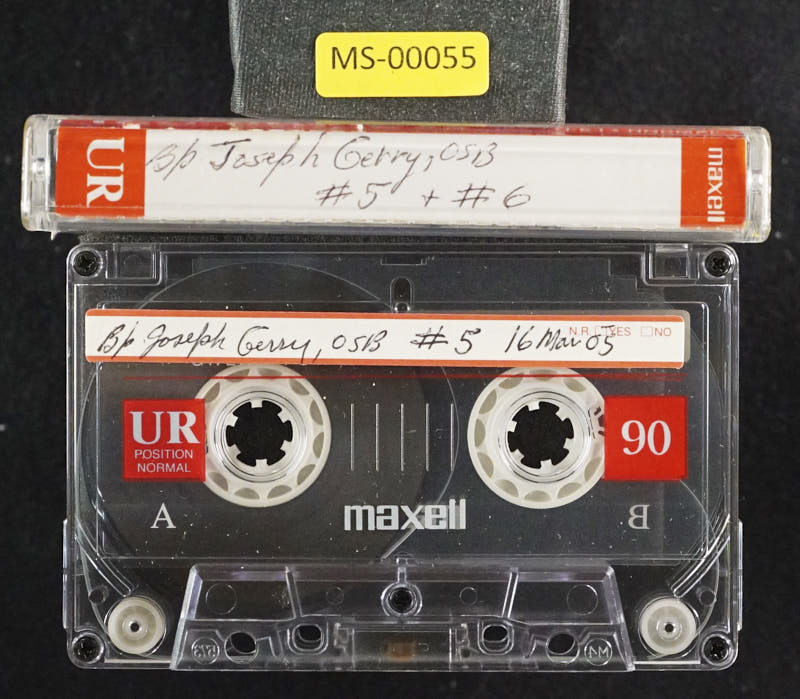
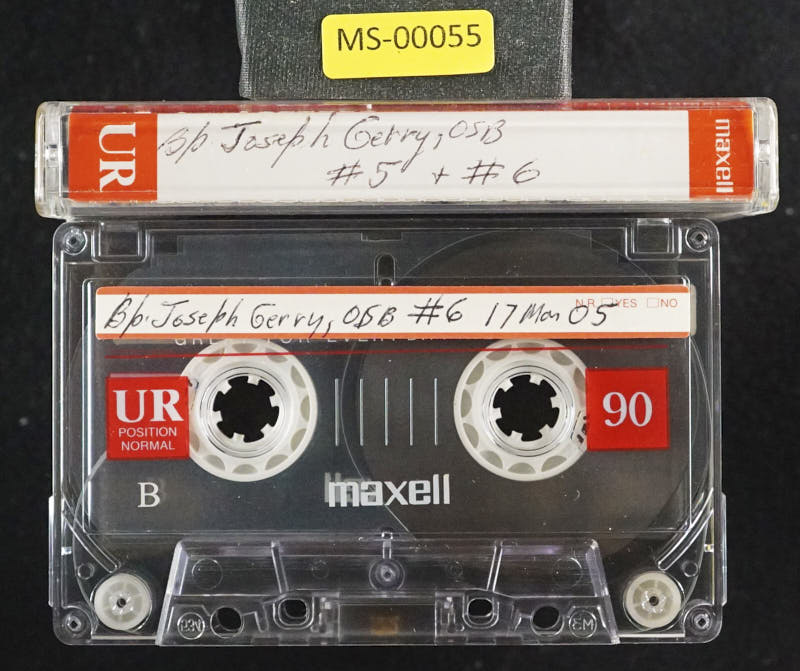
AI Vision - Possible Values from Photos:
Speaker: Bishop Joseph Gerry, OSB
Possible Title: #5
Additional text:
Speaker: Bishop Joseph Gerry, OSB
Possible Title: #6
Additional text:
@AI-Vision_v002
Now, this one this evening should be briefer. Those are bad words to begin with, but that's my intention. Now, the older I get, and I'm getting pretty old, as you notice, the more I enjoyed the dialogues of St. Gregory. And when I was younger, I used to kind of squirm a bit at all the miracles. I guess they were just a bit too much for me to handle at that time. Somehow, I could take all the wonderful works of the Lord in the Scriptures, but not in the dialogues. And as I asked myself why, I came up with the answer, rightly or wrongly, that it probably was because I hadn't yet discovered, I hadn't yet really named and pondered the wonderful things that the Lord daily does for us as we make our journey to Jerusalem and eternal life.
[01:17]
I sometimes wonder if the many miracle stories in the dialogues, now I'm going to say this, all of you have read probably, Oh, God. My age. No. No. Oh, the one from... He's French. He is from... Who? Devogui. Devogui. His thing on the dialogue, he calls into question whether they're valid or not, whether they're work-related persons. That doesn't bother me too much. to be honest, but that's not the point of the story, as they say. But I sometimes wonder if the many miracle stories in the dialogues were related to Gregory by men of faith, men who saw and pondered the reality of God present and working and sustaining all that is, men who saw God present with those whom he had called, walking with them, strengthening them, extending his hand to them,
[02:28]
as he led them along the way. I think stories like that can only be told by people who have experienced something like that, not the exact same thing. Otherwise, you can't tell the stories. I've often wondered if a community ever took the time to sit and reflect just what they might be able to recall with their collective memories regarding the wonderful way the Lord has sustained them, both as individuals and as a community, in so many unexpected ways, not only during some of the very difficult and trying times in their history, but also in their day-to-day lives. As you can see, as you mentioned this morning, one of my big themes is forgetfulness, not to lose our memory. Now, let's turn to the dialogues.
[03:29]
And so this is going to be very easy because you know the dialogue. But let's turn to the dialogues. Recall for a moment Benedict's temptation scene. Now, Gregory describes it as, and I quote, unusually violent. And he goes on to say that before Benedict realized it, his emotions were carrying him away, carrying him, and I think this is a key word, outside of himself. carrying him outside of himself. So real was the struggle that he was on the point of abandoning his vocation when suddenly... Now notice that. He was on the point of abandoning his vocation. Where did we see that before? With Anthony. So that's not a new story. And that is why I still think those stories that come down to us... that wisdom to pass on to those who experienced the trials that we experienced.
[04:29]
You know, as our journey. Okay. When suddenly, with the help of God's grace, he came to himself. The other one, he was carried out of himself. Now, with God's grace, he came to himself. Benedict grew strong. Wow. With the impossibility. Aditorium Dei. With the help of God. He grew strong with the strength of God. And in God's power, not his own, in God's power, he came to himself and remained faithful to the mission the Lord had entrusted to him. If you stop and think of your own history, I mean individually, is this struggle anything new? whether it be in the realm of the temptation, that type of temptation, whatever it happens to be, it's not new to anyone who's made the journey. Is the message so radically different from what we have experienced ourselves on different occasions?
[05:36]
Yet, how often do we remember the auditorium dea? How often do we recall that power of the Lord that we experience? A little later in the dialogues, after relating the reaction of the monks of the Guevara to Benedict when he attempted to put some order in their lives, Gregory goes on to say that Benedict then went back to the wilderness he loved to live alone with himself in the presence of his Heavenly Father. To live alone with himself in the presence of his Heavenly Father. That's a quote. Now, at that moment, Peter interrupts, and he asks just what he meant by the expression to live with himself. Almost as if he had never related the temptation scene that we just saw, Gregory tells him that to live with yourself means, in a sense, being in possession of yourself, knowing who you are,
[06:47]
And where you are going, it means being in touch with your own sense of direction, being in touch with that radical desire at the core of our being to move toward him who alone can satisfy the human heart. And Gregory adds that being in touch with yourself results in peace. Now, quite obviously in that expression, to live with yourself, Gregory is including the uprooting of vices, the cultivation of the virtues, and that gift of purity of heart that the Lord, in his own good time, gives to those who seek him. Gregory then gives the example of a person who is busy about many things and busy with many people.
[07:48]
but because he is not really, again I quote, because he is not really in touch with himself, in all his busyness he never discovers the real value of things or the true dignity of persons. In fact, he is drawn more and more out of himself. So, what is that saying? It's saying that to be in touch with yourself really means what we saw this morning with Metz. It means accepting your humanity. It means accepting your God relationship. It means accepting relationship with reality as God intended to be related and to be experienced. To be in touch with yourself If I may be allowed an aside, it seems to me that from the dialogues, Gregory leaves us with a very definite impression that Benedict, who lives with himself, was also a person who was very, very much in touch with the real value of things and the true dignity of the people in the neighborhood, as is so evident.
[09:14]
in the way he responded to their material and physical and spiritual needs. Gregory reminds us that it was only when the prodigal son started remembering, remembering his father, remembering where he was from, that he was able to come to himself. And when he wanted to leave home, he hadn't come to himself. Where was he? He was outside himself. All the great temptations that were out there. And with that observation, Gregory is ready to answer Peter's question as he says, and I quote, Benedict can be said to have lived with himself because at all times, he kept such a close watch over his life and actions.
[10:15]
By searching continually into his own soul, he always beheld himself in the presence of his creator. You can't know yourself if you don't know yourself as a creature. You don't. You may think you do, but you don't. It's so simple. Beholding oneself in the presence of his creator and drawing on his power, God's power, is what enables us eventually to manifest something of the holiness, the kindness, and the mercy of our God. It is the constant exercise of God's holiness that more often than not makes the wonderful works of our God known and experienced by others. Now, do you remember Benedict's reaction when he discovered that the sieve that his nurse had borrowed that had fallen from the table and broke?
[11:24]
Remember his reaction. Before that first miracle took place, Gregory tells us that Benedict had always been a devout and thoughtful boy, and that when he saw how upset his nurse was, he felt deeply sorry for her. In those few words, devout and thoughtful, I think we get a glimpse of a man who truly loved God and one who could experience genuine compassion for another's need. Again, I don't think... I'm saying the obvious, the two people who don't need the obvious said to them, but I just think it is, you can't really, you really can't love God unless you love him in the context of redeeming, of redemption and being your savior, creation and saving him.
[12:26]
And you can't love him as your savior without without doing the same towards others, sharing that same compassion towards others. I think that's what I'm trying to get at here. You almost get the impression that Benedict turned to the God he loved so dearly and from whom he had personally experienced consolation precisely to ask him to console his nurse who was upset. For Gregory says that Benedict knelt down by himself and prayed earnestly to God. And when he had finished, now this is my interpretation, then to his surprise did he notice that the two pieces of the broken sieve had been joined. Gregory uses it, but he noticed, almost by surprise. In the dialogues,
[13:27]
you in no way get the impression that Benedict knelt in prayer to ask God to mend the sieve. Quite the contrary. No one seems more surprised at the way God chose to console the nurse than Benedict himself, the devout and thoughtful young man. Now, in reacting... to the way that the townspeople misread this work of the Lord's, Benedict decided to go off by himself. For Benedict's desire, as Gregory assures us, was to spend himself in laboring for God, not in being applauded by men. Doesn't that observation of Gregory remind us of the gospel teaching about miracles? does it not remind us that miracles are meant to be a sign? They're meant to say something to us about God, his goodness, and his salvation.
[14:33]
And yet so frequently, people mistake the sign for the reality. Can we reflect on this miracle and Benedict's going off to the cave without thinking of Christ? and what happened to him in St. John's account of the multiplication of loaves. Remember how Jesus went off alone. Why? Because the people misunderstood the meaning of the miracle. They came, and what are they? They wanted to make him kings, for they had seen the multiplication as a sign that here was one who could and would constantly fill their bellies. They missed the point, as we say. It's so easy to miss the point. They did not see this action as pointing to the deepest hunger in the heart of man and Christ's assurance that he came to answer that hunger.
[15:35]
Now, remember the story of the famine and how at the monastery the entire grain supply had been used up And nearly all the bread was gone as well. When mealtime came, there were but five loaves for the entire community. And again, Benedict, what does he notice? He notices how downcast the community is. What does he do? He gently reproved them. He gently reproved them, Gregory tells us. For their lack of trust in God, at the same time... tried to raise their dejected spirit with a comforting assurance. Why are you so depressed at the lack of bread? What if today there is only a little? Tomorrow you will have more than you need. Gregory doesn't say that Benedict then went off to work a miracle. No, he simply says that he uttered those words of encouragement because he wanted the community to learn to trust.
[16:44]
in the Lord. And what happened? The next day, 200 measures of flour were found in sacks at the gate of the monastery. Now, I think the line that is not to be overlooked is the one that says, but no one ever discovered whose service Almighty God had employed in bringing the sacks of flour to the monastery. No one ever discovered. I never read that story without thinking of the years at our monastery. This goes back before I entered, but not too far before I entered. And the individual that God, Almighty God, employed to be of service to our community.
[17:47]
And also, I don't read this story since I've become bishop, that I don't think of the individuals that Almighty God employed as I faced different projects in Portland. Now, the one who most often comes to my mind was I followed by the name of Mr. Daly. That's a D-A-L-E-Y. And for in the early 40s, at a time in the history of St. Anselm's, when we didn't know where the money was to come from to pay our debts, when in a sense there was no bread that we did not own money on, then in our hour of need, God came to our help. And interesting, this individual was a truck farmer. And he used to come to the abbey, come to the seller, and try to sell his products. And the seller said, they're too expensive. You can't afford those. So he didn't buy them.
[18:51]
The guy died. Now, I don't know what the amount of money would be today, but in those days, it was just a whole change for them. He died and he left everything to us, to the abbey, which made a tremendous difference. But the difference here is that we learned. We learned who the one was that God employed to do this. And then when I became abbot, I would often, as you would expect, having been with you only two days, I often reminded the community that we, like the monks of Benedict's Day, must not lose our memory. We must recall the many visitations of the Lord who came to visit us in our hour of need. And this memory of the wonderful things that God has done for us should fill us with gratitude and should teach us to trust in the goodness of God.
[19:53]
And it shouldn't teach us to think we're going to have a miracle tomorrow to face a difficulty, but it should teach us to trust in the reality of God. You know, that Habakkuk, one of the canticles we have in the office where he says, I just love it. If everything, if there's no cows left in the barn, there's nothing left around to eat, nothing at all, what are I going to do? I'm still going to praise the Lord. That's got it. When I was in Maine, We only had one diocesan Catholic high school. We had a Catholic high school in Portland, done by the Jesuits, and a Catholic girls' school run by the Sister Mercy, and the diocese I was responsible for was in Lewiston.
[20:59]
Lewiston was a Franco-American. and it was a joint city, and you crossed the little bridge, and you went to Auburn. Well, it was just in the mindset of the Franco-Americans that Lewiston was Franco-American Catholic, Auburn was Protestant and Yankee. Despite the fact, by the time I came around, many of the people from Lewiston had moved over to Auburn. It didn't make any difference in their mindset. So we were going to build the head of school there, and it was in very, very, very bad condition. And so I went and I talked to people and I said, you know, we either have to build a new school or we're going to have to close the school. And so we went through a whole study. And the study indicated that we probably could not, we wanted about 13 million and the study indicated that we could probably raise about four and that we probably weren't going to have the student population for it, even if we did build it. So it was not very encouraging.
[22:00]
But anyway, to kind of cut the story short, my theory was we'll take one step at a time. We won't throw things in until we've looked at every possibility. So we kept moving ahead and did our study and finally went on our drive. And this individual, an Irishman, why did I say that, died. And he, I think, ended up getting close to five, I think five million. Look, there's five million. Talk about the dialogues and talk about a miracle. And yet, something like that, we say, oh, that was great. Now what else can we do? And we forget who's behind the things that we're trying to do. and that the extent that we stay with him, then there's a much greater chance that the work that's going to be done in those places is going to blossom.
[23:07]
We ended up getting a first-class principal for this place, layman, tremendous faith, great, great sense of Catholic education, and he's trained those kids to be respectful and to be appreciative and to be welcoming. And the school is drawing from as far away as Augusta, that the kids come down and bus to go there. And we've done very, very well. I'm simply saying the obvious to you. And you people think, but I like this type of thing. It means something to me. I hope it means something to you. So this is not a case of expecting that some kind of miracle will occur to get us out of every difficult situation. On the contrary, the memory of God's many kindnesses should help us to embrace with trust and confidence the hard and rugged way that alone leads to the Father and that will, in the end, answer our deepest hunger and longing.
[24:17]
It is this memory of the wonderful things that our God has done for us that enables us to follow the Lord Jesus. It is this memory, it seems to me, that enables us to give all those things that could slow us down in walking the way that the Lord Jesus has walked to push those things aside. It is this memory that enables us to live now that life That does not end. Now Gregory tells us of a time when there was much suffering from famine in the air. You remember that little story. I've always been moved with the way he describes Benedict sharing the food supplies of the monastery with the needy until there was nothing left in the storm. But remember that little bottle of oil. And it is as if Gregory is saying that Benedict saw Christ in the needy, that he shared with them what he had until he and his community became one with them in their need.
[25:30]
I don't know just what the role of the subdeacon was at that particular time. We've done away with him now, but what his role was at that time. But as the story goes, remember the subdeacon came and asked for a little oil that was left. And Benedict, as you'd expect, sent him to the cellarer with the order that he was to be given the oil that remained. For Benedict wanted to hold nothing back from the poor. The cellarer, evidently, was a bit worldly wise. I mean, I don't know if you're who your cellarer is here, but cellarers have a way of doing that, you know. They have a way of being a little on the worldly wise. And though he heard the abbot's command, you know, like we all do, he probably figured it, he didn't really mean it quite, he probably didn't understand the situation. If the abbot had understood the situation, he wouldn't have asked for that, you know? So he wasn't quite ready to give it up. As he put it, if I had, there would be none left for the community.
[26:32]
You know, that sounds pretty solid. Didn't want the community without the oil. We know the rest of the story of Benedict's anger and How the glass with the oil, despite the fact it was sawn out and struck against the cliff, did not break. And again, when Benedict turned to God in prayer, how the oil was replenished. He was not praying for the replenishment of the oil. He was praying for forgiveness. But the guy didn't follow orders. But for me, despite the great stress that Gregory seems to give to obedience, that's why he... He said that the world did not break and why it was being filled. I've always been intrigued with the way Benedict handled the situation. What did he do? First, he called the whole community together. Why? It was a teaching moment. That's what you do. In difficult times, you call the whole community together. You want anybody to miss.
[27:33]
And in their presence... he rebuked the settler for his pride and lack of faith. Could we not say for his lack of trust in God and his thoughtlessness to those who were in need? And again, in the middle of the miracle, as the empty cask is being filled with oil, Benedict turned once again to the settler. He didn't say, look what's happening. He turned once again to the settler and urged him to strive to grow in faith and humility. And all I could think about is those words that Gregory used in the very beginning when he described Benedict as a young man who was devout and thoughtful. Devout in union with God and in thoughtful, in compassion, you know, those around him. Obedience for Benedict is responding to God in whatever it is that he asks.
[28:35]
Here Christ had come and asked for oil, and he had been refused. He had been turned away. So in this story, as in the one dealing with the sieve, Benedict knelt to pray, not to ask God to work a miracle, but to ask the God of all consolation to console and heal and sustain those who were suffering. whether in body or in soul. God chose an extraordinary way to manifest the simple truth that he is indeed with his people. I used to say to the monks, we'd have chapter meetings and we might be dealing with putting up a new building for the college. And I would say, don't think the Lord is indifferent to what we do. Don't think this is simply putting up a building.
[29:39]
There's something behind this building, and keep that in mind, what's behind it. So anyway, manifest simple truth that he is indeed with his people, that he wants them to be devout and thoughtful. You know what I mean by that. That he desires them to be humble, and gentle of heart, that he calls them to be compassionate, to recognize him in the needs of one another, whether those needs be of body or whether those needs be of behavior. In truth, God wants them to prefer nothing whatever, not even security, to loving Christ As Christ chooses to appear in the here and now, he wants them to prefer nothing to the love of Christ.
[30:41]
And remember that little saying in the rule that tells us comes from Cyprian. But the tail end of Cyprian's thing goes to prefer nothing to the love of Christ because Christ preferred nothing to the love of you. That's pretty good, huh? I like that. The Lubach once made the observation, the saint of tomorrow will be poor, humble, dispossessed. He will have the spirit of the Beatitudes. He will neither damn nor flatter. He will love. To me, that is amazing. an accurate description of Benedict. Benedict was poor. He was humble. He was dispossessed. He possessed the spirit of the Beatitudes.
[31:43]
He neither damned nor flattered. He loved. And it seems to me that it is the same love that he calls us, his sons, to exercise. So that's my little... my little uncritical, under-Volgian reflection on the dialogues of Gregory. Okay? I don't know whether it's the scripture itself or whether Gregory's commentary, I think it's Gregory's commentary of the prodigal son, Habitare Seiko, at a point where he's out on the farm, he came to himself. Right. I think that's in the scripture too. Yeah. He came to himself. Yeah. That's a lovely, I think, a lovely expression. And once you get your teeth into what it means, and I really do, I really think it means, I don't think it means much different what Matt said, this one though, being truly, really accepting.
[32:51]
I mean, one of the great problems among people today is they don't see themselves as creatures. they don't see themselves as related to God. You know, it's quite a different thing. And that is kind of too bad because it means their relationships are not going to be grounded. Nor are they going to know themselves. You know, I just told them, whatever, you know, the, well, we'll get into more things later. But that, yeah. Yeah. We had a nice little, it's something like we were sleeping on, and in the very first month, one day, Father Gregory told us, we have to pray because we don't have enough money to buy food tomorrow. So we prayed. I mean, people start to have a problem.
[33:54]
In the kitchen, it was just a little problem. I don't know how to do it. It's very bad. I mean, collective memory is a marvelous thing, but we don't very often lock those things down. In the history of our monastery, in its founding, there were several times when they were ready to give up. And there was, I can't tell you when, before my time, but the chapter actually declared the local bishop as co-founder for St. Anselm's. Because when things really got difficult, And they figured that they had their clothes. He was the one who liked Benedict. First of all, he went after them to come because he said he wanted an institution that would educate the poor kids, which is not the topic today enough, but in those days, because his kids, the middle town, Manchester, they'd never be able to afford to go to the Holy Cross where he himself went.
[34:58]
So he got some account. But then they figured they just could not make it go of it. And he said, he reminded me very explicitly, he said, any foundation that's worthwhile is going to go through extreme difficulty. And you've got to be willing to bear that. And then that, I think, after the war, there was an increase of Catholic colleges, you know, precisely because of the government aid the soldiers coming back. And the Cardinal of Boston, Cardinal Cushing, wanted the monks to come to Massachusetts, to establish a Catholic college there. And at that time, most of the community was from Massachusetts. And so I was before my time. But he actually had a chapter meeting with the community to decide whether they should And to establish the college would have meant moving the whole abbey from New Hampshire.
[36:03]
And someone told me, I don't know this for a fact, someone told me it was something like a way of vote that they turned it down. So I mean, those things are real in our lives and we count very much on God's providence. But I mean, it's... well, I say this a million times over and over again, but somehow to be able to hold on to the things that he does for us. I think that's sort of, it's what happens with our life, doesn't it? It's the encouragement that we can, growing up, the encouragement we see from, we see it especially from families, that gave us the courage to go when things were difficult, you know, and it's not very difficult in our search for, you know, within our union with God, either. I'm sorry?
[37:05]
I'm sorry? I mean, expression for nothing to the love of Christ. I guess it became a recipient. I never realized the other half of it. Yeah, I love that, huh? Because Christ referred nothing to us. Do you know where I sit there? Oh, I couldn't, I couldn't. Okay. But you know where you find it very easily. Yeah. In the Art B 1980, you look at that, what's in the room there, and it gives you a footnote to it. Yeah. Okay. Peace and benediction. See you in conference. I've been totally toying with the idea of what you might do tomorrow, and I gave a retreat one year, I won't say where, but to a group of monks similar to here. And I was going to give a talk on Lectio Divina.
[38:10]
And I said, jeez, their whole life was in that. I mean, I don't want to say it too obvious. So I decided, I finally, put the park up and did two different things. And then, I'll never forget, at the conference, the prior came to me and said, oh, he said, I'm so glad you gave that talk, I'm next to the vena, because we're so busy. You know, because I think, my God, I mean, your life has not been bigger, you know. And I was just floored. So what I thought I would like, I am trying to do tomorrow is A couple of talks, now again, I know you people are formed with Damascus, and you probably think that what I'm talking about is not, is, you know, but I thought I might give a couple of talks tomorrow on the Eucharist, because this is the year of the Eucharist, but I thought I might give a, for some of you, you may say, this is a class, this is 101 or something, but that's all right.
[39:19]
So you be patient with me tomorrow, and that's what we'll do. And I came across some wonderful, at least for me, some wonderful little things in the Holy Father's encyclical and in his little Manny Noviscom letter there. And I read Jeremy Driscoll's, here's a book, I can't remember the title of it is, on the, it was conferences, talks that he gave, papers he published, but they all put in one book. And I had read that, and I found some interesting things there, and some things from . But that part will be in the last lecture at the conference. So. Do you have a book? I don't have it. They have a book out there. No, at Mount Angel. I think it was published in San Anselmo. It's in all English, but you know, what do you call that? I think it's more of, is it? I'm not sure, but they publish theses and things every so often, huh?
[40:24]
Is that, does that put that in? It may be in that, although I'm not sure. I read things, I never worry about titles. I worry about the author and the content, which is very good. We could write the editor and ask him. Oh, we have it at the edit. Yeah, we have the, well. You want me to send you this? Oh, yeah. I'll get that for you. I thought it was very, very good. Very good. Okay. I will leave this side. Oh, while we're here. Praise up in your church, O Lord, the spirit that animated our Holy Father Benedict, that filled with the same we too may strive to love what he loved. and to practice what he taught through Christ our Lord. Now, as you all know, this is the year that the Holy Father has dedicated to the Eucharist, and so I thought we might do a little reflection on that.
[41:28]
And also, I'm going to give a little thing on the disciples on the way to Emmaus, and the reason for that is because the Holy Father sees that as a passage that could dominate our thoughts during this particular year. I've also been talking about remembering, and I noticed that the responsorial psalm for today's liturgy, for the first reading, is the Lord remembers. He remembers the bond that he's made with that, the commitment. And I just mentioned this, that how different the reaction of the disciples on the way to Emmaus are to Jesus as he tries to reveal to them what's happened in the scriptures from what it is today in the gospel. Totally different. They're not the disciples, obviously. But anyway, so one of the most moving appearances of Christ after the resurrection is, I think, when he shows himself to the two disciples on the way to Emmaus who, after the crucifixion,
[42:34]
were on their way from Jerusalem to Emmaus. They're downcast as they talk about what happened. All of a sudden, this stranger, Jesus, comes along and joins them. And St. Luke tells us that they did not recognize him. And so when he asks them what they're talking about, they are astounded that he doesn't already know. They figure that everybody knew what had happened, and so they brought it out Are you the only visitor in Jerusalem who does not know the things that have taken place these days? Then they go on and tell him all about Jesus being crucified, that they considered him to be a prophet, mighty in deed and word before God and the people, that they had put their hope in him, that is, they took him to be the one who would redeem Israel, and now their hopes are shattered. Now, as you notice, Jesus did not ignore them.
[43:36]
He didn't ignore where they were coming from. Rather, he spoke to them. And where did he begin? And this is the answer that is so important. He began with the Scriptures. Drawing from Moses and all the prophets, he shows the two disciples that these Scripture passages refer to the Messiah, that they point out how it was necessary, I love that, how it was necessary for the Messiah to suffer the very things that had happened and thus enter into his glory. If you wanted a play of the same tune that Metz did, I suppose it was necessary if he was going to be faithful to his humanity, just as it is necessary for us if we're going to be true disciples that we're going to find we follow the same path. And we're going to find the journey leads to Jerusalem as it did for Jesus. That's the way it is.
[44:36]
What do the two disciples experience? As Jesus speaks to them and explains the Scriptures, all of a sudden things start coming together and they feel their hearts burning with joy and they find their hope is re-enkindled. We might say that the light and the love flowing from his words dispelled their darkness, softened the hardness of their hearts, and opened their eyes. Jesus' words brought a ray of light to their present situation, and it opened their hearts to yearn for the fullness of light. And their reaction. As the disciples arrived at their destination, namely Emmaus, Jesus gives the impression that he's going to go on further. And what is their reaction? They plead with him, stay with us. And he agrees.
[45:39]
And soon after, when they are at table, as he takes bread, gives thanks, breaks it, and their eyes are opened and they recognize him. I think the thing to note is that it was the light that that had come to them from his words that had enabled them to recognize him in the breaking of the bread. Jesus' face would disappear, yet he would stay with them, hidden in the breaking of the bread, and through his words they would recognize him. The Holy Father encourages us during this year to make great use of this passage of the disciples on the way to Emmaus. He says that it can serve as a guide to us. In other words, who of us, like the disciples on the way to Emmaus, do not have questions and difficulties or even bitter disappointments?
[46:46]
The gospel assures us that despite it all, Jesus continues to walk at our side opening to us the Scriptures and leading us to a deeper understanding of the mysteries of God. The point, I think, is simple but important. It's like when I was talking to you about the bearing one another's burdens, and I gave you a little thing from Augustine. What's the point of the story? The point of the story is not that you're going to end up with a community where everybody's lovey-dovey. The point of the story is that each individual at times is going to bear the burden of the other. That's what you're going to experience, the cross as you bear the burden of the other. That's the point of the story. Don't miss the point. And that's the point of this. So at every Mass, what do we find? The liturgy of the Word of God
[47:48]
precedes the liturgy of the Eucharist. At Emmaus, Christ himself intervened to show, beginning with Moses and all the prophets, how all the scriptures point to the mystery of his person and to his burning desire for our salvation. All the words of the scriptures point to the mystery of his person and and to his burning desire for our salvation. His words make the hearts of the disciples burn within them, drawing them out of their darkness of sorrow and despair and awakening in them this desire to remain with him as they plead, stay with us. It is Christ himself, as Vatican II reminds us over and over again, who speaks to us when the Holy Spirit... In other words, I think you read the Scriptures differently as they are used in the lectionary, as you may read in their own context.
[49:03]
It's the church's book. She cuts it up. Sometimes, as you know, in the Old Testament especially, she will use a response that really is negative, and with her response, I'm giving it a very positive response notion. And what I've said to some of you here before, but I am convinced that if everybody in the world had to have a spiritual director, there wouldn't be enough to go around. The real spiritual director is the church or the spirit. And one of the ways that this is done is especially through the liturgy and the way the church forms us over the year, the liturgical year, by what Christ is saying to us. And the key to understanding the first reading is the responsorial psalm because that's what we're singing back to. We just heard the word. We're not singing back a song we picked up somewhere. We were singing back to him what the church sees as a response of the faithful, of us to God.
[50:09]
And so that's why I read it practically. I take a fool around. I begin my reflections on the scriptures by fooling around with responsibility for that. And I always say to myself, what condition, what would I be experiencing that would cause this response to surface? What could I possibly experience that would want me to sing that? And then I fool with the little verses when I get there. Then I go to the first reading and I say, now, let's see what is being said now that I'm supposed to sing this back. That's the way I fool around with things. But I mean, I'm just saying, everybody, you know, you don't pray as you, you pray as you can. You don't try to pray as, you know, as someone dreams up for you. You pray according to what the Lord gives you, enables you to do, huh? Anyway, that's an aside. That doesn't cost me. There's no charge for that. That's an extra. Okay, now, so at the Mass, as we said, it is Christ himself who is speaking to us in the Scriptures.
[51:13]
The homily is part of the liturgy. Its purpose is to explain the Word of God, it seems to me, much as Jesus explained Moses and the prophets, and to thus open our eyes to recognize the Lord in the breaking of the bread, so that through him we can receive the power to live the divine life that is ours as a result of our baptism and confirmation. Well, the prior just gave me an article, which I haven't had a chance to read yet, by Jeremy Driscoll, but I noticed that what it is, it's talking about how the Eucharist leads to Trinitarian life. You stop. What is the life that we receive at baptism? It participates in the divine life, in Trinitarian life. And this is what is nourished constantly, huh? Anyway, the Pope sees this year of the Eucharist as an important opportunity for us to evaluate how well we are doing in this area.
[52:22]
And as he put it, it is not enough that the biblical passages are read in the vernacular. They must be proclaimed with the care, the preparation, the attention, and the meditative silence that enables the Word of God to touch. to touch. Remember we spoke of that tangible aspect of God? If this is Christ speaking, then we must let that touch and change our minds and our hearts and our lives. Now, returning to the two disciples, what did we see? We saw that once they were prepared by our Lord's words, they recognized him at table. through the simple gesture of the breaking of bread. Now, what it seems to me is that when our minds are enlightened and when our hearts taste the Lord, then the signs and actions of the Mass begin to speak to us.
[53:32]
And they're very simple. The offertory, the little procession, the giving of the gifts, the offering of the gifts, the reminders at the end of the preface that now we are one with the angels and the saints and the whole heavenly court. We're one with them. We're right in the presence of the great presence of God as we join them in singing, holy, holy, holy, hearing Jesus say to us, this is my body. And on and on we could go. Through these signs and actions, the mystery, that is, Christ's loving presence, in some way begins to open up before our eyes. Now, all of us have experienced at various moments in our lives, times of great interior struggle.
[54:36]
as we try to determine just what it was that the Lord was asking of us. It could have been a vocational problem, could have been a personal moral dilemma, all kinds of things, as we know. But often, if you look back, if you remember, often as we struggled, like the two men on the way to Emmaus, with little awareness of much light, like them, they had no light when they began to struggle. All of a sudden, some word from Scripture that we had heard a number of times took on a brightness and a power we had never experienced before. It enabled us to move forward with freedom and with confidence, whereas moments before we had experienced little more than confusion. The Scriptures, as we mentioned over and over again, are God's living Word.
[55:38]
To those who listen, the Word changes their lives. We all know the story of St. Anthony that St. Athanasius wrote about, and how Anthony, you know, listening to the gospel, going to the church, listening to the gospel, you know, go, sell what you have, give to the poor, you will have treasure in heaven, and come follow me. And on that day, there were several trips of that, if you recall, but on that day, Anthony heard those words as he had never heard them before. It was to him as if Jesus himself were present, speaking directly to him, and Anthony, like the stories of Peter and Andrew and John and James, left and followed the Lord. He, in turn, through his life and his words, as we know, became the source of much wisdom for many down through the centuries. Recall, I love the story of Augustine, recall the last ages of his conversion.
[56:47]
Remember, he was finding the whole process of conversion very, very difficult. He couldn't seem to let go of his lust. My one-time mistresses, as he put it, held me back. plucking, plucking at my garment of flesh and murmuring softly, are you sending us away? From this moment, shall we not be with you? Remember that? And later, in the midst of his struggles, he heard the youngsters outside chanting, tole leje, tole leje, take and read, take and read. And he said, I never remembered any game with kids, but that was part of their game, you know, totally late. So he got up. I arose, he writes, interpreting the incident as quite certainly a divine command to open my book of Scripture and read the passage at which I should open, for it was part of what I had been told about Anthony.
[57:54]
In fact, that Anthony from Athanasius had on Augustine. Augustine arose, picked up Paul's epistle to the Romans, and in silence read the passage upon which his eyes first fell. Not in carousing and drunkenness, not in sexual excess and lust, not in quarreling and jealousy, rather put on the Lord Jesus Christ and make no provisions for the desires of the flesh. It was as if Jesus himself stood in his midst and said to Augustine, Augustine, it is not in drunkenness, it is not in sexual excess and lust, it is not in quarreling and jealousy that you are going to find happiness. No, it is only in me that your heart, your human heart, will find peace and joy. Let me enter, take me to your heart, make me your all,
[59:02]
and all will be well. Now, try to grasp something of the light and the power of those words. Note the effect that they had on Augustine. These are Augustine's words. I had no wish to read further and no need. For in that instant, with the very ending of the sentence, It was as though a light of utter confidence shone in all my heart and all the darkness of uncertainty vanished away. The power of those words. Now, many moons, I'm not comparing myself to Augustine or to Anthony, but many moons ago, when I was a youngster in the monastic light, and the time came for solemn vows, a final commitment was approaching.
[60:04]
I went through the struggles that every person does who's trying to hand himself over to the Lord. And before I get to the story, I was going to say there, during that process, the abbot, who was a very stern man, if I may say that, decided to see the junior monks. And he usually didn't see us individually. That was usually up to the junior master. So I went in, and I said, whatever, I have no agenda, whatever he wants to talk about, we'll talk about it. So I go in and he said to me, well, he said, how are things going? And I, at the time, I was struggling. So I told him how things were going. And being a little bit on the critical side, I thought things could improve in the monastery. And I thought that really my vocation was probably to the Trappists. So I gave my little spiel. He listened patiently. And he said to me two things.
[61:06]
Teni quad habes. Hold on to what you got. And the other thing he said to me was, aim for a hundred and be satisfied with fifty. I did not know what he meant. I had the slightest idea what he meant. Because when he spoke to us monks, he never told us to aim for a hundred. hundred and be satisfied with fifty, it was all, this is what a monk is supposed to be, shape up. So I didn't know what he was talking about. It took me a long time. It's like the Desert Fathers. You went to them, give me the word, they gave you a word, go back and chew on that for three or four years, and once you've rastered it, come back and I'll give you another. So I had to think about that. And what he was saying to me was, never, never lose your vision. But you're not going to accomplish your vision this side of the kingdom. The vision that we have and what's burning in our hearts is not accomplished here. We approach it.
[62:09]
We come closer to it. We give expression to it. And we know ourselves. Our community gives expression to the reality of God that we ourselves don't often see. Other people sense the presence of the Spirit in communities. They sense They're striving for God. They sense God's presence. They sense the incarnation. That God has become man in the communities. But sometimes we don't sense it ourselves. So I never, never forgot that. There was a tremendous wisdom. And again, that's a type of saying you don't give to someone who's wax. You don't tell someone, aim for 100 and be satisfied with 50. No, that's the kind of thing you pull out of your medicine cabinet when you... No, a guy is looking for the kingdom with this side of it, but the reality, the totality of it. That's not the point of this. That wasn't the story I was going to tell. The story I was going to tell was that when I went through the struggle that most people would go through at that time.
[63:12]
And the pulls, it seems to me, in those days may have seemed to be different from today's, but I think when all is said and done... It is always the struggle for interiority, of getting to the core of one's being, of discovering the Lord, like Benedict, of discovering the core therein, the Lord therein, of tasting his goodness and then letting go of all else to follow him. I think that's what's involved in the struggle. Now, if I, so to be personal, it was a gospel text that was read on the feast of St. Joseph. that spoke to me in my struggles. It was the words that the angel spoke to Joseph that became a light for me. Joseph, son of David, do not be afraid to take Mary, your wife, into your home, for it is through the Holy Spirit that this child has been conceived in her.
[64:16]
And Joseph's response, he did as the Lord commanded. Now, it was to me as if the angel of the Lord said to me personally, you must not fear, for the life conceived, the life pulsating within the monastic community is of the Spirit. You must not be afraid. You must not hesitate to embrace it, to live it, to be protected and nourished by it, and in turn to protect and nourish and hand it on. Thus shall you be saved and come to know the Lord. Now years later, when elected abbot, I chose to have that text sung at my blessing. And when I was ordained bishop, the monk surprised me by singing it at the ordination. From those words still comes confidence and peace.
[65:20]
and the darkness of uncertainty is dissipated. The point. When the scriptures are read, Jesus himself is present and speaking to us. His speaking to us enables us to enter into the daily rhythm. In other words, they're not words removed from us and our situation. but they enable us to enter into the daily rhythm of our lives aware of how close He is to us. His speaking to us draws us to His table to be fed and to receive His Spirit that enables us to respond to the Father in the most ordinary events of our life with fidelity and love. wherever we might be and whatever it might be we are doing.
[66:21]
Never forget, at critical moments in our life, God comes to our aid. And with his word comes the grace both to have our eyes opened and the ability to recognize and to respond to his call. And now, What I would like to do for a few moments, how are we doing time-wise? For a few moments, the decree on the ministry and life of priests points out that the faithful, and this is a quote, are to offer to God the Father the divine victim in the sacrifice of the Mass. You see, that's pretty evident. And to join to it the offering of their own lives. That's the other part of it.
[67:24]
It then goes on in the next paragraph to state, if the Eucharistic celebration is to be sincere and thorough, it must lead to various works of charity and mutual help, as well as to missionary activity and to different forms of Christian witness. That's what it's done for you people. It's led to mutual support and to a form of Christian worship, which is essential to the life of the church, as the Vatican Council tells us, Dreti Caritatis. Together, this is what is meant. In other words, the offering of the victim and joining to it the offering of our own lives. That is what is meant by the self-surrender of the faithful in Eucharistic sacrifice. Now, this is not a course on the Eucharist, but just a few little thoughts.
[68:31]
Hopefully, it's good to think back of the basics. But I would strongly recommend, especially to some of you, I mean, anybody who wants to take it, that the The catechism of the Catholic Church is a beautiful document, as you probably know. In there, for example, you will find the section on prayer is as fine an expression of prayer you will find. I've been told, I don't know this, but I've been told it was actually written by an Eastern, I don't know if it was a monk or a priest, but who was an Eastern, what do you call it, church, Eastern. Union was wrong, but in Eastern Church. It's a beautiful, beautiful, beautiful section on prayer. Also, in the section, and this is what I'm recommending today, the section dealing with the Eucharist. There, the church, in that catechism, they list the various names that the church uses to describe the mystery of the Eucharist.
[69:40]
Remember, what's his name, the Jesuit theologian of Fordham now, Dulles. Remember how he wrote the models of the church? Well, something like, I'm not the same, but if you, in other words, what he was showing is the various, if you don't take any one model and think you've got the whole, you know, looking at these models gives you an insight into the mystery. And so I think if you look at these various names that the church gives to the mystery of the Eucharist, then each one has its own little insight which together helps you to see the mystery more clearly. And what I told you before, I'll never forget this, when I was studying at Toronto, we were doing a course in St. Thomas. But I remember Thelen, who was a great Aquinas scholar, would say to us, those who followed Aquinas, very often they tried so hard to grasp the mystery, what they were talking about, that they squeezed all the mystery out of it.
[71:01]
You know, don't try to destroy the mystery. Don't think you're going to destroy it. You don't say, I've compris, like the old guy who said, I live all the virtues. Well, you found out he didn't live all the virtues. He was struggling to live the virtues. So, too, the mystery is bigger than us, and so whenever we think we've got to, this is it, you know, you've missed it. You're no longer bowing. You're in control of it. And so I'm just suggesting that you might You might find it interesting to sometimes just to look at those names and the little explanation that it gives and realize that each one is giving you a little deeper insight into the mystery. You're not going to remember them all at the same time, but I mean, it's helpful. And I think that that is important. Now, what I'd like to do for just a moment is look at the first one, which is, they speak of it as Eucharist. And I'll say a few things in that, and the other I'm just going to give a couple words and then move on.
[72:06]
The first one speaks of why is it called Eucharist. No, probably not that. Very simply, the word Eucharist, as we know, means thanksgiving. And that is precisely what the mystery is, namely, an act of thanksgiving to God. And St. Paul tells us that Jesus, the night before he died, took bread, and what did he do? He gave bread. Thanks. And he broke it. This is my body. We might ask, for what did Jesus give thanks? And for what do we give thanks? Jesus gave thanks to his Father, like all good Jews, for creation and for God's remembering his covenant, for God's covenant with the Jewish people. But on this night, he gave thanks, it seems to me, especially for the mission given to him by his Father, namely to set us free. The time had arrived when through the cross and the gift of his Spirit, he would free us from our sins, from Satan, and from death itself.
[73:17]
He gave thanks to his Father because through the shedding of his blood, he would redeem us, that is, he would make us sons of the Father. He gave thanks because through His saying yes to His Father, He would empower us, He would give us the power to do the same, that is, to turn from disobedience of our first parents to the obedience of sons. He gave thanks because in Him, through the gift of His Spirit, we too would be able to give thanks to our God and Father, to love one another, and eventually to sit at the Father's eternal banquet. Now, for what do we give thanks when we gather at the Eucharist? We give thanks to God for his works of creation, which includes us. We give thanks to him for the redemption that is ours in Christ and for the sanctification that is ours through the gift of his Holy Spirit.
[74:25]
In other words, the point is simple. Our thanks is not for some abstraction. Our thanks is for our creation and the creation that is all about us with all its beauty and grandeur, which includes our family, our communities, our friends, people who are struggling. Our thanks is for our redemption. that is, our being made sons of God, and brothers and sisters of one another. Our thanks is for our sanctification, namely the gift of the Holy Spirit that has been poured into our hearts and whose presence and promptings we daily count on as we continue our journey. Our thanks is for the work that is ours and the contribution we make to the life of the world. It is impossible to give sincere thanks to God for his gifts, I think, without accompanying that thanks with fervent prayer that others, in other words, that all, might come to know and experience this gift of salvation from the Lord.
[75:44]
And I think, as a monastic community, that has to be at the heart. you know, of your own prayer life with God. The inclusiveness of all people who are struggling. All of us are conscious. I mean, you get all kinds of requests for prayers. People think you're holy. They think you have a name with God, you know, and that is true. And they come to you for that. That's the expression of their faith. And your accepting that responsibly is an expression of your faith in God, that you make this known to him, that he hears you, which is important. Now, when you stop and think, oh, now what I want to do is the other... So that was thanks to Eucharist, under the heading Eucharist. Now, under the Lord's Supper, it speaks of it as the Lord's Supper. Now,
[76:46]
The connection, very obviously, is between the Eucharist and the supper that the Lord had with his disciples, but also the Lord's Supper is kind of looking at that future tea, that future sitting at his banquet, eternal banquet. The Lord's, the breaking of bread. Again, at the Last Supper, it's called the breaking of bread because Jesus made use of the Jewish rite of breaking bread. That was what he did. Also, we know in the Acts of the Apostles and what we just saw in the trip to Emmaus, the breaking of bread has been used very early on to express the Eucharist. Those who partake of it. The other also in that, the breaking of bread, is the significance that it is but one bread. And that the bread is Jesus. So those who partake into communion take... are taking communion in him. And in turn, with him, if we all partake of the same food and the food makes us one with him, then we're all becoming one with each other.
[77:51]
So that together they form but one body. And so that a community continues in time the presence of Christ. We speak of it at the Catechism, uses the expression, the memorial of the Lord. What do I mean? The memorial of the Lord. It's that remembrance of the Lord that actually makes present here and now in sign and sacrament the Lord's passion, death, and resurrection. That's a mouthful. You can spend six months on meditation. Holy sacrifice. Why is it called holy sacrifice? To show the one sacrifice of Christ the Savior is made present. But the Catechism, when it speaks of the Holy Sacrament, immediately reminds us, present and united with Christ's sacrifice is the church's offering of herself.
[78:54]
In other words, present in the Eucharist is the offering of all the faithful down through the ages, right up to now, when we become part of this offering. Our lives, with all our joys and sufferings and prayers and works, are united with those of Christ. You know, they say that, you know, mingle the water, I forget, I can't tell you who said it, but one of them, this is good back, they used to use the expression that it was Christ himself, by putting that water in, Christ was drawing into himself, because the water represents us, drawing us into that total offering. But I like that, the offering, all the people who have gone before us, they're one with that whole communion, you know, and they're all part of the sacrifice now.
[80:00]
Anyway, so... Then it speaks of it as the most blessed sacrament. That is, it's the sacrament of sacraments. In other words, the whole Christ is contained therein. It speaks of it as holy communion. So it refers to the sacrament as it unites us to Christ so that we can be holy as he is holy and share more deeply in his charity, his patience, his obedience, his humility, and his power to go about doing good. Very simply, it nourishes, what are we saying? It nourishes the divine life that we received at baptism and enables us to truly live it. And it's always in it. Now, the little expressions I used there, if I may just make a point,
[81:01]
when I said to share more deeply in his charity, etc. The prayer that St. Thomas has for after receiving communion, it's a lovely little prayer. And if I said to you, to whom does Thomas address his prayer after communion? Nine chants out of ten, if you asked anyone else, they would say, obviously, to Christ. No. The prayer is addressed to the Father. And it's thanking the Father for what the Father has given us. And it's praying that as a result, that the gift that he gave us is going to do its work. It's going to change us. So we're going to become more like the Son. And in that, prayer. There's a reading that we have sometime during Lent, I don't know if it's holy or not, from Aquinas, and it is reflecting on the crucifixion, on the cross.
[82:16]
What are the virtues you see from the cross? What are the virtues? And these are the ones he lists. Charity. Now, he's not talking about good feelings. He's talking, he's reflecting on Christ on the cross, a charity that is willing to give itself even unto death. And that's why patience follows it. Imagine the patience that had to be exercised. It wasn't fun. So we mustn't get discouraged when at times we find things difficult. You know, I mean, that's part of the purification that goes on. But anyway, so that notion of charity, patience on that cross, humility, obedience. But notice what he does.
[83:16]
And the power to go about doing good. You've got to put them all together. You take those virtues and isolate them, you get distortions. You focus on them only to bring them back to the whole. I feel like I'm saying the obvious to you guys. Holy Mass, and then the other elastics, there's a couple more that I didn't put down, but then he uses the word, the catechism uses the expression, the Holy Mass, which is the ite misa es, you know, go forth and create this civilization. Spread this good word, huh? So now, having said that, I know this is longer than... Can you still take a minute? Okay. Now, we're winding down. Now, obviously, we are talking about a great mystery.
[84:21]
A mystery that can only be grasped, as we know, through the gift of faith. And again, I want to just add this. I told you the other day, a couple of days, that I picked up that little book on Padre Pio. And what really has struck me is that they tell me that in the process of beatification, it was canonized, I think. I know it was beatified. I think it was canonized afterward. But in the whole process, they began to see that he really, for most of his life, was in what appears to be the dark night of the soul. And when you stop and think of it, that was true of... We find the same thing with Mother Teresa of Calcutta. You read her things, you think she's just having one picnic after the other. And yet... And the more you reflect on it, the more you can see how people like that, who are touching so many people and really causing conversions that are visible, that almost have to experience a dark night of the soul or they get carried away with themselves.
[85:38]
It's almost, because it's so easy for us to get caught up in ourselves. So easy, even though we may not think so. But anyway, so Aquinas speaking, it's the light of faith. It's not some emotion thing. But anyway, Aquinas makes it very clear. It reminds us that in this sacrament are the true body of Christ and his true blood. But he also tells us that this is something that cannot be apprehended by our senses. Our feelings don't apprehend it. It is only known by the gift of faith. It is faith, that light that comes to us, that light that has enabled us to make the proper moral decision, all that type of, that faith that enables us to rely on God's word, not simply on what we see or taste or touch. St. Cyril says the same thing. Do not doubt whether this is true, but rather receive the words of the Savior in faith.
[86:44]
For since he is the truth, he cannot lie. Now, and we all know the words of Christ, you know, the transformation is supposed to come to us. Now, in the divine office, there is a reading that goes like this. It says, On the feasts of the Lord, when you receive the body of the Son, you proclaim to one another the good news that Christ is risen. When you receive the body and blood of the Lord, you're proclaiming to one another that Christ is alive. He's risen. He's among us. And that the first fruits of life have been given to you, just as when the angel said to Mary Magdalene, Christ is risen. Now, too, our life and resurrection...
[87:48]
conferred on you when you receive Christ. Life and resurrection are conferred on you when you receive Christ. Now we're down to the conclusion. This is very simple. To me, some of the best reflections of the Holy Father are the reflections that he gives the youth. And you know the youth in Europe, when they're talking about youth, they're talking about people probably from 21 to 32 or 3, something like that. That's what they mean by the young people. When here we think of youth, we think of 16 to 20 or something like that.
[88:38]
@Transcribed_UNK
@Text_v005
@Score_92.86