You are currently logged-out. You can log-in or create an account to save favorites and more. more info
Embracing Mary in Monastic Rhythm
Retreat - Abbot Leonard Vickers, of St. Anselm's Abbey, DC
The talk explores the enduring devotion within the Benedictine tradition to Mary, the Mother of God, highlighting the significance of her numerous feast days and the ways she is honored in liturgical practices. The discussion delves into the historical roots of Marian devotion, emphasizing her roles as the Immaculate Conception and Maria Typus Ecclesiae. It draws upon significant theological debates and writings by early church fathers, the proclamation of dogma by Pius IX, and contributions from liturgists like Dom Guéranger. The speaker also reflects on personal encounters and the transformative power of iconography.
Referenced Texts and Their Relevance:
- "Maria Typus Ecclesiae" by Saint Ambrose: Discusses Mary as the model of the Church, highlighting her role in uniting believers with Christ.
- Dogmatic Formula by Pius IX (1854): Proclaims the Immaculate Conception, stating Mary was free from original sin, which solidified a central tenet of Marian theology.
- Writings by Ephraim, Ambrose, Augustine, Maximus of Turin: Referenced to illustrate the theological evolution and debates around the nature of Mary and her role in salvation history.
- Essay by Dom Guéranger on the Immaculate Conception: Cited for influencing Pius X, recognized as a pivotal work supporting Marian doctrine.
- Pastoral Letter by the Archbishop of Boston (1971): Connects historical theological perspectives to contemporary views of Mary as a model for the Church.
The speaker also alludes to personal influences, such as encountering prominent theologians and participating in retreats that shape understanding of Mary’s significance within both personal and collective spiritual practices. The impact of Marian devotion is compared across different historical contexts and expressed through visual representations like icons, which serve as conduits for divine contemplation and grace.
AI Suggested Title: Embracing Mary in Monastic Rhythm

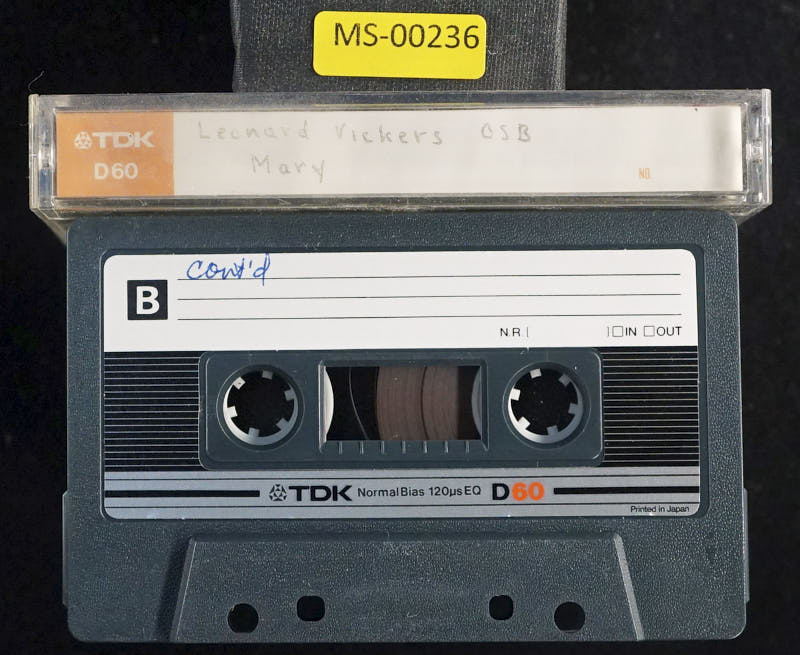

AI Vision - Possible Values from Photos:
Speaker: Leonard Vickers, OSB
Possible Title: VI Retreat
Additional text: Mary, Community Retreat
@AI-Vision_v002
Well, I feel that I could begin this morning by saying that no retreat, and especially in a Benedictine house, would be complete without some specific reference to Mary, the mother of God. I say this not for sentimental reasons But at the Benedictine level alone, I have realized over the years, both at Dowie and nearly every community that I have visited, the deep devotion that Benedictines have had, and have, and have had down the ages to Our Blessed Lady. At the liturgical level, we remember her throughout our year.
[01:08]
We begin the year now, January the 1st, with the Solemnity of Mary, the Mother of God. In February, not now considered a specific feast of hers, as we've changed the emphasis somewhat, but on February the 2nd, the presentation of our Lord in the temple and the role that Mary plays in that. In March, the Annunciation. And sadly, no main feast in April. Perhaps the liturgist should do something about that. But in May, the visitation. And normally in June, the Saturday after the second Sunday of Pentecost, the Immaculate Heart of Mary. Again, one of those feasts that were changed in the revision.
[02:14]
July, Our Lady of Mount Carmel. August, the Assumption. And also on the 22nd, Our Lady, Mother and Queen, In September, her birthday, as well as on the 15th, Our Lady of Sorrows. Perhaps a liturgical link could be made there between her birth and the sorrows, the suffering that she would have to endure. October, Our Lady of the Rosary, and in November, her own presentation by her own parents. And then finally, in December, the great feast of the Immaculate Conception, which plays such an important role in the liturgical life and the dedication of this country.
[03:18]
And we know too that despite these main feasts of hers that the church has we are able to remember her on any ferial Saturday, those Saturdays throughout the year that have been set aside, which we can have the memorial mass to our Blessed Lady. So just on that level alone, there are liturgically many, many times in the year when we are reminded of different aspects of the life of our Blessed Lady and the role that she plays in the church's liturgical life. And then again, there have been numerous sermons preached. There have been numerous books written. Musicians have composed hymns and canticles.
[04:25]
And all these in honor of Mary, the mother of God. And in fact, we cannot really talk about Mary, I feel, without expressing our thankfulness for the church's devotion to her. That devotion, as I say, that has gone on down the ages. And this devotion, although perhaps it took time to gather momentum, yet how immeasurably rich we are by it. When you look at the period of the Reformation, it's interesting to note how the absence of Mary in the Reformed Church is almost painful to behold.
[05:42]
For us, she has got that wonderful, intimate title of Our Lady. For the Protestants, for many of them still, she's just that rather cold title, the Virgin. Now, I do feel that there are many ways that we can approach Mary. One of the first prayers that most... Catholic mothers teach their children is the Hail Mary, a prayer that I think we gradually discover is so meaningful. There is a simplicity about it, and yet the mother's desire to teach it is almost something that comes spontaneously and naturally.
[06:52]
to her mother. And it is interesting, too, the role that Mary has played in the life of the church and also the opposition that she engenders in those who find it hard to accept her role in the church. Her title, for instance, of the Immaculate Conception, seems to cause a great deal of opposition. And I think that it is perhaps a subtle realization of the pro-abortionists in our age that a recognition of this title undermines so many of their arguments.
[07:55]
Again, was the fact that Innocent XII in 1695 imposed the Feast of the Immaculate Conception on the whole church a response to the degradation that Mary's title had suffered throughout the Reformation. And it's good to realize that this, in fact, was 159 years before the dogmatic formula was proclaimed by Pius IX in 1854. And that dogmatic formula in itself that the most blessed Virgin Mary in the first instant of her conception by a singular grace and privilege granted by almighty God in view of the merits of Jesus Christ, the savior of the human race, was preserved free from all stain
[09:18]
of original sin there it was proclaimed the dogma now the church had to accept it there was no more argument but it is interesting as you look back over the history of that particular dogma of that particular question of the exciting time that theologians had down the ages over it. As I was saying to Gabriel yesterday, trying to recall a patristic Jesuit that, a well-known one, I can't remember his name, so he can't be that well-known, but in fact he is well-known in England. He teaches at Heathrop and at Oxford. And Abbot Gregory invited him to give us a retreat, a patristic retreat, one of our annual retreats at Dowie.
[10:26]
But what he reminded us of during that retreat, which was, as I say, totally taken up with patristic spirituality, that although many of the early fathers of the church... completely disagreed with each other and were quite cruel in their writing, in their condemnation of each other, the underlying unity that was always there was the desire to bring the love of God and the knowledge of God to their hearers. Now, I say that because, in fact, the question of the immaculate conception, not only through the early fathers, but especially in the medieval controversy, caused great disputes and great arguments.
[11:29]
Pius IX, when he drew up the dogma, also turned to sacred scripture in combination with what the early fathers of the church had said and what tradition had taught dating back to the fourth century. And as I say, although some of the opinions were controverted, we have such great names as Ephraim, Ambrose, Augustine, Maximus of Turin. In this pastoral letter that the Archbishop of Boston wrote in 1971, he refers to St. Ambrose. Among the early fathers, St.
[12:34]
Ambrose was the first to express another dimension of Mary's intimate relationship with Christ. When he spoke of her as... Maria typus ecclesiae, Mary, the model of the church. And the church is not a place but a happening. It is an event by which union in Christ is constantly taking place among men. Now, if Mary is the model of the church, then there is we have, going right back to St. Ambrose's time, this aspect that by our union with Christ through Mary, we can draw closer to him. It's interesting that our own particular patron of St.
[13:37]
Anselm's sat on the fence on the wrong side on this question of the immaculate conception. When put to the vote, he voted against it. And yet, the honor and respect which he had for Mary, giving her that beautiful title of just lady, even forgetting that putting away side the hour she was the lady, is beautiful in itself. But for us, As Benedictines, I think that we can take great pride on the influence of the great liturgist, Don Garanger. It was an essay, in fact, that he published on the subject that made Pius X state that he thought it was the best article that he had ever read on the subject.
[14:38]
of the Immaculate Conception. What, then, we might ask ourselves this morning is the strong call to devotion to Mary, the Mother of God. Why has this devotion always been so strong? Surely, It is that all men and women, young and old, poor and rich, find Mary so easy to relate to. There is a strong yearning in us for the love of a mother and Mary can so wonderfully fulfil that role. She who was so uncomplicated, whose life was so simple and yet profound, has an appeal I feel for all to follow.
[15:49]
Her ideal has persisted and been interpreted in each age and culture according to its mentality. In medieval times, she was regarded as one who had compassion. At the Reformation, it was one who showed sincerity. And in the 19th and 20th centuries, numerous religious founders pointed to Mary as the model of apostolic activity. But I was delighted to hear yesterday of Father Martin when he gave me some little article about Basil Hume ought to be defrocked because of his attitude to Fatima, and sometime in that discussion pointing out that the title now for Mary seems to be Queen of Peace for this age in which we are living in, a title that I know that
[17:06]
you have adopted here as a community. And I must say that in the few days that I have spent here with you, I have certainly felt within this community a deep respect and sense the honor of which you yourselves treat Mary in your lives. I mean, most Benedictines at the end of Compline do go to the statue or the triptych or whatever it might be in the Church of Mary and sing the Salve. But how moving it is here as you descend from the upper church down to the lower church of the crypt and stand around that very beautiful statue. There are many ways in which we can look at our Blessed Lady.
[18:10]
And it must be remembered that although she was close to our Lord in one way, by being honored as the Mother of God and giving birth to the Son of God, She was not spared the agony of the faith. Our Lord, even when here on earth, distanced himself at times from her. Staying behind in the temple is one that we all know, and what consternation comes through in that gospel story for Mary and Joseph when they lose him. And we know that she had to give way to his work as Messiah. We learn, too, that she pondered these things in her heart, perhaps an encouragement especially to us as monks, that we, too, need to ponder the life of Christ and her role in that life.
[19:31]
Her life was full of a round of monotonous chores of any mother in the Holy Land of that day, simplicity but never monotonous. And often as monks, a great deal of our life is taken up with just monotonous chores. With regard to our relationship with her and her life, relationship with us, she is certainly one who will always be sympathetic if we turn to her in prayer. She will always be one who will be understanding to an eminent degree. Her role now, perhaps on earth, is queen of peace, but in heaven is queen of heaven. but she is still our mother.
[20:34]
Her holiness, which we know is so great, does not mean that she will be or ever will be horrified or disgusted at our lack of it. The impact that she can make on us can perhaps be likened to the impact that she made on Bernadette when she saw Our Blessed Lady at Lourdes. The beauty that transformed Bernadette, people speak about and spoke about at the time. Our Lady's virtue is not a negative thing. It comes out in the way that she is there to help us. It is not something of the past. It can be something very much of the present. And when we look at her life, we see that she very often had to wait to see how things developed, just like we have to wait to see how things develop for us.
[21:57]
Who is my mother? Those who do the will of my father. There I feel we have for us a way in which we can imitate our blessed lady. And to finish up, I would like to give what to me has become an aspect of devotion to our lady, which came about in a very strange way. Some years ago, I had given the first of some pre-nuptial instructions to a couple. A girl who was studying up at Oxford to a young man who was not a Catholic but who had studied law whose father was a governor in one of the African countries, or had been, with pots of money, but who had spent the previous 12 months to this engagement, what he said, bumming it around the world, just blowing money with no job or anything.
[23:21]
And I was very concerned in my first talk that this couple seemed completely incompatible. I couldn't see how they could possibly settle down and make a go of it with such a bad start. And perhaps for the first time in my prenuptial talks, and perhaps because I'd become a tribunal judge and saw some of the difficulties, I spoke very outrightly and then promptly went on holiday, so there was no comeback. When I got back, there was a message to say that this marriage had been postponed. That was all. And that the girl, who had a strange name called Pandora, that she would be in touch. And about a month later, she asked if she could see me. And she said that the wedding was off.
[24:25]
he realized that what I'd said on that first occasion was correct. And then she produced a package and she said, Father, I'd like to give you this as a present of gratitude. And when I opened it up, it was one of these icon pictures that she had painted as part of her art program up at Oxford she had done it out of her head but it was based on the typical icon Madonna pictures of the mother and child and I looked at it oh gosh and I thanked her but I didn't show her that when I thanked her I just thanked her gratefully and I took it back to Dowie and just left it in my room I didn't hang it and then I came across this article about icons.
[25:30]
And this is what I just want to read to you and then tell what happened to me. The profound beauty of an icon is gentle. It does not force its way. It does not intrude. It asks for patience with the uneasiness of early acquaintance. And I certainly had that with this one. It asks for time spent before it in stillness and gazing. And more important, it asks the one praying to allow himself to be gazed upon by it. One must yield space within himself to the icon in its persistent beauty. An icon is prayer and contemplation transformed into art.
[26:31]
When exquisite art combines with prayer to become a work of worship and wonder, the art becomes sacramental. It manifests to us the God who breaks through all signs and symbols with truth. The West treats the icon as an edifying picture. The East regards it as a redeeming mystery, a window through which to look into the world, transcending time and space, a work that is a continuation of the life of the Christian on earth. The icon inspires and instructs. It makes present the Holy One depicted there. It is a channel for divine grace to pass to the worshipper.
[27:38]
And then he gives a quotation. Yes, it ceased to wander. It stayed until the church was closed for good. People worshipped it and said their most heartfelt prayers to it. Well, they might, for it wasn't just holy, it was mercilessly beautiful too. There's never been such beauty. I was struck by Pasha's phrase, mercilessly beautiful. She had meant, no doubt, to refer to the merciful Virgin, but had got confused in her expressions. And yet I reflected, all beauty is power, an absolute, indestructible power, which either throws you at the feet or lifts you up to itself.
[28:51]
Beauty is that which we cannot resist, and therefore it is indeed merciless. And these words elaborate on this universal glance. While I looked on this pictured face, whether from the east or from the west or the south, It seems in like manner itself to look on me, and after the same fashion, according as I move my face, that face seemeth turned toward me. Each of you shall find that from whatsoever quarter he regardeth it, it looketh upon him as if it looked on none other. And as he knoweth from the icon to be fixed and unmoved, he will marvel at the motion of its immovable gaze.
[30:03]
Thy being, Lord, letteth not go of my being. I exist in that measure in which thou art with me, and since thy look is thy being, I am, because thou dost look at me, and if thou didst turn thy glance from me, I should cease to be. Now, when I had read this, I put up that icon picture, and I realized that in the East, the icons very often are in the dark, with just the lamp in front of it. And honestly, the first occasion that I did that in my room, I almost went into ecstasy because that picture, which I thought was so horrible artistically, came alive.
[31:07]
I was amazed. And in fact, it means so much to me that in this particular monastery, there seems to have been or still is a great sort of interest. in iconography. And I wonder if we are aware of just how powerful that can be to our spiritual lives. May Mary bless this community and may the peace that she has as Queen of Peace be ours and also part of our world today. Hail Mary, full of grace. The Lord is with thee. Blessed art thou among women, and blessed is the fruit of thy womb, Jesus. Holy Mary, Mother of God, pray for our sinners now at the hour of our death. Amen. And as this is the last of official conference or talk that we have, I would like to thank you very much for allowing me to be with you.
[32:22]
to join in your monastic life. The contrast is amazingly different from St. Anselm's or from Dowie, but I am very taken by it and find it very uplifting. I did at one time in my life actually want to become a Cistercian just before I made my solemn profession, but my brother who wasn't a priest then was still at seminary was furious and disgusted he said I couldn't they didn't wash and they slept in their habits and that was the end of it but we know how wrong that is although having read Merton's book I sometimes wonder how right he was
[33:24]
but certainly in England I didn't gather that, but it was the country and farming aspect of the Cistercian life that was making its appeal to me then. And then, that was my brother speaking, when I thought that he had had his final word, I asked my confessor and spiritual director, who was a very down-to-earth person, and he literally rolled around in the confessional laughing and told me that I wouldn't last a week so that was the end of my Cistercian life I carried on at Dowie but it's nice to sense it and be with you for a week I've last almost a week here haven't I I must admit, as a young novice, and I don't know what you feel, but when any retreat father said, well, now we mustn't let an occasion like this pass without saying something about Our Blessed Lady, I used to say to him, oh, gosh, I've heard it all.
[34:45]
I mean, what's he going to say that's new? Do any of you feel that? We seem to have such a devotion to her, and she's so much part of her life, you know. What new thing can he say? I often used to very unchartedly think that. We've not had many talks on very lately. I can remember in years. Well, maybe the assumption is that we know it all. We have what we call our conception. The permission was given on the 11th of October, which then was a feast. Yes. We always commemorate it. Yeah. But that's been one of the things that, you know, kind of, it is important. I mean, it's one of the subliminal things. Yeah. Drawing from it.
[35:47]
Yeah. The chapel was dedicated on the assumption in the office. Actually, the original blessing was the day after. We had to check what's consecrated now, and that was done on the 15th. So those two things have, you know, for us and that's all. I'd say that statue of us is really lovely. It's its own attraction. It's always, and that was Father Damacy, the idea that they are beginning very early. in the darkness and then upstairs the transformation of light and glory. That movement between light and darkness. And again, I think in a very natural way or subtle way, just a very gentle way that kind of gets grounded or assimilated. But it is, there is always something
[36:50]
But at any rate, There is, in England, I don't know about America, quite a strong movement within the Anglican Church, Marian devotion that seems to be growing.
[37:55]
Yes, but this seems to be a stronger emphasis of getting a sort of more balance into it. I mean, I have met people, lay and priests, who sort of drive me away from her because every sentence is almost Marian and I can't take that so what I call the sugary sort of devotion I find very difficult to take but what I've always found in Benedictine spirituality is there's a simplicity and a sort of sensibleness about it as if it's sort of natural that she has this role it's not sort of pushed or overemphasized I mean Unless we're children, none of us rush around saying, here's mummy, here's mummy, here's mummy. We just, mummy is there and mother is there. She's part of the family, you know.
[38:59]
She's accepted. And I think that's what I find so wonderful about the Benedictines, spirituality and devotion to our Blessed Lady. I suspect it was before Burden as well. played, I think, a great, yes, great role. I think there's an article where Richard Bernard is the first Catholic charismatic. You mentioned the Marian devotion. I didn't know certain of it in my younger years. I went to a Catholic grade school, which I thought back now, went to a high school which was run by an order called the Marianist, where 19th century French order with great devotion to Mary.
[39:59]
By the time I was 18, I had mountains. And I haven't much thought about it, but if it's a role on the parallel here, I'm extremely good and balanced compared to some more cohesive manifestation. He should add that even though he had enough, he went on to Notre Dame. Questioning greater things, were they? Yes. I found that... An insight, again, it was on a pastoral level, which made me sort of look at Mary's sort of relationship with our Lord so much differently, and especially at the birth of our Lord, was that it took me maybe 10 years, I think, as a priest, to discover just...
[41:16]
what traumas many mothers go through before their child is born. And, you know, it's not something they talk about, certainly not to the priest, and I'd met a number of these mothers that, you know, were quite sort of close and talked about lots of things quite openly, but they never seemed to give an indication that they were worried. And then I was at a hospital where a mother who'd given birth to a child turned around and said how worried she'd been. And I mentioned it to the matron. She said, oh yes, they go through terrible. The thing that they look for most is the little tag that says normal on the baby's arm after it's born or on the cot. That's their great fear that it will be abnormal. And this is the thing that worries them. And I... sort of thinking about this and I thought to myself yes it's so wonderful when you see in hospital a newborn baby with its mother the sort of the mothering instincts despite the worry aspect that they've gone through seems to just overflow in a most endearing way and our blessed lady knowing you know having been told who she was giving birth to
[42:42]
What it must have been for her as a human mother to give birth to this baby. What was going on in her mind on that first Christmas night? And the perplexity of it all, knowing who he was and where she'd ended up. But just the link, the maternal instincts must have been great. Are we taping this? Are we ours? I won't. Oh, I will tell you that. A doctor who was a great friend of mine who got married at the age of 40 phoned me up once a day and said that his wife had just given birth to their first child. And I happened to be actually setting off for Reading, which is 10 miles away. I was going to the dentist or something, so I went straight to the hospital. And I saw the mother and everything, and she was delighted.
[43:48]
And Elizabeth, Caroline was a child. She was the first baby. It was the first one they'd had, you see. And then the husband came in looking terribly red-faced, you see. And he said, oh, it's you to me like this, you see. And I looked at him and said, yeah. I was coming in, so I came. He said, well, when I got here, I went to the matron and said, can I go and see my wife? She said, oh, no. Can I go and see Elizabeth Hawkin? That's what he said to her. She said, oh, no. The father's in there with her. So we've had many a laugh about that. Yes, okay.
[45:01]
You can scrap that off the tape.
[45:28]
@Transcribed_UNK
@Text_v005
@Score_93.95