You are currently logged-out. You can log-in or create an account to save favorites and more. more info
Imitating Christ Through Communal Living
AI Suggested Keywords:
The talk delves deeply into the themes of monastic renunciation, human needs, and communal living, using examples from early Christian monastic life, particularly focusing on Pachomius' teachings and experiences. The discussion highlights obedience balanced with charity, as illustrated by thoughts on providing for the sick even when fasting is observed by others. Renunciation is linked not to mere asceticism but to imitating Christ's suffering. Additionally, there's an examination of Pachomius' role in nurturing community, emphasizing mutual support and spiritual growth, reflecting a holistic approach to Christian communal living.
Referenced Works & Teachings:
-
Jerome's Translation of Hulu and Tacoma Nadine Documents (2004): Discussed to illustrate compassionate care for sick brothers, highlighting a balance between asceticism and charity.
-
The Parami Parinam: Story referenced to explore the dynamics of communal meals and the implications of fasting, revealing the tension between individual needs and community rules.
-
Boa Ebrek (Goa-Everglide), paragraph 48: Demonstrates flexible application of communal rules for the benefit of individual members, underscoring the importance of discernment and compassion.
-
Life of Pachomius: Used throughout to illustrate Pachomius' leadership and innovations in monastic community organization, characterized by collective living and mutual service.
-
Acts of the Apostles: Referenced to draw parallels between the early Christian community in Jerusalem and Pachomius’ monastic vision, emphasizing mutual support as an expression of Christian community.
-
Athanasius' Writings: Mentioned for calling Pachomian monks the "sons of the Church," reflecting integration and harmony with the broader Christian church.
This summary highlights the intricate balance between ascetic practices and charity, and the development of a community life that aspires to emulate the life of the early church, fostering both spiritual and physical support among its members.
AI Suggested Title: Imitating Christ Through Communal Living
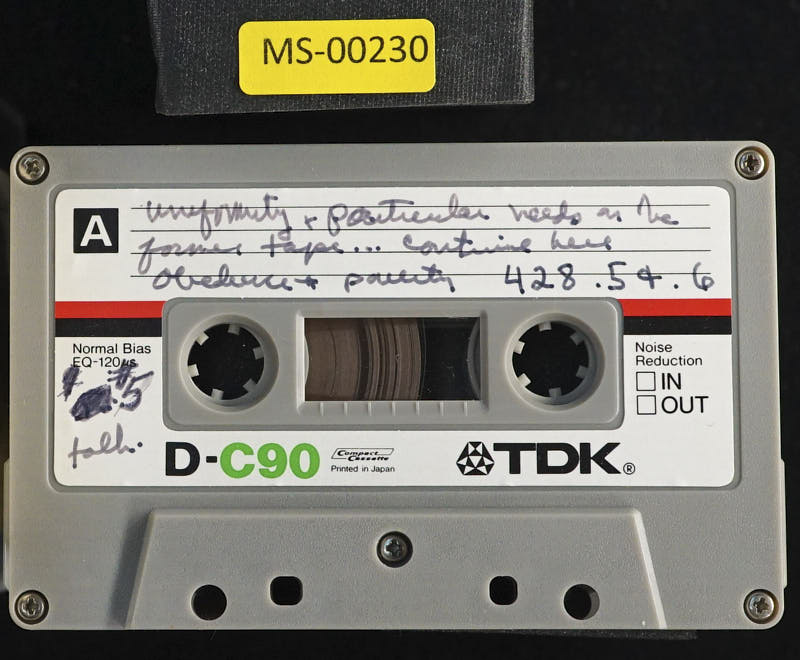


AI Vision - Possible Values from Photos:
Speaker: Fr. Armand Veilleux
Additional text: uniformity & particular needs in the \nfraternal spiritual motivation. \nObedience & growth.
Speaker: Fr. Armand Veilleux
Possible Title: Spirit of The Founder
Additional text: Development de Croissance.
Speaker: Fr. Armand Veilleux
Additional text: Spring, April 1981 visit\n\nTalk 5. Care of particular needs of brothers \nand spiritual motivation of renunciation.\n\nTalk 6. Pachomian Community.
@AI-Vision_v002
This morning I ended up mentioning the uniformity that was requested of the brothers, saying that along with that uniformity there was also a consideration of the needs of each one of the brothers, a special need that the individual may have. taken into account. Jerome, when he translated the rules by Romans, a few other documents that are gathered under the name of . A bunch of texts edited by Jerome in 404. Jerome in the book says that the sick brothers are careful with and great amounts of food, although all the other brothers had several precepts that were mentioned that tended a lot of attention to the sick people.
[01:18]
In one of the stories of the Paranipotena, we hear about a young brother who complained one day to Patomius. Because for two months, no cooked dish had been prepared in his monastery. The music is going through the monastery. And he comes to one of the monastery, on one person to have one cook dish every day. And in that monastery, for two months, he had not been in the name. And a young brother was there. He went to the kitchen to see what was going on. found one of the cooks flicking mats, eating mats. And they were wearing baskets. And he says, why are we not cooking? He says, well, the brothers in this monastery are so acidic that nobody is eating any of the cooked food that we picked up for them.
[02:23]
So everything is lost, spoiled, and spoiled. So many gannels, so many measures on it every day. And that is lost because nobody wants eating on it. You're very austere. You just eat a few beans of cream and so on. That's all. And since we saw it was useless to cook, we decided not to cook and not to remain idle. We read the basket. But all of us are very angry. And yes, I'm in basket thinking well. And then he said, if the brothers have put food in front of them and they decide not to eat, then they are agreeable to God and it will be a reward for them. But if they don't eat because there is nothing,
[03:24]
then there weren't that many people, there weren't that many mirrors. We may not be too keen on that theology, but what I would like to underline here is the fact that he listened to the complaint, because his complaint is founded. But probably the most beautiful text is the . When Fakumus is sick, it's a time of playing, I guess. Very often, they're addicted to playing. Every time, a lot of the ballers come down. When Fakumus is ready to return to the ballers, it's a really very civic play. And so, at that time, Bhagavad Gita was sick, and at the same time, there was another one sick, another house.
[04:26]
And that brother had been sick for many, many weeks, and he was almost to the point of dying. And he had asked the brothers, the inferno, to give him some meat. The father is a few. This was a . So he decided to tell them, bring me to Pacovius. And so he said, bring me to Pacovius, rather to go to Pacovius. And when Pacovius signed, he was moved with compassion. And he exclaimed, for you who are respecters of persons, Where now is the fear of God? You shall love your neighbor as yourself. What if you don't have that to say? That's the precept in the Gospel.
[05:27]
The precept not to give me, not to be me, that's a human to say, the human custom that we have adopted. But the divine precept, you shall love your neighbor as yourself. Do you not see that this world is like a cross? Why do you not give him what he asked for? The God knows that if you do not give him what he has mentioned, I will not eat or drink either. Is there no difference between a person and another? I'll let all things pure to the pure. So, if we don't eat meat normally, then we have some pure and pure. But everything is pure, only pure. And saying this, there is something different. This is the version in the Greek line. It's a bit bitter on me. It says, why did you not take good care of him before he made this recourse? You shall have realized before he made the recourse that he needed that type of food.
[06:32]
And why did you argue with him after he made it? But you will say, we neglected these recourse because this sort of food is not customary among us. It's not about the end of the book of Jesus. Are there no difference among sick people? Are not all things true to you? And if you were unable to discern by your own judgment that this was good, why did you not tell me? Here we have also some teaching about obedience. Obedience is not the blind application of the rule. You have the rule. But then you have to apply it to a case. And in this case, it should have been clear for you that the rule did not apply. that there was a superior race of charity because you had really needed, so you should have given them. And you should have been wise enough to know that by yourself. But if you were unable to discern by your own judgment, at least you should have come to me, and I would have told you.
[07:34]
Because I'm saying this, he will. Peers are always enough. This is a long sense of tears. When they heard these things, they took lesson to buy the other people and give it to the sick brother to eat. And then Pachomius ate. Pachomius ate the vegetables like any other brother's business were giving things. Well, I think this is a nice example of Pachomius' care for the sick people and the demonstration that Although he insisted very much on uniformity and unity, he was also able to take into account the particular needs of individuals. Now, about the spiritual motivations of this type of thesis, pronunciation in general.
[08:36]
I mentioned in the first data Monosic life is a human phenomenon. But what is in particular is the motivation to Christians, which only leads into the Christian motivation. For Christian monks, renunciation, the akotahit, can be understood only as one of the two goals of the middle of reality, the other goal of which is the obedience to God and the submission to His Word. Renown us in order to give our son. The great example of submissiveness is evidently Christ himself, making himself obedient unto death and death upon the cross. And his example is given by the universe. And the ascetic courts of the mount are not, therefore, a form of athletic contest and still less some kind of masochism.
[09:41]
They are an invitation of the suffering of Christ, our crucifixion in the sufferings of Christ. The Bovairite line speaks of young Jacobus going into the deserts in order to pray. And, quote, if thrones happened to pierce his feet, he entered them without removing them, remembering the nails that pierced our Lord of Christ. Immediately, there is the illusion to being with the cross of Christ. the explanation, the motivation, why he does that, is immediately to us. This was, you see, we don't have long elaboration on the meaning of pronunciation, but by all those little allusions, the text was said by that one, by the way, as something very natural and very normal for them, we can discern. This was a lesson that Camus had received from Palamon, his father, who bore at all times in his flesh the cross of Christ.
[10:53]
The author, as you say, that Palamon had a strict assesit, he says, he bore at all times in his flesh the cross of Christ. There is also an anecdote about Palamon, who refused to eat oil even Easter Sunday. Easter Sunday, instead of... We didn't even prepare some special food for us. We put something a bit special, and we put a bit of oil into the salt. And when Palamon sold it, he didn't want to eat. Palamon had to get rid of that salt and bring the usual salt with ashes. Anyway, but his motivation is... My Lord was crucified for me. This is the verse. Yeah, that's the word of the Pascha, the memorial of the sovereigns of Christ. My Lord was crucified for me, and am I to eat that which will give strength to my pledge?
[11:54]
In terms of the motivation, whatever. The giving strength will pledge to the other God. Likewise, it is said of Pychagoras and his brother John that they practice together a great assesance, carrying the cross of Christ. The great assesance is to carry the cross of Christ. It's not to kill the body, soul, or spiritual, and treat from that jail, prison that the body is, or the new definition, spirituality, mentality. No, simply imitation of God. Fulfilling the word of the gospel, if anyone wants to come after me, let him deny himself. Take up this cross. Follow me, deny himself. Take up this cross and follow me. Trust will come. To the promotion of God.
[12:55]
Of a brother who did not observe the line of the carnalia, eventually left permanently, I told you said that He had not given himself up, he had not given himself up totally to carry the cross. Since he did not carry the cross in Christ, he was unable to continue to live that land. So I think all these texts, all these texts show clearly the absolutely Christian character of the congregation. There is no trace whatsoever of neoplatilician dualism or of a negative attitude of powers of body. Renunciation is a participation in the cross of class, but it is also a means to arrive at the purity of heart that makes someone able to see God. And to see God is the aim that was reached among them.
[14:00]
When the other armed was there, still in his parents' home, he killed him. He said to himself at the close of a banquet, only on his family. People were waiting for him and watching his room. He said to himself, if you give yourself to those dishes and the wines, you will not see God's everlasting life. His desire is to seek God's everlasting life. And later on, he came, when he was in the monastery, he came to Sipacomut and asked him if he was going to Siga. So one day, less than six months after his entry among the brothers, he came to our Father Quacomius, shedding a few spears.
[15:08]
Our Father Quacomius said to him, Why are you weeping? He answered, I would like you, Father, to declare to me what I shall see. If not, what is the profit for me you have been brought into the womb? The only thing about him is to see why. He answered, But how fast? Our Father Pachomius said to him, do you wish to see him in this age or in the age of color? He answered, I wish to see him in the age that lasts for all eternity. Our Father Pachomius said to him, may praise the word for the truth the gospel speaks of, blessed are the pure in God, conditional sin. If you are the sin, you must practice the purity of heart, chapter 6. And if an impure thought enters your mind, so what is this impure thought? Be it hatred, wickedness, jealousy, envy, contact with your brother, or pure and bed-blowing, all those are impure thoughts.
[16:19]
But remember at once, and say, if I consent to any one of those things, I shall not seek out. So the purity of heart is the preservation of all the fruits of the spirit, and the practice of all the virtues. It is very constant, the purity of art, very, very ethereal, something practical, to practice all the virtues, the concrete daily life, and to avoid all the voices of people, to prevent the devil from sowing into your heart and in to prevent him from taking away from your heart, pending through the Spirit. The purity of heart is alive, contained below the Word of God. Simple as that. Another reason for practicing ascenses was to do penance for one's sinners. To get rid of sin more impurity than we have sinned in any of the virtue.
[17:27]
It is one of the ways in which we can dispose of our son to receive from God the gift of the Middaya, the transformation. And then it's also a way to stay awake and vigilant in front of the attacks of the devil. As for that special form of Assisus, poverty, its first aim is to live in a spirit liberally. and to manifest total confidence and trust in God. The one who tried to acquire a lot of things and to gather them into treasury is the one who has more confidence in God. He is counting on his own wisdom. But the one who has confidence in God does not need to accumulate things that used to come. To the brothers who were very upset one day because a boat loaded with flags for their throats had sunk.
[18:34]
They did not use a... ...sheep. They used flags. And the boat, it was loaded with all the flags they had And the brothers were very upset. And the other said, why are you upset? Did we not, for the sake of the name of our Lord Jesus Christ, joyfully abandon the property of our parents, which belong to us, when we are still in ignorance? Are we then going to be upset over those things which have been withdrawn from us now that we have received the knowledge of the Lord's truth? So when we were in ignorance, we knew about nothing of God. I know we're pagans. It's the beginning of our conversion. We had the courage to rely on liberty. But now we have received the knowledge of God.
[19:36]
We have lived the love of God. We have read the scripture. And we now to be absent. That's one of the things that we have abandoned years ago. Here, when he speaks about ignorance and knowledge I don't think we should see any kind of Gnostic. The Gnosis here in the British and the corresponding world in the country is a very common nuance in the Gnostic. It's everywhere to know God's salvation. What is characteristic of the Gnostic sects is that salvation is supposed to come through a kind of esoteric code, which is transmitted through initiation ritual. And only a few people know that, especially revealed truth. And when you know it, you are saved by the very kind that you know it.
[20:37]
But you are a Christian, orthodox Christian, to know is that allow the knowledge that has to pass in practice and the whole life that we transform. Finally, One of the most important aspects of poverty is the solidarity of the monks with their full suffering brothers in the world. The first encounter of battlements with Christianity was his encounter with the active charity of the Christians of Thebes, confronting him on his fellow constructs in the Jew. And so, as soon as he was released, he settled down in the village of Shenese, where he could serve on the service of God. going to the bones for them, and encouraging them in many ways. And before leaving that place to become the one, he took care of giving his place to another old man who was partying on the same surroundings, this preoccupation of serving. And so after he has found this one, he's to have the same preoccupation, and it began to preoccupation of the one to meet him.
[21:45]
The solidarity with the poor and the suffering was so deepened by the bones, that he wanted to experience it in his own flesh. One day it happened that the brothers went out for a service, and they informed our father Pacomius that the great famine and the contagious disease were raging in the world. For a good time, people would come back. It's only a trip. Pacomius was always asking them, how is the church there? How is the world? This happened. He's very concerned about the situation of the church. So he's informed that the great families and the contagious disease were raging in the world to a point where the earth was threatened with destruction. When he was informed of this, it was the second day he had gone without eating. And he went on not eating until the next day.
[22:50]
saying, neither shall I eat, while my fellow members will hungry, and find no bread to eat. So he continued, in fact, out of solidarity with his brothers who are suffering. But he wants to experience his own touch, that solidarity. It's easy if we are just to give some of our wealth to the poor. But that's what we're looking at. to share with them and to experience, you know, in summary. He said, I want to eat while my fellow members, fellow members of the same body of Christ. All the while, the famine lasted outside. He mourned and mortified himself the more by fasting and agonist prayers. Quote in the words of the Apostle, if one member suffers, all the members must suffer with him.
[23:56]
But we have many other examples where a church or a village is in a situation of need, will give your kingdom brothers, you will help them. But here, it shows that text because there is something more. He wants to suffer with them as long as this. And this is also a way to ask God to work together. Solidarity with the suffering Christ on the one hand, and solidarity with suffering in the fellow human beings is basically what gives all its meaning, its purpose, to become a citizen. We are about These bodily ascenses then recall many other aspects of it, chastity, manual labor, vigils, silence, simplicity in clothing, all dimensions and forms of dimensions.
[25:05]
But there, I think, there is a tradition of doctrine. I've always heard that the colonists were very moderate on the C6, but when we've written Popin on February, a couple of details stuck in my mind, it seemed rather extreme. For one of Palomine, when Palomine died, the doctor comes and says, it sounds as if the doctor said, the guy is starting himself with that, so I think we can do that. And when the The Roman general comes through hunting for black militias, I think. He says, I have seen true aesthetics where you met them between them. And they're constantly dying with flames and it sounds like it's not going to fully grin on all of them. Do you know much about their diet? Well, their diet is, they eat vegetables.
[26:08]
They call them vegetables. Vegetable vegetables. They don't eat meat. But meat was very, very, very expensive during that time. They would eat broth, kind of broth, in which there would be fish for sick people. There was no, there was no expense in giving the sick people to go to the food. But there was something sweet also, sweet bread. was given after the meal. It was a very, very austere balance, but my impression is that it was not much different from the life of the Catholicism. Which I... I don't know.
[27:12]
People have to go online. Plates. Plates. But for someone who is under marriage, will be more vulnerable. Plates. So they can explain it. Any country could explain it. the condition of the night, the night was carried on, I think. It wasn't just fine. It wasn't very melted. And the other one, it wasn't a lot better for the night. It's certainly a kind of rumor that we should not judge it with our heart on standpoint. It's because you go into India, South Africa, [...] South Africa.
[28:42]
Iran, through the run, and the... One of the questions from an important angle. Well, there was one story I'm going to tell about where the British criticised performance for having refused to accept many men with the Chernobyl, But we've accepted all those people now, we've got a lot of numbers, and we've got people to do all the work, and things are good fun. The companies are going to be full, we've accepted them out. We have a place we've fallen apart. That's the only thing that we'll identify with our hard work is to be very reluctant to accept people who are going to leave and try them. It seems that we reject a lot of people.
[29:43]
In that story, the old context is the context of people who are forgiven, who are cured. And the people who are broken from Alexandria. And the brothers, the old context also expressed in the fact that the brothers of Wilhelm didn't have the discernment because it has to discern you. And Bacomus was very, very strict in that form that somebody who was given to you in purity. I used to be a part of the context of some kind that you would not accept homosexuals only, too? Yeah. And also, the context of the industry, the discernment of Bacomus and the other brothers, who wrote . They want to stress the biograph. want to stress the climate. Pacarius is the one who wants to discern. He reads it through the soil.
[30:46]
And you see, Pacarius is very conversant with someone who is making templates, who reach conversion. But when someone doesn't want to really make the effort, on the Expo. We have only kids who are the Expo. And about those people, then the accent doesn't come on. But he says, it is very hard for those people to be saved in the country. You need someone who takes care of them. And he said, you see how busy I am with our brothers, and they can't do it. So you find a Rosman. where a whole-year-old man will take care of that money, will become their father and will follow them and bring them to foundation and salvation. Where we have the brothers and go after, which is not the same, okay, but they are in Sylvanus.
[31:52]
Sylvanus was a young boy who came to us and he had been in the theater, playing in the theater before he came. And when he came, he told us to be serious. And we lost a group of water. And then they stopped making jokes again, and we all had a position. And then Fikovine just stopped there. And then Sylvain, so I don't know, I don't know, my supplication, but if the captain, he will cause a very much more vision and so on. And Fikovine went to see all my everything. You see, this one cannot be saved alone. I cannot take care of myself. I am too busy with all the ministries, all the brothers. I provide them to you, to make sure that we will be saved.
[32:55]
And the same one is beautiful in the works. We are in the region. We learn to be alone in all the others. So there is this Some people who have more difficulty with this fight or that virtue, practice of that virtue, need more help. And if the community cannot give them help, they need to make sure that the particular help we need will be given. See, from the rule, We see that when the numbers came, they were the poppers. Poppers for a long time. Men, they were, for example, they were really, willing to abandon the crime. Abandon the position, benefit from the hidden.
[34:02]
Except that case, it's even a full number. It was a big one. [...] We made a statement. We made a statement. [...] What did you say with your article? Well, there was a kind of parenthesis on the date there for the algorithms where tears are reassigned with emotion. There are a few paragraphs in the life of this question about tears. I've never been too interested in it, so I studied it too deeply. But the gift of tears
[35:04]
We see that when Theodore comes to ask Pachamius whenever he will be saved, he will see God. Pachamius asked him, why are you weeping? For he had often been astonished at seeing his propensity to tears in him, although he was so new. So for Pachamius, tears are a sign of someone who has reached a high degree of perfection. And because of that, he is more aware of his sins, his sinfulness, and more aware of the mercy of God. And that should bring him to tears. And if someone has a propensity to tears, the beginning of his life, of his malasic life, is a sign that is more than normal. I don't think there are many mentions of tears that will allow us to make a practice.
[36:13]
But they are considered as the expression, the normal expression of someone who has become conscious both of his sinfulness and of God's mercy. Because if he is conscious of his sinfulness but not of God's mercy, he will despair. It is also of God's mercy. There is another example. A month wanted to be a mountain. It was in a time when there was no longer persecution in the church. He went to see Bacomius and he wanted Bacomius to pray that he would become a man. Bacomius didn't have a prayer. So he bothered Bacomius so much, Bacomius says, okay, I will pray, but never again.
[37:19]
And so one day the man was sent to bring food to other brothers who were walking in the field. And some barbarians. were passing by on the sun and he was carrying food on the back of the donkey. So they took his donkey and the pool down. They brought him in the camp of the other barbarians. He started making joke with him. And then for the time of eating, so they asked him to have a poor vibration, their gout. And he did not run. They take their sword. If you don't go alive, I should go. God will kill you. When alive, I should go. And then they all got drunk and they go, they should get away. And then he was completely discouraged. He came to back home. Well, he said to himself, when someone has made a sin, that's a beautiful dimension.
[38:24]
When someone has made a sin, he has become alien to God. He has made himself. alien to God. And he is in a very bad position because he can receive the people, conversion of God, metanoia, only from God. But since he has made intellect with them to God, he cannot pray to God himself. He does not dare to pray to God. So he needs someone that will pray to God for him. And he needs also to be told by someone that there is metanoia, there is a place of conversion for you. There is a place where you can make a conversion. And so it comes to Pacomius. And he says, if Pacomius tells me that there is a possibility of conversion for me, they will be. And he just says that they will not be. So he comes to Pacomius. Pacomius says, you are foolish. You are the crown, the crown of the holiness in your hands.
[39:29]
to be among the dissenting people. And of course, to avoid a few minutes of suffering, you are abandoned on trial, and you are betrayed God. But there is a basic conversion. And then there is a beautiful text. He says to Patronus, I am very grateful to you, because thanks to you, I will. So the role of the father, the father of the father, is to give life. Christ said that, I came, that we may have no life. So the role of the spiritual father is the same thing. Give life. Give life. But there is also the community dimension of payment.
[40:39]
When someone has made the same, because we need someone to pray for him and to get for him the grace of Metanoia, so it may be a stage for the Father, but it may be also the community. And the reason why, every day, at the synaxis, we need the Father Brothers in the monastery, there was a place for acquisition. And the whole idea is not to fulfill oneself. But it's simply to tell the brothers, I've made some serious sin. I need your help. I need you to pray for me so that God will give one. And then the brothers will pray with him. And they will do penance with him. In other words, that God will give. So you cannot... when you sin, you sin not only against yourself, against God, but you sin against the community. And in order to come back, for coming on with God, you need the help of the community.
[41:47]
For there is place or solution or anything, but there is a sin. But there is no place for someone who is unkind of conversion. Someone who is not disposed of conversion. And one day when my commutes have refused someone, and brother was complaining the same, and said that we refused them because they were not disposed of conversion. That's where they were in church. I don't know what's up. It wasn't the danger of contamination. Oh, so? Actually. Maybe we are... I think it's getting a lot of fun.
[42:55]
rediscovering the real spirit of the founders of the communities, I suppose, by returning to the spirit of the founders. I think that we tend to think of the founders of any community, they are the founders of Hanan citizens. I think they had, at some point in their lives, a very clear vision of what they were going to do. And from that time on, All their efforts consisted in trying to practice their vision that they had at some point in their life. In reality, they all had to go through uncharted roads and to find God's will day after day, often through painful walking. Their life did not follow a clear blueprint, but was a continuous search. And this is true of all of them. This is true of , and we see this is true of Anthony and Benedict.
[43:59]
Last year, we stand low here, more celebrate Benedict. And at times, we forget that whole life Benedict was a search, growing and growing. And what we do is the expression of In the last period of his search, he lost him. He left Rome for affiliate, affiliate to Subihaco, Subihaco to Vicovarova, Subihaco. That was, Vicovarova was a big failure on those 12 monasteries. Subihaco has a problem with Chris Romano's. So we go to the casino, begins converting the barbarians who were there, destroying the temple, which is according to St.
[45:03]
Figueroa, building his church. And then we see the sending power to conquer the people surrounding villages. And it's always a form of a spot, always evolving. We can announce one period of the evolution. seems to us the best one, the last one. But we don't have this following the will of God day after day and never knowing what will be developed by the next day. The same thing for Anthony. Athanasius is very strong in stressing the fact that his whole life is a continuous growth, step by step, always. Each step is referring to a next step and always going deeper into the solitude, always. So attracting most disciples and becoming one of the spiritual fathers. And even at the time when he was for solitude, leaving his solitude, to go to Alexandria to assist the volunteers and so on.
[46:14]
So they are always searching. So let's analyze a little bit the search. platform is for community. How we will speak this morning about the government community. But how we arrive at the type of community that we see expressed in this life, in its world. I mentioned no total steps. I don't know. I'm just a rapid servant. But I wanted to express that rather than idealizing too easily one or the other of the steps for which our followers I don't know. It's important to understand the causes of growth, through which they were growing. And I think this is called from who, why the leaders of the kingdom of God, and also the parables that tries to extend to us what is the kingdom of God, are parables of growth. It's a scene, it's called the ground, growth.
[47:16]
So let us hope for the being the dog, and making it permanent. So, and growth at some of its period, its seasons, we have to respect the wisdom, the rhythm growth in ourselves, and being taught us. So, my community was born as a pagan, discovered Christianity at the age of 20, a lot of the community of Christians who practice the commandment of law for their neighbors. And this marked his understanding of Christian life, that we see as a mutual service. Then when he left Jerusalem, the army was released. By the way, the community was in the Armenian region.
[48:20]
he reads at most. So it's very funny when we read, you know, some text also, the history of Pakomya. So he doesn't have the military character, because Pakomya is always a soldier. He was a construct for a few years at most. I don't think that's into his understanding. I don't know they're coming to life very much. So as soon as he is released, He went and settled down in a small village of Aborigin called Shinesen, where he was born. He became a catechumen and received his formation within the communion. On the night he was baptized via the dream, a beautiful dream. And the source speaks at the time of visions, but usually it speaks of dreams. Often in translation, they translate both words as a vision. But a dream is something, a dream is when you get in touch with something which is deep within you, and God is speaking, speaking to you, through you, around your own human trait, your own sight, your self-touch, or so on.
[49:45]
So he has a dream. the dew of heaven descended on its head, then condensed in its right hand, and turned it toward Omicron. And while he was considering it, it dropped onto the earth, and spread out over the face of all the earth. So that's a vision. It's easy to interpret. It was interpret to him literally. This is during the night of his battles, and after Kriya, in the past. So the dew from heaven is obviously the symbol of the water. And the whole name is a symbol of the Eucharist that you see here in the Seminole. Why? It is clear when we know, when we remember, that in the rite of Christian initiation in Egypt, the newly baptized received, the time of the Eucharist received
[50:49]
with the bread and the wine, the mixture of honey and milk. So the Holy Room is quite clearly the symbol of the Eucharist. So all this is the symbol of what he has received during that, the grace of becoming a Christian, the grace of being integrated into the church, the Christian community. And that grace comes into his head, onto his head, into his hands, and from his hands, full on the ground, and coverage of the face of the earth. That means that what will be explained to you, the grace he has received to know Christ through the Christians and the theme we are good to hear, and through his baptism, that grace you will have to give it to other people. It will be the channel through which the grace will be communicated to others. Understand this by going just for it will happen with you in a short time. And the meaning will be explained later on.
[51:50]
He has to translate to other people's categories. And he will go on later on. He's always searching on the will of God, to know the will of God. No God of all sin. He knows the will of God is to serve my man. But how to serve my man? And then it will be rebuilt gradually. It will be to receive everything, to make a Christian and to live that Christian life of service with him. and then how to organize that Christian community and how it will become a monastery. That's what Lord is a monastery. And that would just go out of this search. But even before being baptized, during its time there was a cathedral, my community would serve all those who live near him and those who passed by his furniture. And people came to settle by him because he was good to them. He was a poor community builder. Every time he settled somewhere, people came to live around him, simply because he was good to them.
[52:52]
The text says in the line, he was encouraging toward anyone who came to him, and his renown went out to many people who came to live in that village because of him. And after living in that village and serving the people of the place during three years, he wanted to become a man. And he put himself under a direct candle. Hanuman, spent seven years with him, before settling down alone at some distance in a deserted village called Abenizu, not a deserted village. Then his brother, John, came and heard about him, came to live with him. And then he told him, of course, to the community of two. But the same phenomenon happened again. One by one, people from the surrounding villages came to him. They don't come to be monks. It started in a very simple way. Thesans who hear about that wonderful man.
[53:53]
They built for themselves ruins in the place where he had a farm. And they gather there to live the anchoritic one, solitary one. Together they constitute a small group of men. It's a group of men. the monastic community, etc. Then, Francoise formed with them a mitigated type of community. When he saw the brothers gathering around him, he established for them the following rule. Each should be self-supporting and manage his own affairs. But they will provide their share for all their material beings, either for food or to provide hospitality to the strangers who came to them, for they called it together They brought their share of doing Indian history. So this was a mitigated form of community. It's not the perfect expression of the idea of the community of Jerusalem.
[54:57]
I read the text the other day, explaining he did that because he saw they weren't ready to do it, or they produced the idea of the acts of the tribe. the believers who chose on them, they were one heart and one soul, and everything to go on was fed in heaven, but one of them said that anything he crosses was his own. So during many years, he put himself entirely on his yokes, but did not succeed by this means to make a real community of them. So one day he tried to make a real community of them, and he said, now we have another house. One night I called you to, when I they make the sound for the athletes, they would all come together. And when they call you for a meal, they would all come to eat together at the same time. And then when I give the sound for work, we would all go to work together. So you have the three elements, the psychologist, the gut, or the biographer, considered as the main element of the community life, praying together, eating together, and the meals are something they need to do.
[56:04]
could express in one breath the liturgical prayer, or Thomas prayer, and meals. And then it worked. Come and talk. Come and pray. And then they did that happen. They used one by one when they called for the office, and then they go with it. And they said, what does he have to do with my husband? He did it somewhere. And so, He spent his life praying and decided to explode. His first attempt, he took the latch of the door and ran after that. They all ran away. And he went to the bishop to complain. And the bishop said, well, you are sturdy, guys. You are strong. If Thakon Yusolem was able to chase you like that, And in the Boaeric life, the Greek life, this is not mentioned, or is mentioned just by the way, very real, but we have a full description of this only here.
[57:32]
I remember here, in the sight, we were very old, very old sighting fragment. So, they did not feel because of shame. Then other disciples started coming. But he has learned from that experience. And when other disciples came, he did not only serve them. His idea was to serve people. But then they realize that they should set up the type of organization in which they will be at the service of one another. The whole system of houses, as I mentioned the other day, is built around the dispensation of various services to the community. Then it will develop very rapidly. For a long time, The group of monks, brothers who found that community with him, are in close contact with the other people who have come to the village, the new population of the village.
[58:46]
And for the liturgical celebration, for a long time, they will go to the church in the village. He has built the church of the village for the people, or rebuilds it, And the monks and the villagers go to celebrate the Eucharist together on Saturday and Sunday. We practice in Egypt Saturday evening on Sunday morning, twice a week. It was very surprising to have a celebration so close to an hour. And in other countries it was Friday evening, Sunday in Egypt, Palestine on Saturday evening on Sunday evening on Monday. But then, when the monks reached the figure of one hundred, Pachemius built a church in the monastery itself. But then it was not yet radical separation from the people of the village, because we got more priests in the monastery.
[59:55]
Pachemius was a team and made monks become more priests. And so the the priests from the village worked on with the villagers to celebrate in the monastery on Saturday and then went to the village church to celebrate with the villagers on Saturday. But there was still the community between the monastery community and the surrounding community of Christians. Then These cycles continue to come when it's really become too small for the number of people, but Fakumya's decided to perform a second of the Baal. And that would become relevant with motherhoods of the Holy Convocation. And this is the beginning, part of the culture of an important development of Fakumya's community.
[60:58]
What do you do? This is here. And so, Taten Nisi, Taten Nisi is, Taten Nisi is here, to let it be the first, somewhere here, to be the first monster of Taten Nisi. And when they talk about Taten Nisi here, it's about the title of our world. So, my community will continue to be the superior, to supervise, to be the female series. And then later on, in the place where he became a Christian, there was a community there.
[62:15]
We did not hear about it before. But a community that means a man like Palermo, who had a great number of disciples around him. And he asked the community where you can and transform, and integrate, ultimately, into your ,, to bring the way of life into . So that becomes the . It's a bit . But it's a walking distance, very less than one hour. And later on, they will take another group of . And then you'll come here to New South. That would be the fourth minister. So all in working this time, that's a few hours. Maybe four, five hours, four years from here. That would be the first group of the students. And it's taken, there was a period before the second group.
[63:21]
And then this is misleading because the delta is not sure. Later on, it would come here to the towns of Shmin, the towns of Shmin, or lateral position of . And there it would come another here near Shmini. This is about 50 or 60 miles from here. So it's a completely different region. And later on, there would be a man called Petronius. Remember that name? He would become the successor of Petronius. Petronius has a community here. He's a man who found the community of the land of Israel. And he asked Petronius to integrate his community into the Poignania. And one of those people they was found, of course, the bishops.
[64:24]
And later on, they were found another from the day in Shmill, for the group 4th of the day here. And when he found the one here, he will take Tritonius here, who's a man of experience, very young in the congregation, and he will appoint him at the Shmillet here, with the responsibility of the monasteries of the area. So, my community has kept the responsibility of those monasteries here. I'll go later on. actually with one superhero of each case. Here, there is a superhero of each case, but Patronius has a kind of supervision of . So, I think that shows how the community is able to dedicate responsibility and realize he has a lot of experience. A man of discernment, when they say Patronius, that the superiors of other monsters will come spontaneously to him, When they have to discern the case, they cannot discern.
[65:29]
If the question came, they are not sure or they should accept it, they go with them to see discernment. See the importance of discernment of vocation. And he's a man of discernment, so he can be probably superior. Later on, he will be his successor. Probably this explains a bit of the tension. But all the people, all the people here were in the same diocese, in the same diocese. But here it was slightly different. And the growth was, the community grew rapidly, but not so rapidly as it grew more afterwards. And then when it reached a large number, it would get time to build the picture to be there, and then the other would prevail.
[66:29]
So the group who entered that time were called the Enchants. The Enchants, the Enchants. And they always had a kind of special note. And I think there was so much tension between the Enchants and this new wave, this new note. But they were living according to the same way of life. And one of the superior of the bishop asked my community to become a part of the community. What they want is the way of life, he understands. And there were a lot of groups of parents living around this very short time, forming the community. But what is particular to my community is they all live within the same prison. in the same building, the same group of buildings. They do everything together. They eat together. They all live everything together.
[67:32]
You know, maybe living individually like the Arabian group. They create together every day. And they have someone who is superior of the group and is supervising all of the aspects of the group. He's the center of the group. And this wants to be, I repeat, the life of the early church of Jerusalem. So Jacobius, later on, set up his headquarter at Cobalt. And so soon he brings their fellow to be his assistant. And both of them visit the brothers all the time. and to bring the word of God, the catechesis, the information of the scripture, and then to conquer each one of the problems.
[68:38]
Each local community was divided into houses with the house of master and his second, with the catechesis, the instruction of the scripture given So all the monks of the ,, who were about . And they all gathered together twice a year, two . at Easter for the celebration of the Passover and baptism. And another time at the end of the year, the end of the Coptic year, the last day of the month of May, which was going to August. And it was the time for administration, administrative business.
[69:41]
All the bookkeepers or procurators will bring It was a very, very good job of keeping all of them to their account, how many months they have made during the year, and everything they have made, or sold, or both. And there was the appointment. Appointments of all the superiors of the monster. At that meeting, and the other one at both meetings. And there was also at that meeting, at least at some period, a type of general celebration of penance, forgiveness of all the offenses. Everyone, all the monks, attended each other to ask for pardon, to forgive each other, having made in the convocation, the general celebration of conciliation.
[70:46]
Why did the disciples come to that type of community? Some sociological and historical studies would be necessary in order to determine all the reasons that may have caused such a rapid growth and such a large development of the Macombian Foundation. And not all of the reasons, probably many, many reasons, but not all of them are It's actually spiritual, the fact that it's extremely cool, and it's exactions, and then the Celtic peasants were starting off maybe one reason. Your community life had been put around themselves together. For the moment, let us see what our sources tell us about the motivations of those who came to be mine.
[71:50]
We already saw that the first disciples gathered among Bacomus in Genesis and in Genesis came because of his personal renown. And mostly because he was good to them. And because he is good. It is certain that the personality of Pachomius still continued later on to attract many of the vocations among the best. But people did not come only to put themselves on their Pachomius' personal direction. They came to profit from the form of community that he had founded without grace. And even when they came for Pachomius himself, they immediately found that only Pachomius could be found with the import. And this was, for example, the experience of theater, who came because of all the wonderful things he had heard about the communists. But he was immediately encircled by the communists in the community of Guadalaj, in the midst of whom he was involved in road.
[72:54]
He was a young man, and he left suddenly to join a group of, a group of lost students. another type of community who always have a community called Semienkawa. And one month from this family day, when he was traveling, spent the night at Pythominus community. And he heard the Pythominus talking, giving the key pieces, the instruction to Semienkawa. So when he came back in the evening, he gave a report on the script. And he told his community the wonderful things he had heard about the community. The other one was taught by that, and he wanted to know about the spiritual man, an Islamic disciple. Later on, one man from the Paco-Mian community, from the Paco-Mian community, went to that one yesterday. And when the other knew that that man came from the Paco-Mian community, he wanted to follow him.
[74:01]
He wanted to renew Paco-Mian's growth to a battle. And so when they arrived north, Alphabekash announced him to our father, Pycomius. At once, Theodore embraced him, kissed him on his feet, and planted a kiss with Oswald's cover on the door of the monastery. So this Pycomius, he read, also, the monastery. Then he turned his face away, and he went. Later on, Pycomius introduced him into the monastery, near the community. When he was in, He saw that the brothers were walking in uprightness, and he imitated their good works and their virtues. He came because he heard about Pacomius. But Pacomius is introducing within the community. And then he sees the brothers walking in uprightness, and he imitates their good, and he can crawl. But the community is a place where we help each other to grow, by example,
[75:06]
practicing with good works and virtues together in a certain time. Same thing happened to the other piano, the Alexandrian. When he was living in the church of Alexandrian, he made this prayer to the Lord. Lord, show me a man living a life that agrees with your holy will. Then I will go to him, so as to know you well by means of that servant of yours, who is living and with the clerics. what they call a monastery, a clerical monastery in the Exambria, under Athanasius. And he wants Bethlehem, and he prays the Lord to show him a man, a guardian. And then some monks from the Femenes' time, during their annual trip to India, and they speak about the pain in Lua. While he was speaking and praying in his heart about this, he heard some monks sending the praises of the Cardenians, which, out of his love for men, God had founded through our father Pacomius.
[76:10]
It's God, that's what he opened here, through Pacomius. And he hears about the currency. And when he comes to Papa, Pacomius assigns him to a house where there is a nation who understands the Greek language and can come for it. He made fine progress and advanced in all good works and according to the rules of the brothers. So there is the example of the brothers. There is also a rule of life, which is complex, which is set up in such a way that it will help people to grow in spiritual life. Paikovius never wrote a rule in the sense of the rule of St. Benedict, for example, a spiritual book put together the basic spiritual principle of the life. He considered that the scripture was written. But from the scripture, he took a certain number of precepts to organize the concrete material of the communion.
[77:21]
After whom, that rule was transmitted to each new foundation of each monastery admitted into the koinonia. The number 29 of the projecta, per section of Tavu, stays at the questioner who comes to the Westerners. When someone comes to the Lord of the Mastery, wishing to renounce the world and to be added to the number of the brothers. Yeah, I quote, it's the other day. But I quote it again to show that, what someone comes to the Lord of the Mastery, wishing to renounce the world and to be added to the number of the brothers. Yeah, I quote, it's the other day. But I quote it again to show that, what someone comes to the Lord of the Mastery, is in order to be a member of the Lord. He may have been attracted by the charism of Pakundi, who is they were fathered by the community. But he comes to live with brothers, to be added to the number of normalities. It is implied, therefore, that someone of the community could be a member of the community. The Monastery as a Church. Macombian monks, including a biographer who wrote the life of Macombians, were not tailored.
[78:28]
So they did not elaborate any theory about the community as a church. The revealing of their understanding of community is the fact that, speaking of it, they use a great number of images that the New Testament apply to the church. In the last way, the chosen people of God, is the flock of the good shepherd, the adults vineyard, and so on. The community is called the shepherd servant of the great shepherd. He's a small shepherd, a great shepherd with flags. Here are a few examples. The Lord has ordered us to love our enemies, to bless those who curse us, and to do good to those who persecute us. What venture are we in, then, if we hate one another, and if we wait our co-members, members of the team,
[79:31]
The ones with us, sons of God, branches of the Torah, sheep of the spirituals of God, gathered by the truth of God. This is in the catechism of the spiteful moment. It's a thousand hands, but a thousand of them are two for his best and who will not. And we shall all acknowledge because we are four members of the sin of God, the Christ. We are one with us. We are one with us. We are all sons of God, branches of the true God, shaped the spiritual flock, gathered by the true shepherd. So all those are biblical images of the people of Israel, the new people of Israel, the church. Orsi Jesus says, the monastic communities are indeed the house of God, in our image of the house of God, the vineyards of the saints. And the author of the Bovarying Life considers Bacomus as the governor to whom that binary has been passed away now.
[80:39]
And of course, monastic life is considered as the taphwassalic life. That is, a life according to the model of the apostles. There is only the idea that the apostles have found out of monastic life. But in some way it was unwell, because what we try to live is one table. But this text here is from an instruction by Theola. It is by a favor from God that the Holy Cognonia appeared upon her, by which he may know the life of the apostles, to men who desire to follow their model before the law of all of her. So, Cornelia is a gift from God, is given to those, and it has made known the life of the Apostles to those who desire to follow their mother. Indeed, the Apostles left everything, and with all their heart followed Christ.
[81:50]
They stood steadfast with Him in His trials, and shared with Him in the death of the cross. after which they deserve to be seated on the twelfth thrones of glory and prejudiced with the twelfth tribe of Israel. This is the example of which I have told. And Kandania wants to be done. We give thanks to God, stating that prayer. We give thanks to God, the Father of our Lord Jesus Christ, for particularly us to forget our sorrows and our distress in the fragrance of obedience and with the firmness of a firm faith in the law of the holy and true Kandania. That Galinia has, as its author, after the Apostles, after Pachonius, the man who has God-given promises we are ready to be near if only we observe his commandments. So Pachonius has founded the Galinia. It's a gift from God. It's the lifestyle of the Apostles.
[82:53]
And Pachonius has received promises. inherit those promises of salvation if we observe these commandments. So, you have already here in Pyrdha, or in Pyrrhaeus, they mention that, well, the commandments, or the rules, or the precepts that Hakoblis has given us, they are given from God, and we have to be faithful to them in order to inherit the Christmas. The summaries of the Acts of the Apostles, describing the life of the primitive church in Jerusalem, have been the inspiration for all the folk coming from the church who are the same figures. The Communism makes no exception. The following text from R.C. Agius from his testament is a beautiful example. The apostle, says R.C. Agius, the apostle told us that our community
[83:53]
The communion by which we are joined to one another. Our community, our community, the communion by which we are joined to another, springs from God. And he said, do not forget good works and communion. So the bound of communion is not simply something affected. But good works that we do together and communion. For God takes treasure in such sacrifices. Sacrifices that we have to offer to God, you know, is our communion in your voice. We read the same thing in the Acts of the Apostles. For the multitude of believers had one heart and soul, and no one called anything his own. They held everything in common. This is capital importance for us to have everything in common. And it seems that at this time, amongst were really becoming to be unfaithful to start using.
[85:02]
If all the communities and within the community want to do little things for their personal use, our teachers is always reacting against them, calling them to repentance, conversion, to go back to the perfect community. and to all, everything in God. And the apostles gave witness to the resurrection of the Lord Jesus Christ with power. And let us, who live together in the colonia, and who are united to one another in mutual charity, apply ourselves so that just as we deserve fellowship with the Holy Fathers in this life, we may also be their companions in their life to come. So if we live the life of the apostles, the same way applied, we We are fellowship with them. So let us live that life in such a way that we will deserve fellowship also in the life of the canon. And there is the conception that the balance of the koinonia that we have established here on earth will continue in heaven.
[86:14]
And there are a few texts that are very interesting. One is saying that All the monks that died before Pachomius were given to St. Paul and St. Paul kept them in order to give them to Pachomius when he arrived in heaven, for example. Pachomius is coming today. So those who died before, they were kept as a community by St. Paul who was waiting for Pachomius. And Pachomius is often compared to Paul. Because Paul says that he's a father for those he has engendered in Christ. Pachomius has engendered in Christ many months of his father called Pachomius. Paul was a father to Christians because it's in other churches. This is the meaning of a spiritual father. To be a spiritual father is not to engender sons who
[87:19]
to ourselves, which is to bring Christ to birth and to engineer people in Christ. And there's another thing that says that Theodore, I think, is a calling monk to be program. And he says, let us live in such a way that our father, Macomius in heaven, can be there. to be proud of us and to say to the other sons, look at my sons. I heard how good they are. It is not surprising, therefore, that Athanasius calls the Frechenden monks the sons of the church. When the Frechenden monks are coming, she will where Athanasius means visiting with a lot of bishops.
[88:22]
And when Athanasius sees them coming, he says to the other bishops, look, the sons of the church are coming. As you can see, there is no tension between the local church, local bishops, and the community. they consider Atomitius as their father. And we see many examples of the church. Just before the time of Picoglius, there would be a very, before his death, before the death of Picoglius, there would be a strange event. There would be a council, a synod, where Picoglius would be called, like bishops, to explain himself. And he arrived. This has not been integrated into the Boa recline, just a small mention into the recline.
[89:25]
And it is described at land in the Arabicode. It seems that the question was question of Pactonius' discernment of his clairvoyance. There was renowned restaurants to see through the heart, to see in the heart. And some bishops were upset about them, to see this human being who was playing that. This is a very bright component. But there was tension in the bishop at that time. Now, there is also another instance at one of the foundations in the area of the Schmin, the third foundation, a group of people. came on destroying the world during the night months, we were building them during the day, and we were destroying them during the night. There was some tension.
[90:25]
But as a whole, with the hierarchy, the understanding was perfect. I would like to speak also of the kind of spiritual.
[90:42]
@Transcribed_UNK
@Text_v005
@Score_70.31