You are currently logged-out. You can log-in or create an account to save favorites and more. more info
Origen's Allegorical Exegesis Unveiled
AI Suggested Keywords:
The talk discusses the theological contributions of Origen, a 3rd-century Church Father from Alexandria, emphasizing his role in the development of biblical exegesis and his influence on Christian thought. Origen is presented as a pivotal figure in interpreting Scripture through allegorical and mystical frameworks, seeking a deeper understanding of Christian faith and the embodiment of divine wisdom in Scripture. The talk explores Origen's biographical background, major works such as "On First Principles," his commentary on the Gospel of John, and various homilies, illustrating his innovative approach to biblical interpretation and his influence on theological traditions.
Referenced Works and Their Relevance:
-
"On First Principles" by Origen: A foundational theological treatise exploring Christian doctrines and scriptural interpretation, emphasizing the allegorical reading of Scripture.
-
Commentary on the Gospel of John by Origen: A significant work analyzing the theological depth of John's Gospel, highlighting Origen's focus on divine knowledge and mystical insights.
-
Eusebius's Church History: Provides a detailed biographical account of Origen, underscoring his contributions to Christian theology and his role in the early Church.
-
Hexapla by Origen: A critical edition of the Bible presenting various translations, demonstrating Origen's scholarly approach to understanding Scripture.
-
Homilies on Leviticus and Numbers by Origen: Demonstrate his method of spiritual interpretation of Old Testament texts, asserting that all Scripture contains a deeper meaning relevant to Christian faith.
-
"Exhortation to Martyrdom" by Origen: Reflects on Christian suffering and martyrdom, aligning with Origen's broader theme of living in alignment with divine truth.
-
Against Celsus by Origen: A defense of Christianity in response to the criticisms of Celsus, showing Origen's engagement with pagan philosophy and his apologetic methodology.
These works collectively illustrate Origen's influence on the development of Christian exegesis and theology, offering insights into how early Church Fathers approached understanding and interpreting the Christian doctrine through biblical texts.
AI Suggested Title: Origen's Allegorical Exegesis Unveiled
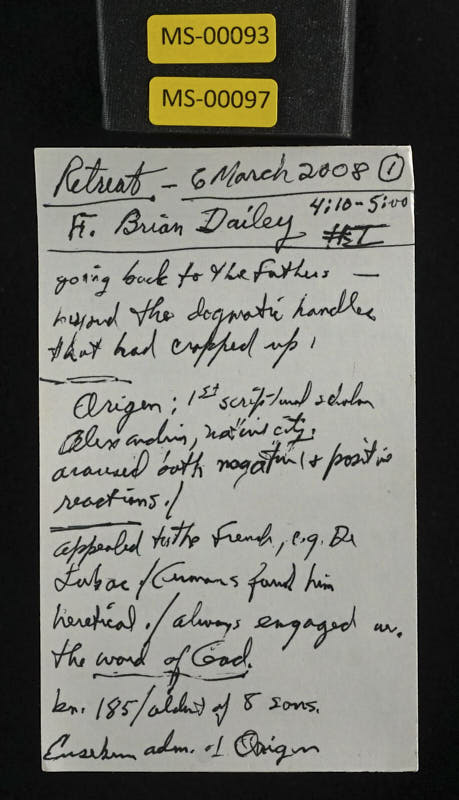
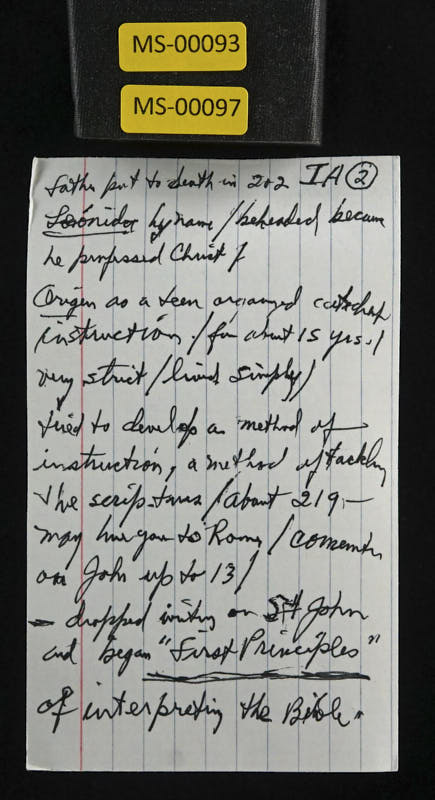
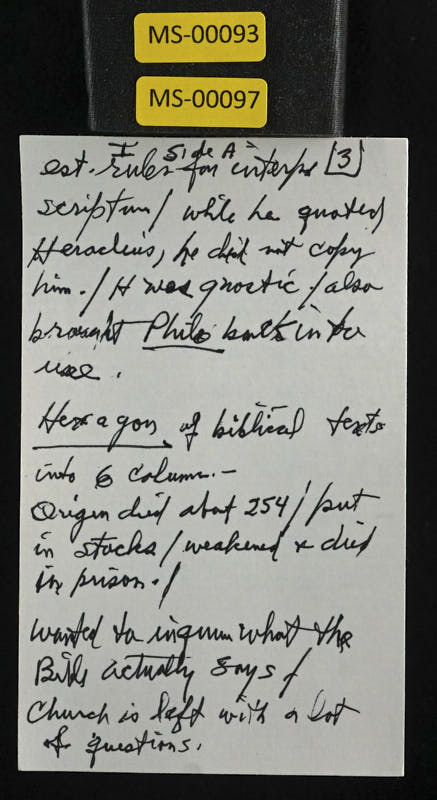
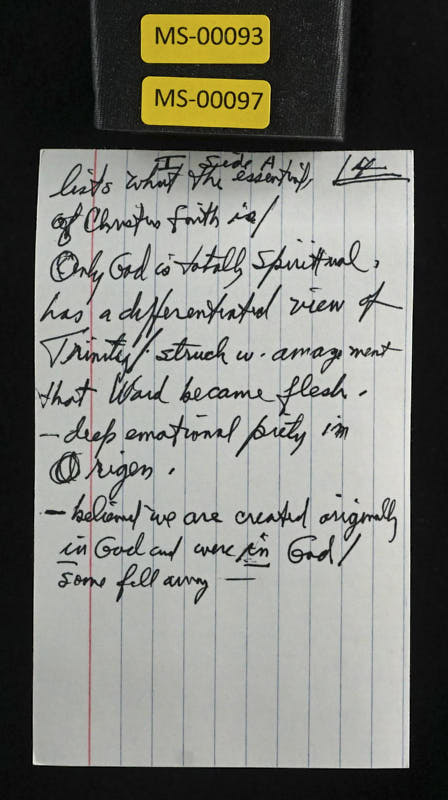

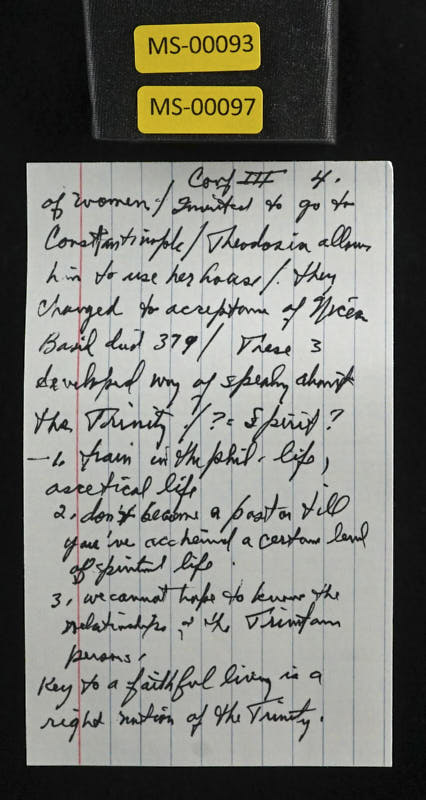
AI Vision - Possible Values from Photos:
Speaker: Fr. Brian Dailey
Additional text: Retreat 6 March 2008 \nFr. Brian Dailey\n4:10 - 5:00\n
Speaker: Fr. Brian Dailey
Additional text: Conf. III\nFr. Brian Dailey\n 10:05 A.M.\n
@AI-Vision_v002
Two talks from this date
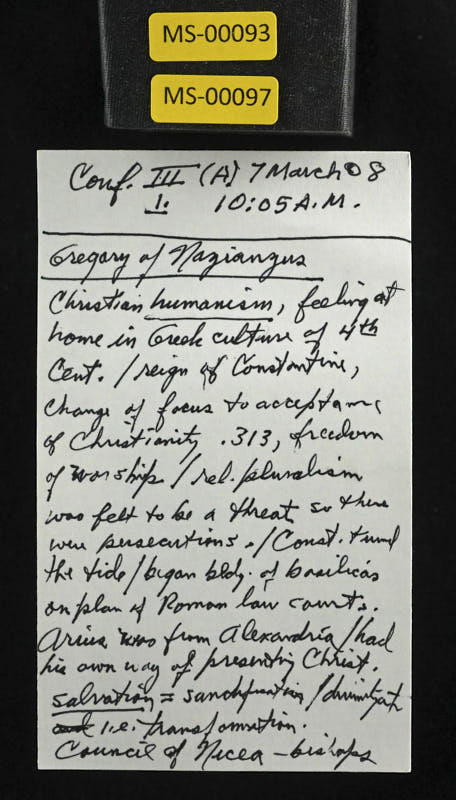
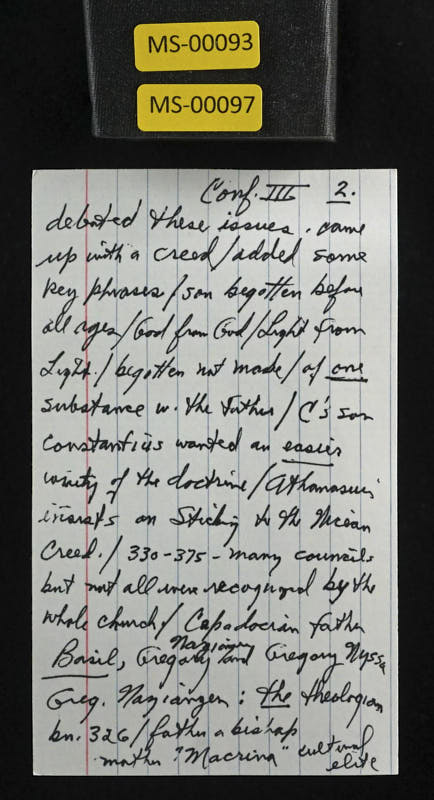
Are we? We're wired. Okay. But I'm really delighted to be able to at least share some reflections with you about some of the church fathers. The problem always is to figure out whom to talk about and where to begin and what to say, because there's so much that you could do. But we thought that it might be good to follow at least one particular thread. among the many that you could follow in thinking about the early church, and that's to think about the kind of Greek fathers in the intellectual and cultural tradition of Origen. So I wanted to say a little bit today about Origen himself in the 3rd century, and then tomorrow about St. Gregory of Nazianzus, who was in the 4th century a great admirer of Origen, and then on Saturday something about St. Gregory of Nyssa, his friend, and colleague in the late fourth century who was also, although in different ways, an originist.
[01:01]
Just to think about them as people who lead us more deeply into the mystery of Christ and therefore I think who are really appropriate to our keeping Lent and preparing for Easter. The poet Eliot says really an old phrase, in my end is my beginning and in my beginning is my end. And I think a lot of The theological tradition of the church operates on that principle, that somehow we need to go back to our beginnings to discover where we're headed. And when we get there, we find that, in a sense, the fulfillment of our journey is coming back to where we started, coming back to the original plan of our lives and to the original gift that God has given us. That's something I think that we see in all kinds of different ways over and over in the history of the church. that our early assumptions, our early aspirations and hopes, the questions we ask at the beginning of a journey and so on, can really set the agenda and point us in a certain direction so that as we go along we keep discovering more fully what we were beginning with and the meaning of our journey in the first place.
[02:19]
A lot of the... times of renewal in the church have been times when Christians have kind of felt the need to go back to the sources. Think at the time of the Reformation, for instance. Luther and Calvin emphasizing, again, the importance of going back to reading the Bible and reading it straight without too much doctrinal overlay, and also going back to the fathers. And then the Counter-Reformation, the Council of Trent, the great theologians of the 16th century who were disputing with Luther and Calvin, also began to study early Christianity and really provided us with an understanding of the texts and the controversies of the early church in ways that we hadn't had before that. And I think, too, also of Vatican II. I mean, a lot of the... movement of the Second Vatican Council really began in the 20s and 30s with the rediscovery in various places in Europe of early Christian liturgy, as in your own origins at Mount Rialoch, for instance, in Damodo Castle, or of the theology of the Church Fathers.
[03:22]
It was some of the great Dominicans and Jesuits and others, people like Congar and Chenu and de Lubac in the 30s who began reading the Fathers very intensely again. reading their biblical exegesis, reading their theological treatises, and in going back there, beyond the dogmatic handbooks and the seminary textbooks, discovering, in a sense, where some of the central themes of Christian theology have come from. I think we always need to keep doing this, and that's why I think in the divine office you always have patristic readings. We need not only to find the scriptures, which are embodying God's word to us, in human words, but also to increase our knowledge of the world and the church even though he does bring these other traditions that think with two degrees of scripture, I think as a parent, if you look at all of that, it's argued that the theology of the gospel is always in the days of the specific word, the thought.
[10:11]
You see a scripture that's a body of writing that really is necessary. So I think what one finds at them is, whether one likes him or doesn't, is a person who lives from the nourishment of Scripture and sees in the Bible more than simply a set of ancient texts. He's there a word of life, and a word that wants to draw us into the lives of the life of the Lord. Origin, it comes from Alexandria, and that's important. Ancient Alexandria was a great culture. It was kind of the busy place of the Eastern Mediterranean, right at the mouth of the Nile, as it comes out at the Mediterranean. It had been founded in the time of Alexander the Greek, a couple hundred years before Christ. And it was a great cultural and scientific thing. It was a place, in a sense, where people could go and study all the riches of the Greek intellectual tradition.
[11:18]
observatory there, the big zoo, the kangaroos, medical lectures, and also literary studies and philosophical studies. It was probably in Alexandria that the whole system of Greek accents did, the way of kind of marking up, giving people the right pronunciation to read the text. And the Alexandrian literary critics were the ones who kind of put the text of Homer, it seems, into written form and who kind of canonized it and prose it. It had a strong Jewish community, and so there was a lot of Jewish exegesis going on there, too. There's probably in Alexandria that the Greek translation of the Hebrew scripture is made, but recall the Septuagint there. And it's certainly in the Greek-speaking Jewish population there that a lot of the connections were made between the Old Testament and the life of the culture world. But Arjun is born in Alexandria probably around the year 185. He was born in a Christian family.
[12:21]
His father was apparently a very devout and committed Christian, as was his mother. And he was the oldest of eight sons, from what we know, and was brought up with this tremendous reverence for the text of the Bible, which presented Christ to the community and led the community into an engagement with the Savior. We have a lot of information about Origen's life, in fact, in the earliest church history that we possess, Eusebius of Caesarea's church history. Eusebius has practically a whole book of his church history just on the life of Origen, because Eusebius was the successor of Origen as being the head of a school of theology in Caesarea in Palestine. Eusebius is a great admirer of Origen, so we get a more positive view of him from Eusebius' comments there. But Eusebius tells us that his father was amazed when he was a teenager, even a little boy, at his precociousness and used to just wonder how the Holy Spirit had been given to such a young child.
[13:32]
He always had questions about Scripture and about Christian faith and Leonidas, his father, used to be kind of amazed at his question. Eusebius says he would come in at night and look at the child sleeping in his bed and just kiss him as a temple of the Holy Spirit, as one in whom God had obviously taken up a dwelling place at that early age. His father was put to death in the persecution of 202. It was one of the outbreaks of persecution, which were not that common, but which happened every now and then, came in the year 202 under the emperor Septimius Severus. And Leonidas, his father, was apparently arrested and was brought before a judge, confessed that he was a Christian, and was beheaded. And this really left a tremendous mark on Origen and on his family for the rest of his life, understandably so. First of all, he was the oldest son, and he had a supportive mother and his brother.
[14:34]
But secondly, I think it made him always live with a sense of the danger of being a Christian. A lot of his writings talked about martyrs about the fact that professing Christ and living from the scriptures means living the Pope, but also being ready to bear with him in a way that might fall. But he has a word from the T30, an extra case, which is really written to encourage this, like, electric and upgraded. It's really not a very important word, but it's not. But I didn't have to live in this sense of being ready to lay down his life. Eusebius tells us that after his father died, the first way he started to support his family was
[15:46]
by teaching classical literature to other kids in Alexandria. There were no formal universities or high schools at that time, but a teacher would sort of set up shop and would charge a little bit, and people would send their sons to be trained in the various skills that you needed. The most basic skill was that of speaking accurately and correctly and persuasively, and so the grammarian, the interpreter of literature, was the first educator that most people had. And Origen began by training people in the Greek language. But soon, it seems when he was still a teenager, maybe at the age of 19 or so, he was invited by the bishop to organize the catechetical instruction for adults in the Church of Alexandria. There may have been a few other people doing the same thing. I don't think we want to imagine a big formal school, but rather that he was somebody supported by the Church of Alexandria to train those who were preparing for baptism.
[16:54]
So for the next 15 years or so, Origen seems to have done this as his main way of making a living was paid by the bishop to do that. We hear that he also began to live a very austere life. Being ready for martyrdom meant living without a lot of comforts. had some books, which are very expensive, and apparently he sold them, according to Eusebius. He had a patron for a while, a wealthy woman whose family were Christian, and she was willing to subsidize his studies. But then he found out that her son, named Paul, was not entirely orthodox, in his view. We don't know exactly why. So Origen refused to pray with Paul, and in fact then withdrew from this woman's support. He didn't want to compromise his own fate. But he seemed to have had a fairly strict attitude to things in his early days. Eusebius also tells us that he was very ascetical. He slept on the floor, didn't wear shoes, and lived very simply.
[17:57]
And he tells us, too, that Origen, taking it very literally, Jesus is saying in the Gospel that if your hand or your foot cause you problems, that you should cut it off. and throw it away because it's better to go into eternal life without a hand or a foot than to be thrown into the fires of Gehenna." Well Origen took this apparently seriously and literally and had himself castrated because he was going through the usual sexual distractions of late adolescence. Now this has been questioned by a lot of modern scholars. It seems so unlike Origen. I mean his later approach to the scriptures is anything but literal and he really criticizes people who take the scriptures overly literally. So this doesn't seem like the kind of thing he would have done at least when he was fully grown. But at least it was one of those rumors that was circulated about him. The bishop is supposed to have kind of thrown up his hands but said, well, young people make mistakes. So he didn't take this too tragically at that point. But Origen at least did have the reputation of being an austere and somewhat ascetical person.
[19:05]
And in that guise, began giving Christian instruction to the people of the town. As his life went on, he got more and more focused on interpreting scripture. As somebody who was well-trained in classical studies, as someone whose whole life had been centered around the faith of the church, he really seems to have seen more and more that it was his obligation to develop methods of interpreting the Bible and to communicate these to people. And so eventually, apparently, he decided that the job of running the general Christian instruction program was too burdensome and he divided the task. He got a younger colleague to come in and take over the basic RCIA program, if you want, the basic instruction of catechumens. And he himself focused more and more on training people how to read scripture and how to preach scripture, how to... interpret this body of writings that was becoming more and more fixed.
[20:09]
We don't know if they had an actual formal canon, a list of Christian scriptures, Old Testament and New, but certainly there is one for all practical purposes in Origenstein. He operates with more or less the same vision of what the scripture is that we do. And it seems to have been A concern of his to try to find ways of getting into this and seeing it as a whole, interpreting the books of the Old Testament by the figure of Jesus and so on. In the 230s, or excuse me, in the 220s, Origen began giving lectures on the scriptures and probably wrote his first commentaries in the 220s. We don't have any texts of them, but... We do have records by St. Jerome and other people that he had commentaries on the Psalms that he began in the middle of the 220s. Also, sometime around then, maybe about 219, he's said to have gone to Rome on a long visit. That, again, is disputed by some people, but he seems to have traveled around a bit, and going to Rome would be one of the things that a young Alexandria scholar might well want to do.
[21:19]
When he was there, he would have met people in the Church of Rome, maybe even had conversations with the philosopher Plotinus, who was lecturing in Rome by that time. And in the late 220s, he begins what was to be his first big work, that enormous work, which is his commentary on the Gospel of John. And I wanted to look at some of this later on today, the beginning of that commentary. It's a wonderful passage, but it gives us a sense of how Origen went about commenting on the Scriptures. He wrote... an enormous commentary on John. I think Eusebius tells us that he completed something like 34 books of a commentary on John, and he only got to chapter 13. At that point he decided that it was getting a little bit too long, so he says at the end of chapter 13 that he's going to, or book 13, rather, on chapter 13 of John that he'll complete the rest of it in heaven. So he decided he wasn't going to be able to do the Last Supper discourse.
[22:20]
But it's a commentary that goes into tremendous detail, and what we have of it, which is about a third of it, is tremendously rich, I think, and interesting, and gives us a glimpse of how he goes about looking at the text of Scripture. In about 229, when he had written five books of his commentary on John, he interrupted it and wrote what... is quite a unique work, and in some ways his most famous work, called On First Principles. And I'm going to talk about that in a minute, because it's very revealing of how Origen proceeds and what he does. One of the questions is, what is the book On First Principles really about? This is a copy of an English translation of it, and it's fairly long. It's four books in Latin and Greek. It's originally written in Greek. Most of the Greek is gone, but we have some of it. We have an early Latin translation from the time of Jerome. And this book on first principles is an odd thing to the English modern reader.
[23:27]
He has a preface in it, and then he starts going through the basic faith of the church. He's following what we would think of as an early creed, the rule of faith, a kind of outline of what Christians believe, what you give to somebody who is in the catechetical program. This begins with the being of God as Father, Son, and Spirit, with the incarnation, with the creation of the world, of spirits, of angels, of human souls, of the creation of the physical world, the fall, Christian hope, the hope for the resurrection of the dead and for salvation, and the end of things. And he goes through that scheme. once in the first book and a half on first principles. And then he goes back to the beginning and does it again at a little greater length, which is puzzling. And then book four is about how to interpret the scriptures.
[24:30]
And it ends with a famous passage about spiritual senses, which has left a big impression on later theology, on St. Bernard, of course, and on modern theologians as well. to build a kind of tradition, a scriptural interpretation.
[29:25]
And even 100, 150 years later, his school and his library at Caesarea were the place for his tradition, his style of thought, really was carried on. It's thought also that one of the things he did when he went to Caesarea was to bring copies of the works of Philo, the Jewish scripture scholar, with it. Philo also was a rather sort of scripture scholar who lived around the time of Jesus. And it's thought that the works we have of Philo, we have quite a few of them, about 50 of them I recall, come through the origin library at Caesarea, through origins preserving these. Because the Jews by this time had lost interest in Philo and most other Christian writers seem not to have been very interested either. At Caesarea the bishop apparently asked him to preach on the whole Bible as a kind of a project. And so we have, then, from the periods of 232 to 235, a lot of homilies on different books of Scripture.
[30:26]
And apparently, Origen went through the whole Bible. We don't have all of his homilies by any means. We have Latin translations of most of what we do have, some of them in the original Greek, on Genesis, Exodus, Joshua, Judges, other books of the Old Testament, and then on Matthew, on Luke. and some of the other New Testament writings. And apparently he would do this in the church. He would go to the church and give homilies every day in the morning, commenting on another chapter or two of the particular Bible book that he was commenting on. And these are quite different. These are not learned, detailed commentaries, but they're homilies. They're meant to draw regular Christians, members of the parish, into the life of the Bible. And so some of them are very moving. very much based on his own piety. He also, in Caesarea, wrote his work on prayer, which is one of his more famous things, his treatise on prayer that raises a lot of the theoretical questions Christians have had about prayer, prayer of petition, especially ever since then.
[31:36]
He wrote his exhortation to martyrdom there. And also, later on in 245, his big his apologetic work against Celsus. Celsus was a Platonist philosopher and Origen takes his criticism of the Christians and goes through it chapter by chapter and piece by piece and in a sense defends Christian faith against Celsus. Another thing he did there and which was kind of a wonder of the ancient world was put together what's known as the Hexaplau. And this was a kind of edition of the Bible that brought together the different languages in which the Bible had been written. And there were six columns in this, apparently, across a double page. On the left would be the Hebrew text, because Origen had learned Hebrew from a Jewish rabbi in Alexandria, and apparently it was good enough to at least dope out the text. And then he has a transliteration of the Hebrew into Greek, so that even if you didn't read Hebrew letters, you could hear what it sounded like.
[32:40]
And that was very important to him. Saying the words as they would have been said in Hebrew would give you a kind of resonance with divine names, a divine title. And then we had four different Greek translations of the Hebrew text, the Septuagint and then three of the kind of corrected texts that were available in his day, Theodadion and Simichus, which were Christian translations, and then Akvela, which was a Jewish translation. What he would do then, if he was... commenting on the biblical passage would be to have this in front of him. And so he'd be able to use the different Greek texts, but also look at what the Hebrew text would have been and notice some of the different variations of the way a Hebrew text was translated. And that gives you, I think, a feel of his whole approach to things. He wasn't simply preaching on what he saw, but trying to get to the wording itself and the problems inherent in the text. He's always a scholar in this way as well as a man of the spirit.
[33:42]
We don't know much else about his later life except that he died probably in the year 254 as a result of persecution. He wasn't actually martyred. He didn't have his head cut off or anything but he was at this time about 68 or 69 and he was put in the stocks for a long time as the Puritans used to do in old Boston, which obviously is pretty strenuous and especially for someone who at that time was pretty elderly for the ancient world. So he apparently suffered and was weakened by this, spent a lot of time in prison and died in prison as a result of mistreatment. And so he was in a sense a kind of martyr even though he wasn't actually put to death himself. But I think that kind of death gives us a sense that where he began is also where he ended and that His father's witness really continued throughout his own lifetime. Well, that's a lot of sort of biographical material, but I think it helps us to get some sense of Origen's life and of the kind of person he was, a scholar, a preacher, a man of the church, but also someone who took risks and was willing to take hand in unpopular positions.
[35:03]
I mentioned, though, this work on first principles. I'd like just to look a little bit at that before we stop, because it does give us a certain sense of where Origen is coming from when he interprets the Bible. But you have to find people in the back of your mind as a sort of principle or with your interpretation.
[42:36]
And that is the idea that God is without a body. And that God is the only being that doesn't have a body. God is the only being who is wholly, completely from the end of it. And this origin was following a philosophical idea that even spiritual beings like the angels had bodies of a sort, spiritual bodies, but they have They're not everywhere. Only God is everywhere. That's nowhere. God is not spatial. God is not comfortable. And if we keep that in mind, then we'll fall into errors when we're in Scripture. So he says this all in his preface and kind of lays it out there as the rule of faith that we receive from the Apostles, which enables us then to read Scripture in a profitable way. Then in the first three books of this, he goes through these points in more detail, not once but twice. Father and Son and Holy Spirit, the incarnation, the existence of angels and demons, the creation of the human world and the material world, salvation, eternal life, judgment, eternal life.
[43:47]
And all of this is meant then to put us in a position Christ, the Lamb who was slain. And the book of Revelation is constantly quoting the Old Testament. It's kind of a pastiche of excerpt from the prophets in the Old Testament because it's seeing the whole biblical tradition summed up in the glorified Jesus. And Origen has that conception, which, as I say, you find in Augustine and many other writers, I think very clearly. He says, first of all, in the beginning of Book 4 on First Principles, how do we know that the Scripture really is the work of the Holy Spirit? I think he has the idea that the Scripture is sort of full of the Spirit, that every word is a kind of expression of the Spirit, and that the reader has to have the Spirit too. The reader, reading and interpreting right, is itself an inspired act.
[44:51]
It's something that kind of engages me and the text in this give and take which is worked by the Holy Spirit. But he seems to say that the only way we know this is when we read the whole thing and see that promises in the Old Testament are actually fulfilled in the New. It's in this idea of the fulfillment of promise that we get to sort of sense that God is at work. This isn't just a bunch of a bunch of texts, which I think the modern reader who wants to prescind from the inspiration of the Spirit ends up taking. I think for most modern exegetes, even for people who are believers but who are doing their scriptural scholarship in a more secular way, it becomes simply a collection or a tissue of texts from different periods that have been woven together by redactors and by editors. But I think the person who reads it in the church, who reads it in faith, sees it more importantly as a single whole, which is telling a single story.
[45:59]
And Arjun says this in chapter one of book four. Now, when we briefly demonstrate the divine nature of Jesus and use the words spoken in prophecy about him, we demonstrate at the same time that the writings which prophesy about him are divinely inspired, and that the words which announce his sojourning, his living here on earth and his teaching, were spoken with all power and authority, and that this is the reason why they prevailed over the elect people taken from among the nations, i.e. us. And we must add that it was after the coming of Jesus that the inspiration of the prophetic words and the spiritual nature of Moses' law came to light. For before the advent of Christ, it was not at all possible to bring forward clear proofs of the divine inspiration of the Old Testament. But the advent of Jesus led those who might have suspected that the law and the prophets were not divine to the clear conviction that they were composed by the aid of heavenly grace.
[47:06]
Interesting idea there. That if you hadn't known about Jesus, you might have assumed that the law and the prophets, the regulations for ancient Israel... were simply secular things and even perhaps were expressions of a misconception of God because they seemed to represent God as overly demanding or as vengeful or as something else. An idea that was not absent in the second century. Some of the Gnostic groups actually wanted to get rid of the Old Testament because they seemed to represent a different God from the God of Peter. But for R.A.S., the other fathers of the second century, That's to miss the point because it's in or through Jesus that we can see the Old Testament all pointing at him. And therefore, in that kind of retrospective look, we can see the Old Testament was also the work of the same Holy Spirit. It was the work of God, the revelation of Golodos himself. And he goes on then to say that this is sort of analogous to the way we understand divine providence.
[48:12]
Just as providence is not abolished because of our ignorance, at least not for those who had once rightly believed in it, so neither is the divine character of Scripture, which extends to all of the abolished, because our weakness cannot discern in every sentence the hidden splendor of its teaching. It's an interesting analogy, I think, too, that, you know, we believe that God is involved in history, but you can't always see that. In fact, if you look at some of the things that happened in history, have a hard time thinking of God to be present here. We look at the disasters and the cruelty of human to each other. How can this be the world in which God is saving God? But we believe in problems and when we look back and get a distant enough view, we can see perhaps the hand of God shaping and moving us towards a better future. And we hope ultimately that at the last day we'll be able to look back and see good coming through. evil.
[49:40]
Well, I mean, the problem of evil and suffering is one of the great challenges to any of this people. And you can't just sort of write it off. But I think ours is saying that the problem of knowing the inspiration of Scripture is kind of analogous to that. If you look at individual passages, you say, how did this come from God to lead us to Christ? But if you look sort of back retrospectively from the point of view of Jesus and then conceiving and leading to him, you get to a deeper sense of how this is kind of all woven together. I think what he's saying here is sort of not that far from what Jesus himself is presented as saying in Luke 24 to the disciples on the road to Emmaus who were shattered and totally disrupted in their faith, and he then walks with them and says it wasn't necessary that the Messiah should suffer these things.
[50:49]
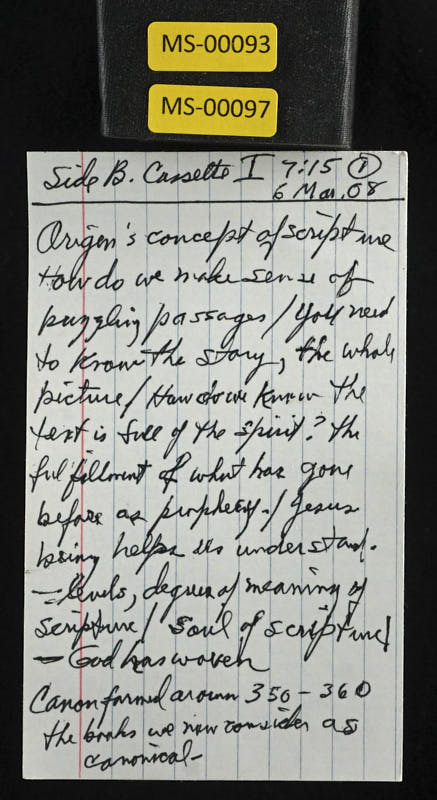
It shows them from the Psalms and the prophets, you know, what pointed to him. So I think the same kind of idea of looking back from the perspective of Easter Sunday and trying to see things as preparing the way for Christ is what originally thinks we ought to do in reading the scripture in general. Another thing that's, I think, often quoted here as a famous detail of his approach to scripture is the idea that there are different levels or degrees of meaning that one has to be able to deal with. And this, of course, develops then. Dustin takes it up in the Middle Ages. You know, the fourfold sense of the scripture and the whole tradition on different... senses of Scripture really is first expressed by origin, although the practice goes way back before him.
[51:50]
I mean, the idea, I think, is that everything that's in the Scripture, we believe, is the work of the Holy Spirit, and therefore everything that's in Scripture is in some way meant to nourish it. But if we look at Scripture and read text, a lot of it doesn't seem to have any direct nourishing meaning, and some of it is not particularly edifying. the sins of the patriarch. So how does one make sense of that? And Origen does two things in the second chapter of book 4. One is that he distinguishes what he calls the body and the soul and the spirit of Scripture. He takes as a warrant for that a passage from 1 Thessalonians 5, I believe. where Paul speaks about the human person as consisting in body, soul, and spirit. But he kind of just takes that. He never does anything without quoting Scripture to do it, to justify. So here he quotes Paul too, but it's a common enough distinction in the ancient world. But for him, Scripture as a whole has a body and a soul and a spirit just as the human person does.
[52:55]
And the body, he seems to mean by this at least the kind of obvious sense, the straightforward narrative, the instruction, the command, whatever it happens to be. And as he says, most of Scripture is perfectly intelligible on that level and so we take it seriously on that level. But sometimes we feel we have to look deeper. And then what he means by the soul of Scripture is sort of the moral meaning, the moral instruction that we find there. Often through metaphors and through figures we're led to some sort of moral conclusion His example for that is Paul quoting, I think it's Numbers, you should not muzzle the ox while it's trapping out grain, which is clearly a regulation for farm. But Paul uses it to justify providing some kind of support from the ministers of the gospel. And the origin point is that Paul here is reading what is no longer relevant for him on the surface in the sort of body meaning.
[54:03]
that Paul doesn't have farm animals, as a kind of justification on the moral level for nourishing people who do you a favor. And so he's willing to see this as a legitimate way of using the scriptures and something that has a long history of mind. And then the spiritual sense for him seems to be still something more defined, and it's pointing to the spiritual meaning, or the mysterious meaning, pointing to the coming of Christ and to the the mystery of redemption that comes to life. And he feels that much of the Old Testament, especially the things that don't apparently make sense to us, are ways of pointing to the news that God had redeemed the name of Christ. And we have to be able to know when to look for these. And that's the second point he makes this kind of, I think, is interesting and also very characteristic in Book 4, where he goes on to say, that God has woven, this is chapter 2 also, God has kind of woven into the scriptures, into the composition of scriptures, little puzzles, or what he calls stumbling blocks, scandala, that kind of tip us off, but we sometimes have to look for deeper meaning.
[55:20]
And if we read along and come to something which sounds either illogical or impossible from what we know the world, Like for us, making the son reverse his tracks. He says, what doesn't happen? So when you get that in the narrative about, in the second thing, you look at it because that doesn't happen. So he's in some ways kind of a naturalist on this thing. And then also things that are unworthy of God or unworthy of God's people, God's command. God seems to be urging people to do what we would think of and what church would teach as immoral. Then that's a signal that There's a deeper meaning here. The adultery of Judah and his daughter. Different things in the Old Testament that we don't accept. For Origen, these are all mystical. These all have mystical meanings. And so the appearance of something that's a scandal to us is kind of a clue that we should dig deeper and look for something that is hidden in the text, which is normally something that has to be described in the coming of the church.
[56:30]
the Holy Spirit. I think that seems kind of arbitrary to us when we hear that. It seems like, in a way, topping out on what are genuine difficulties. But I think the point is that Scripture, as received in the Church and is preached in the Church, is meant to, in some way, nourish the Church. Now, all these things ought to have a meaning that does build up the life of the community. And it's certainly true that every little detail of the scripture for him, if you think about it enough, is something that nourishes and sustains the community. Father Mark Sheridan points this out in his article very nicely, points to a passage I was going to mention anyway, the famous homily 27 on numbers. We still have origins homilies on book numbers. And the 27th homily on numbers is a very interesting piece, but it's... It's from the chapter in the book of Numbers that tells of Israel marching through the desert.
[57:34]
They've moved on from Mount Sinai and they're out of the desert and they move from this place to this place to this place to this place and the author of Numbers lists all these unknown oases or desert spots where the people of Israel stayed for a few weeks. And they're just kind of given in a list almost in This particular chapter of Numbers. But Origen has a whole homily on me. And his point in the beginning is that nothing in the scripture is neutral. And nothing is told simply because it happened. But it's all told for the sake of the people of God. Because this is the word of God. So there must be a meaning in these stations in the desert. And there are 42 of them listed in this chapter of Numbers. So Arjun goes through the 42 stations of the people of Israel in the desert and does a little bit of research on their etymology and what the names mean and sometimes he writes, sometimes he's wrong, but he kind of plays around with these things and comes up ultimately with the idea that this is a description of the spiritual life, that these are a kind of an allegory of the way in which we ascend from
[58:51]
a life of self-scientiveness to the meaning of God. Now, of course, there's something terribly artificial about that. Gregory and I said it was the same thing with the titles of the Psalms. He arranged in the Book of Psalms, it was all meant to be an instruction of the spiritual life. But I think the point for both of them is that the Bible is meant to nourish up, and that we have to look for that meaning and find it where we can. comports with what we know about God and what we know about discipleship, then this is legitimate. It's a legitimate use of the scripture as a way of nourishing and building the life of the community. Well, that's a good question because it's not exactly clear when and how the canon was nailed down.
[59:53]
And we know by the fourth century that there are lists that are provided. Athanasius gives a list of the books of the Old and New Testament, which is just about what we have. And then a little later, Pope Damasus did the same in the West. So in the 240s, 350s, 360s, canon is certainly known and named. But there's a kind of operative canon from the end of the second century, the title of Irenaeus. It seems to be just about the same as the one we have. We don't know all the limits of it. And Origen, even more than Irenaeus, uses the same books that we use and speaks of it as the Old Testament, I mean New Testament. He's the first person, I think, to use that phrase, Old Testament and New Testament, Old Covenant, New Covenant. But it's not entirely clear what the Mark, and even he comments on this. Some books, he says, are used in some churches and not in other. So like the Shepherd of Hermas, which is a mid-second century thing, some of the churches were reading out a scripture.
[60:54]
We don't consider a scripture in Alexandria. Presumably because it didn't have an apostolic author. But he says some of the churches did consider it a scripture. And there's a question about the Book of Revelation, the Apocalyptic God. He believes in scripture, but some of the Eastern Greek churches don't yet. In the West, there's a question about people. So there's kind of marginal areas, but he seems to have a pretty fixed idea that this is all the Word of God and it all belongs together. That's all the work that's doing. And that notion of a canon is really connected with his notion of his belief. One kind of explains the other. The final part of the fourth book of on First Principle, which I mentioned before. It's interesting, in Chapter 4, it's fairly short, because he goes back over the rule of faith yet a third time, and he summarizes quite quickly in the fourth chapter, the final chapter of the whole thing, the outline of Christian faith.
[62:04]
One God who is Father, Son, and Spirit. The Son becomes flesh and has our humanity. The Holy Spirit is giving to the Church. There are angels and demons. Humanity has a free will. And we'll be drawn back to God as saved. And what we hope for in the end is a union of all created spirit. And he sums this up. But now he goes through it under the sort of heading of sharing in the incorporeality of God, incorporeality of God. God is without a body because God is infinite. Creatures always have some kind of a body, he would say, even if it's a spiritual body, because to be embodied is to be limited. But what happens is that we are invited to share in the incorporeality of God. And it seems that we do that by knowing how to read the picture, by knowing how to interpret in an incorporeal way what is written to us in the Word.
[63:08]
And so he talks in the last... about acquiring a divine sense. He doesn't need it in the plural. He quotes Proverbs, that we need a divine sense, kind of a divine sixth sense, I think, to be able to read the scripture and see in it not just historical narrative, but a taste of God's own reality. So that he's inviting the reader, I think, through knowing how to read scripture, to participate more and more in the in the life of God to be kind of transformed. And I think that's really his whole take on Scripture and how we view it and how we understand it. I'll just mention one or two other things about his treatment of Scripture, and then we can maybe look briefly at the commentary on John. He says, especially in his homilies on Leviticus, that the word of Scripture, the language of Scripture, is a kind of incarnation of the word of God.
[64:23]
So that just as the word became flesh in a human body and soul in Jesus, even before that, the word becomes flesh in a different way in the text of Scripture. It's kind of an analogy. He says that in the first chapter of his homilies on Leviticus, and it's often quoted as kind of a preliminary incarnation, if you want, of the Word of God, revealing self-communicated Word of God in the words of the text. That's just something about Origen, I think, too, that he's so fascinated with text that he sees text as kind of an embodiment of the divine transcendent Word. And again, analogous to the human embodiment of Jesus. But another point he makes in these homilies on Leviticus is that the person who knows how to get into the text, to lay it out for the people of God, is the real priest of a new law.
[65:30]
Arjun was an ordained priest eventually, and we don't know much about how he understood that, but he's less interested, St. Galway, in sacraments as liturgy than he is in the Word of God, which is, for him at least, the heart of the sacrament, the sacramental celebration. Fr. Mark cites here an interesting little passage from his homilies on Exodus, where he's comparing hearing the Word reverently with being reverent in receiving the Eucharist. And the argument says this, and this is to a general popular audience, you who are accustomed to take part in a divine mystery, know when you receive the body of the Lord, how you protect it with all caution and veneration, lest any small part of it fall from it, lest anything of the consecrated gift be lost. For you believe, and correctly, you are answerable if anything falls from there by neglect.
[66:33]
not people receding the Eucharistic species in their hand. But if you are so careful to preserve his body, and rightly so, how do you think that there is less guilt to have neglected God's word than to have neglected his body? So we have to show the same reverence in trying to get the nourishment out of every little crumb of scripture. Every little word or title or innuendo of scripture is sort of like the Euclid. And in a passage in the 15th homily on Leviticus, this is the first homily on Leviticus, he says, he makes the comparison that the priest of the new law is basically the scriptural interpreter, the person who's going to cut open the scripture and lay it out for you. He goes to the New Testament what the priests of Israel did in the old. So he says this interesting passage. The priest who takes away the skin of the victim often in the Holocaust.
[67:37]
You have to imagine that a priest is kind of a butcher in the old time. You know, you had a victim who'd been killed and then the priest and the Levites are the ones who would carve it up and, you know, take the skin off and cut the flesh off the bone. But the priest is the man who removes the veil of the letter from God's Word and reveals the Mundus, the spiritual meaning behind them. These members, this inner meaning of the Word, he puts down, not just anywhere, but on the altar. The place he puts them is raised above the ground, the holy. In other words, the people he reveals God's mysteries to are not the undeserving, whose lives are base and earthy, but those who are God's altar, those in whom the divine fire, continually consuming the flesh of the victim, never ceases to burn. It is on men like that that the victim of the Holocaust is placed and divided. And the one who divides the victim from then is the one who can systematically explain and show with the proper distinction what degree of spiritual progress is involved in touching the fringe of Christ's garment, water and washing his feet with one's tears and wiping him with the hair of one's head.
[68:49]
To explain the reason for all that and to set some before beginners, others before people who have already acquired some knowledge of Christ's faith, and others again before the perfect and charity, is to divide the victim. men from men. And suppose someone can show that the law was only a beginning, that the prophets were a great advance on the law, and that the fullness of perfection is found in the gospel. Or again, suppose he could tell you how the word should be given like milk to those who are little children in Christ, how it should be used like vegetables to restore strength to those whose faith is weak, how it can provide solid, nourishing food for building up Christ's athlete. Anyone who can reason about that spiritually and see the distinctions involved, any teacher of that kind may be considered to be the priest. He devised the victim limb from limb and puts it on the altar." So it's kind of an extended unpacking of that passage, but I think it gives you a sense of what he likes to do and also the high esteem that he has with being a spiritual interpreter, being a preacher, for his own job, what he does day in and day out.
[70:00]
Well, I gave you before a copy of these first 15 chapters of the Commentary on John. I realize that it is kind of a bad copy. It isn't very easy to read, but I just thought it might be interesting to look at that briefly and see what he does. You can spend some time looking at it yourself later on if you'd like to do that. As I mentioned, the Commentary on John is this vast Antichrist of origin. This is one of the very few commentaries of his that we had, which were more academic works. We had lots of homilies by him, but we have commentary on the Song of Songs and also on John, and then some fragments of other commentaries. And these were meant to be much more detailed. And this is something he never finished then, as we got to chapter 13 and then ran out of steam. And that took him about seven or eight years.
[71:02]
The first 15 little sections, the first 15 tractors, are really his reflection on what a gospel is and what the gospel of John is in the wider context of the New Testament. For him and for all the early Christian writers, I think John was sort of the classic gospel because it's more kind of mystical, it's more theological. It tells you more about Jesus' divine identity. Matthew and Luke told us useful things, and they're usually respected. Nobody comments on Mark. They accepted it as a gospel, but Mark just seemed a little bit too pedestrian, because some of the early fathers, unlike, say, contemporary people writing a life of Jesus, who would probably spend more time with Mark than the other one. But John was the one who told you about the Word and his relationship to the Father, about Jesus' inner life. So he starts this. in a way from left field.
[72:05]
And he doesn't start with a systematic description of what a gospel is. But he starts with the people of God, with Israel. And in chapters 1 and 2, he tries to make the identification between the old Israel and the new. The old Israel had 12 tribes. And in the book of Revelation, part of what we've done, see in chapter 7, this vision of 144,000 people gathered before the glorified land and being signed or sealed with the name of Christ. And for origin, this clearly refers not to ancient Israel, not simply to ancient Israel, but also to the church, to the people who were gathered from all the nations to be signed with the name of Christ on their forehead and then to follow the land wherever he goes. And so the people of God, really, the new people of God, are gathered before Christ from all the nations.
[73:14]
And then in Chapter 3, he goes on and says, well, what has this got to do with John's Gospel? Rightly asked that. And he talks to Ambrose, who is his patron. He's the guy who... They've been paying him a salary to write the Gospel, the commentary on John. He had wealthy people. And he says, well, this is chapter 3. Those of the tribes offer to God through the Levites and priests tithes and first fruits. So this group, this church, this eschatological church gathered before the throne of God is offering their sacrifice, the first fruits to God through the Levites. and priests. And he says the Levites and priests here are clearly those who have no other employment but the service of God. And they are the ones who interpret the scripture. And what are the first fruits that they offer to God from the people of God?
[74:17]
And he suggests that the first fruits that are being offered to God are the gospel. The first blossoming, the first productive outcome of God's revelation. In chapter 4, he distinguishes between the first growth and the first fruit. You had the feast of weeks in the Old Testament in which the first growth, the first leaves and sprouts of the corn were offered at the temple. And then the first fruits are offered a month or so later when the wheat begins to bear. And so the first... Growth, he says, is the Old Testament. It's books of Moses as they are. But the first fruits, when these things come to their ripeness, are the gospel. And so this sacrifice being offered to God through the priests and Levites of the new law is the sacrifice of the scripture and especially of the New Testament, of the gospel. Kind of a roundabout way of getting into this, but he does want to say that the gospels are really where it's all heading.
[75:24]
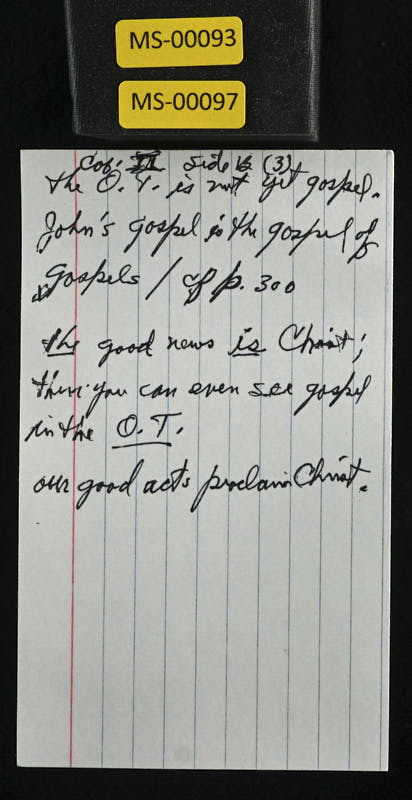
So then in chapter 5, he goes on about the Gospels and their relationship to other scripture. And he suggests here that in the middle of the left-hand column, page 299, must we also show that the old scripture is not gospel, since it does not point out the coming one, but only foretells him and heralds his coming at a future time, but all the new scriptures. our gospel. So the Old Testament, in a sense, is not yet gospel because it's just pointing to one of these. The New Testament is all about Jesus, the fulfillment of the promise, and therefore is good news. It's not until chapter 7 that he'll actually define what he means by a gospel. But He goes on in chapter 6 to say that we have four versions of the Gospel, four narratives of Christ, but the Gospel of John is, in a sense, the first fruits of the Gospels.
[76:35]
It's the Gospel of the Gospel. And the reason is that the Gospel of John tells us more about the divine origin of Jesus, his genealogy, as the word, than Matthew or Luke or Mark, which just tell us about his human origin so then page 300 we may therefore make bold to say that the gospel are the first fruits of all the scripture but that of the Gospels that of John is the first fruit no one can apprehend the meaning of it except he had lain on Jesus's breast like the author he assumed and received from Jesus Mary to be his mother also So to get the point of John's gospel, you have to be like the disciple, somebody who knows Jesus and is kind of adopted in his place. Such a one must he become who is to be another John and to have shown to him, like John, by Jesus himself, Jesus as he is.
[77:39]
And then he says, is it not the case that everyone who is perfect lives himself no longer, but Christ lives in him? And that Christ lives in him, then it is said of him to Mary, behold your son, Christ. So all of us, in a way, get united with Christ. I can call Mary our mother because of this position of being identified with Christ. Right. Yeah, and beloved disciples. And then he goes on to say, well, in this sense, Paul also is giving us a gospel, even though they are called gospel, epistles. But they're gospel because they are about Christ, and they preach the good news.
[78:44]
And then finally, in chapter 7, he tries to identify what is a gospel. Because the gospel is a discourse containing a promise of things which naturally, and on account of the benefits they bring, give joy to the hearer as soon as the promise is heard and believed. So it's a proclamation in a way of the fulfillment of good news that gives us joy. And for him, the good news of the whole Bible, Old Testament news, is Christ coming. And so anything that proclaims the coming of Christ is gospel. It tells of the dwelling of the Father and the Son. And then chapter 8, he'll go on and say, well, in this sense, even the Old Testament is gospel. Everything, if you see it as pointing to Christ, then you see everything else as gospel too. Everybody who recognizes Christ worshiped God in spirit and in truth.
[79:48]
So at the bottom of the left-hand column of 301, before that gospel, therefore, which came into being by the sojourning at Christ, the coming at Christ, none of the older works was a gospel. But the gospel, which is the new covenant, having delivered us from the oldness of the letter, lights up for us by the light of knowledge the newness of the Spirit, a thing which never grows old, which has its home in the New Testament, but is also present in all the scriptures. It was fitting therefore that that Gospel which enabled us to find the Gospel present, even in the Old Testament, should itself receive in a special sense the name Gospel. And by that I think he means the Gospel of John. So that in the light of what you read in John 1 especially, the whole Old Testament becomes Gospel. So you can read it as Gospel. So we're extending the meaning of all of this. And in chapter 10, then, he says that, in fact, Jesus himself is the gospel.
[80:52]
The good things the apostles announce in this gospel are simply Jesus. Jesus is called all kinds of good things, the way and the truth and the light. And here we get into the idea of titles. Everything we can think of that we need is somehow applied to Jesus. Because Jesus contained in his own person the fulfillment of God's promises to us. So in the end, he is the gospel. And chapter 11 then summarizes all these titles that he's going to find in the gospel of John. There's 40-some titles that he finds and interprets as all according to Jesus. And then at the end of 12, page 304, he makes an interesting statement, too, that Everyone who does a good thing for his or her neighbor is entered in the gospel. We read that the woman who anointed Jesus' head and bathed his feet with the tears, that this should be told of her in subsequent generation.
[82:01]
That is good deed. And he says, because it becomes the gospel too, she did an act of charity. Every good deed that we do to our neighbor is entered in the gospel. That gospel was written on the heavenly tablets and read by all who are worded. But on the other side, too, there is a part of the gospel which is for the condemnation of the doers of ill deeds. And so Judas is part of the gospel. So that, in a way, our living out of either the good things or the bad things in the gospel become a part of the text. May us beware, therefore, of us, we also, as crowning Jesus with thorns of our own, should be entered in the gospel and read of in this character by those who learn that Jesus who is in all and is present in all rational and holy lives, learn how he is anointed with ointment, pain and glorified, or how on the other side he had dishonored and mocked and beaten. All this has to be said as part of our demonstration that our good action and also the sins of those who stumble are embodied in the Gospel. So as he's come to this very broad definition then of what the Gospel is, and we'll say that even the Old Testament, which ends with John the Baptist, is
[83:13]
is a part of the gospel, because the gospel is the proclamation that the promise of God is fulfilled in Christ. And if we communicate that somehow with our own actions, then we're part of it. And if we hinder it, then we're part of the opposition. So maybe I ought to stop there just to leave you time for your own comments or your own questions. mind-numbing and bewildering in the bread. But it's very typical of this busy mind, I think, which wants to draw his hearers into this kind of mystical interpretation of how God saved them. And for him, I think interpreting scripture is always mystical. It's always getting people more deeply into the mystery of Christ. So that this whole business of a body, soul, and spirit, the different levels of scripture, As people were pointing out, ours seems to think is a process that the whole church is meant to get involved in.
[84:18]
For simple people, you start with simple explanations, but you try to get them into seeing deeper meaning so that in the end they also move more deeply into the mystery of Christ and in a sense become a part of the gospel itself. It's meant to be a pedagogical process that leads us closer to God and makes you to the Holy Spirit. well his idea of a gospel is that it's kind of the joyful news of promise fulfilled he says that in chapter 8 here and the promise is the promise of salvation and if we really believe that salvation comes to us that's the beginning of chapter 7 The salvation comes to us through Christ, most fully in the person of Jesus. But any time that the Word becomes flesh, the Word of God communicates life to us.
[85:21]
So that in the Old Testament, the Word becomes flesh in this textual sense. And if we know how to read it and understand it, that becomes a kind of small and tiny thing and begins the process of salvation. So he's willing to see that people of the Old Testament who live by their own fate we're experiencing in the coming of the Unification and Barrel, the grace itself. There's a sort of ingeniousness to this, I mean, that you can't say, well, if you're pushing the temple. But I think the reason is to try to try to invite people to get into the mystery containing it.
[86:23]
Well, yeah, that's a good question. I think he's always aware of Gnostic Christians. In Alexandria there were a lot of Gnostic Christians. Who were the Gnostic Christians? There were presumably a large number of people who were living in the church but not entirely comfortable with kind of mainstream interpretation of scripture and doctrine. And some of the more extreme Gnostic groups believe that the ultimate God who saves us is not the God of the Old Testament. He is kind of a lesser figure who is... narrow-minded and even vengeful, and he sets up a system that simply serves him. Rather, Jesus represents another god who had never been known before, and they come to the very originate thing. And so they reinterpret the whole Old Testament and Jewish law and see Jesus kind of opposed to the God of the Old Testament.
[87:26]
And they tend also to want to discount the value of the body, the value of human of worship, the value of the institution, of the church. And so they've become a kind of esoteric group that has their own secret doctrine. And they have become a real problem in Christian communities by the late second century. Irenaeus wrote a huge treatise against Gnostic Christianity, but Origen was always worried about them too. And he has a lot of things in common with them in some ways, but he also is always growing distinctions. And so this commentary on John seems to be set up as a kind of a counterpart to a commentary by a Valentinian Moptic named Heraklion, who wrote the first commentary that we know about. And Origen is always comparing what the Church believes with what Heraklion teaches. And so I think a lot of it is directed against the Gnostics.
[88:19]
@Transcribed_UNK
@Text_v005
@Score_91.79